Aircraft
NASA Teases Potential SR-71 Blackbird Return To Flight
Iconic Cold War spy plane removed from museum amid speculation
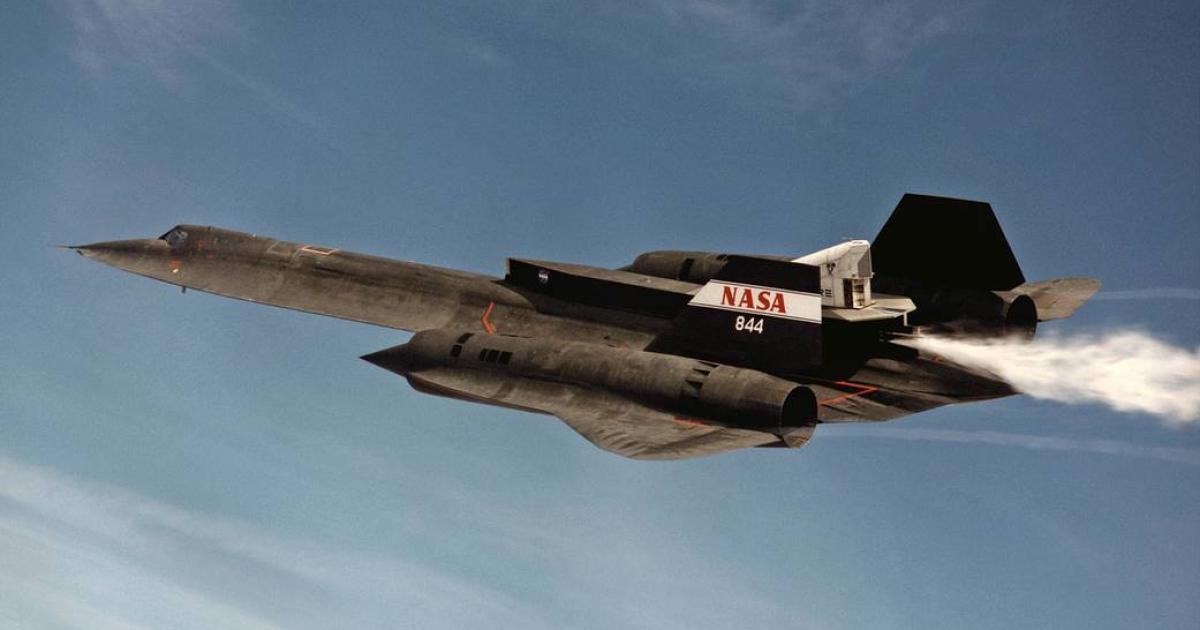
SR-71 with tail number 844 during 1990s flight test
SR-71 tail number 844, the last Blackbird ever built, was one of two aircraft loaned to NASA by the U.S. Air Force for high-speed, high-altitude aeronautical research in the 1990s.

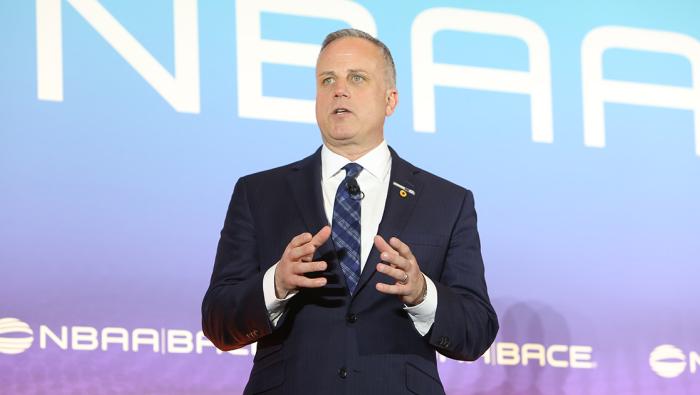
In an unforeseen twist of events, speculation is abounding that NASA could be planning to get the iconic SR-71 Blackbird strategic reconnaissance aircraft airborne once more. Speaking during the recent ‘All-In Summit,’ held in Los Angeles, NASA administrator Jared Isaacman appeared to tease an image of the iconic long-range spy plane: cryptically commenting that “it will not be long before NASA is flying once again as high and as fast as we have from decades past.” 

Meanwhile, as first reported by Aviation Week, satellite images online appear to show a SR-71 has mysteriously moved from its static home at California’s Armstrong Flight Research Center. The 1960s-vintage spy plane was at the forefront of U.S. efforts to monitor Soviet military capability. 

During his presentation, Isaacman noted that NASA is “rebuilding” its experimental fleet of X-plane aircraft, referencing the agency’s X-59 currently engaged in quiet supersonic flight evaluation. However, this is “just the beginning, as NASA recommits to flight test and works alongside industry to push the boundaries of airframe and propulsion design,” he continued. 

Pointing at a silhouetted image on the screen that appeared to show the SR-71’s distinctive smooth, chined fuselage and twin engine nacelles, Isaacman declared “I want to get back to the radical aircraft and engine designs like we were always supposed to do.”  

Under NASA’s proposed full-year 2027 budget, the agency has pledged to “continue advancing critical hypersonic technologies, including combined cycle propulsion and durable high temperature materials, with direct relevance to national security.” It believes that flight testing is critical to validating these new concepts. Additionally, alongside its initiative to “pioneer high-speed flight,” NASA’s Advanced Air Vehicles Program is collaborating with the Pentagon “to advance dual-use technologies for both civilian and military applications.” 

Back In Black(bird?)

The SR-71 was developed by famed aircraft designer Kelly Johnson and the Lockheed ‘Skunkworks’ team at Burbank, California. At the height of the Cold War, when a U.S. Air Force U-2 had been shot down at 70,000 feet by Soviet forces at 70,000 feet—an altitude previously believed to be untouchable—“work had already begun on an innovative aircraft to improve intelligence-gathering, one that would fly faster than any aircraft before or since, at greater altitude, and with a minimal radar cross-section,” explained Johnson. The original aircraft (designated the A-12) first flew in 1962, with the slightly larger twin-crew SR-71 making its first flight in 1964. 

Designed from the get-go as a high-altitude, long-distance reconnaissance aircraft, the SR-71 was able to cruise at over Mach 3 with an almost undetectable radar footprint. It set a world speed record of 2,193 miles per hour and an altitude of 85,068 feet while serving operationally with the USAF from March 1968 to January 1990. 

However, there is precedent for the SR-71 being used as a high-altitude – albeit expensive – testbed. During the 1990s, two SR-71s were loaned to NASA by the USAF for a variety of missions. These included sonic boom research flights, an initiative to evaluate a future potential reusable launch vehicle, and experimental navy radar surveillance technology research. 

Of a total 32 aircraft constructed by Lockheed, the final example—tail number 844—made the type’s last flight on October 9, 1999, before moving to its permanent static home at Armstrong Flight Research Center. Located inside Edwards Air Force Base, NASA lists this facility as “its primary center for high-risk, atmospheric flight research and test projects.” However, as first identified by Aviation Week, satellite imagery shows the aircraft has been missing from its outside pitch since mid-May. 

For now, although NASA has yet to respond to an approach by AIN for confirmation, the SR-71’s return to flight remains a speculative if exciting proposition. But Isaacman's public comments strongly signal his intention for it to augment the research and testing undertaken by the X-plane initiatives. 

"If NASA has a healthy X-plane portfolio, we should be flying experimental aircraft so routinely that the second flight of a single X-plane is not newsworthy,” he suggested back in March. Nevertheless, with many of its Cold War-era achievements unsurpassed even today, the SR-71’s resurrection would be likely to prove newsworthy indeed.