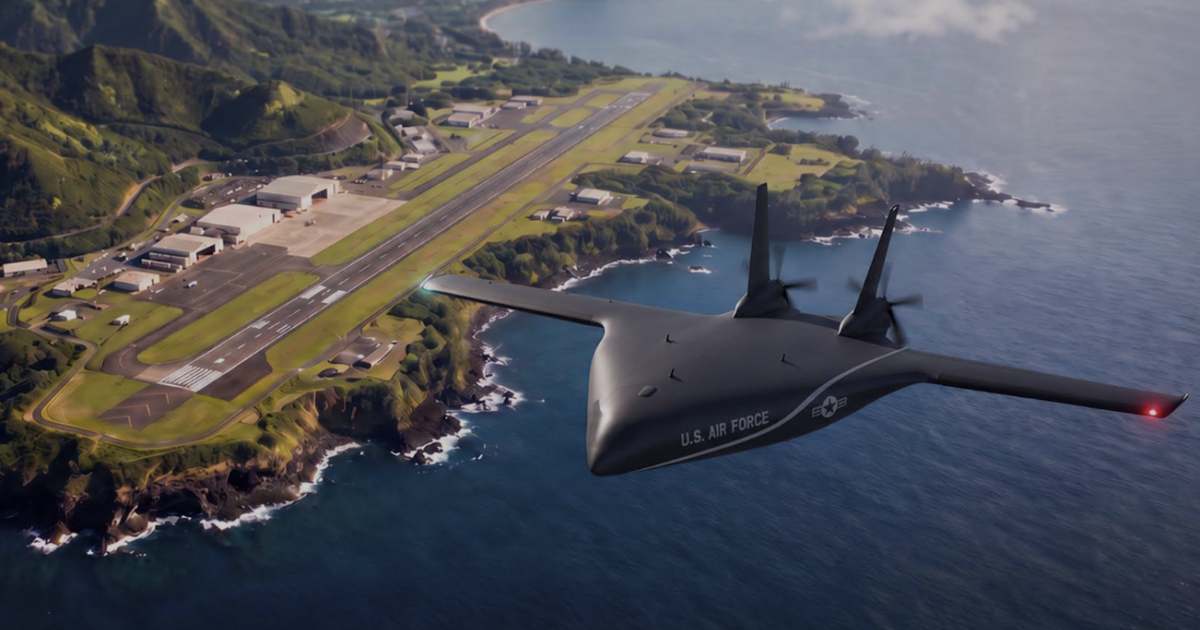
The U.S. Air Force has awarded blended-wing-body aircraft developer Natilus a $3.5 million to advance its optionally piloted ‘Kona’ freighter aircraft. As the San Diego-based startup works towards its full-scale prototype’s first flight in 2028, the funding will also support Kona’s targeted entry into commercial service by the end of the decade.
Announced on October 21, the contract award from the Department of the Air Force and the Operational Energy – Innovation Directorate is intended to accelerate the optionally-piloted aircraft towards what Natilus described as “full-scale flight testing and an operationally relevant U.S. Joint Force demonstration.”
Although the projected target date for a full-scale prototype first flight has slipped by up to two years from 2026, Natilus CEO Aleskey Matyushe insisted the start-up is on track in terms of its path to market. He said that in responding to the USAF's "accelerated operational timeframe" the company will demonstrate Kona's “payload, range, efficiency and flexibility benefits.”
According to Natilus, it is not developing separate commercial and defense variants of Kona, with both markets having expressed interest in the same aircraft’s technical specifications, performance characteristics, and core capabilities. Specifically, the USAF funding “will help advancement and testing of the commercial Kona platform while demonstrating its applicability to military missions,” Natilus told AIN in written responses to questions.
While Kona’s initial military use cases are likely to focus on contested logistics, the company believes its modular architecture could lead to additional applications including communications relay; intelligence, surveillance, and reconnaissance; and specialized payload delivery. It said these needs can all be met “without fundamentally changing the underlying aircraft” and that defense-focused demonstrations could also contribute to an ongoing FAA certification program for civil use-cases.
The Path to a First Flight
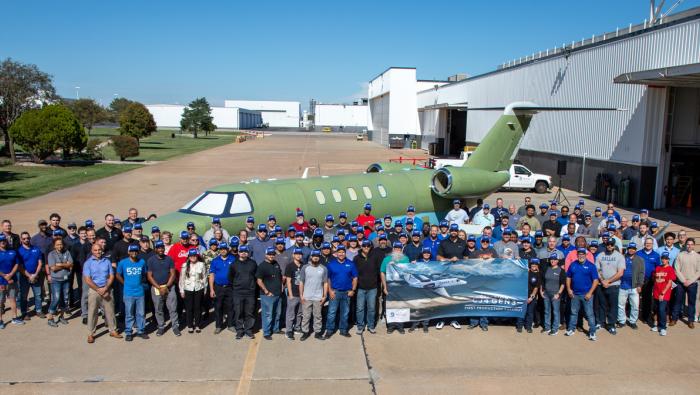
Following subscale model flights, wind tunnel modelling, and aerodynamic and structural analysis, Natilus has now finalized the aircraft’s overall configuration and outer mold line. Production of an initial full-scale prototype is underway, leveraging input from established aerospace suppliers. These include Pratt & Whitney Canada for the PT6A engines, Collins Aerospace for the cargo loading system, and an unnamed carbon fiber manufacturing partner for the wing and fuselage elements.
Based on achieving the first flight in 2028, Natilus believes it can still achieve a commercial service entry before the end of the decade. In February 2025, Canadian airline Nolinor Aviation placed a firm order for an unspecified number of Kona aircraft.
In June this year, the FAA accepted Natilus’ Part 23 project certification plan for Kona. The U.S. regulator has also begun developing the G-1 Issue Paper that will establish the aircraft’s certification basis.
In February Natilus reported it had raised $28m from private sources, bringing its total funding to $33 million. At the time, Matyushev said this backing put the company in a “very comfortable position” to meet the major milestone of a full-scale first flight. The company will need to conduct further funding rounds to raise the $250 million it has said it will need to bring Kona to market and into scaled production.
In 2023, Natilus announced it was considering applying ZeroAvia’s ZA600 hydrogen-electric propulsion to the aircraft, it has since said it will start with "proven turboprop engines. But the company has left open the option of making use of hydrogen propulsion for future applications.
In this article
More In Aircraft