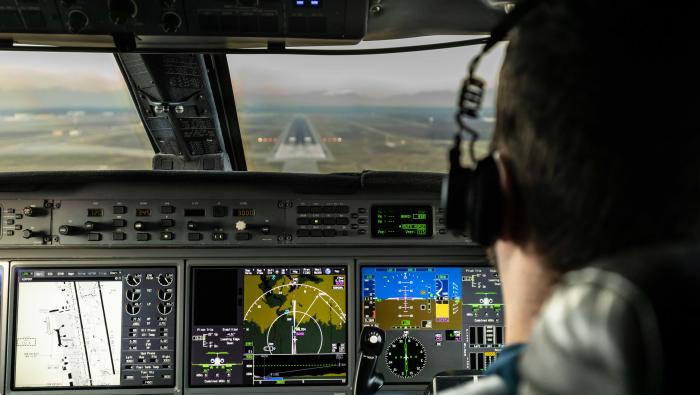

This month’s long-anticipated release of the most recent chapter in the Star Wars saga will no doubt captivate audiences with scenes of futuristic spacecraft skirmishing in a sub-orbital dogfight, their pilots’ hands firmly on the controls, as they have been since the very first aerial combat. Yet researchers at Honeywell are working on something even diehard science fiction fans would find astonishing: an aircraft control system that responds to mental commands. At the recent NBAA Convention in Las Vegas, guests at the company’s annual Aviation Forecast dinner were able to gaze into the engine and avionics manufacturer’s “crystal ball” and see technologies that it believes are on the horizon, among them trans-cranial neural sensing and characterization, which receives and analyzes faint signals from parts of the brain near the skull, using a specialized headset.
More In Avionics