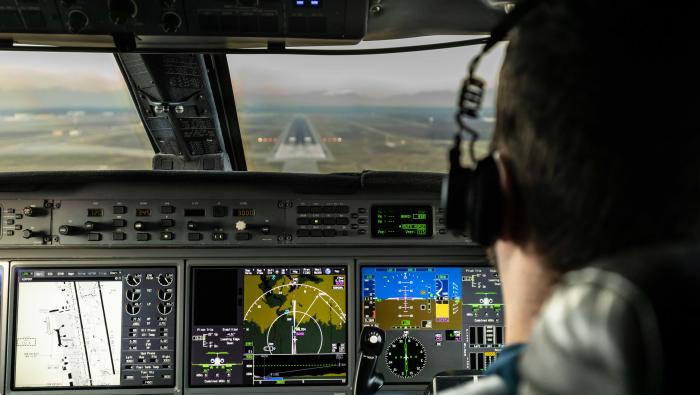
Considering the myriad benefits that digital fly-by-wire flight control systems provide, it’s somewhat surprising that only one business jet–Dassault’s Falcon 7X–has been certified with the technology.
Fighters built with digital flight controls have been roaring into the skies since the 1970s, primarily to compensate for their inherent aerodynamic instability but also to eliminate the danger of hydraulic system damage during combat. Airbus began incorporating fly-by-wire technology into the design of its airliners with the launch of the A320 in the 1980s as a way to save weight, increase reliability and cut cost. Boeing followed suit a decade later in the design of the 777 and is bringing fly-by-wire controls to the composite-construction 787 as well. Yet despite the widespread acceptance of digital flight controls among developers of military aircraft and airliners, business jet makers by and large have chosen to stick with traditional mechanical control systems using the same rod, cable and pulley techniques that have been applied since aviation’s golden age.
More In Avionics