Closing in
0
...
Menu
Search
LATEST
POPULAR
AIRCRAFT FOR SALE
Sign In
SECTIONS
Business Aviation
Aerospace & Defense
Rotorcraft
General Aviation
FutureFlight
SUSTAINABILITY & ENVIRONMENT
CHANNELS
Aircraft
Maintenance
Avionics
Charter & Fractional
Safety
All Categories
News Archive
Newsletter Archive
MORE
AIN FBO Survey
Airshows & Conventions
Aviation Events
Compliance Countdown
Expert Opinion
In-Depth Reports
Leeham News & Analysis
Print Archives
Videos
Webinars
Whitepapers
ABOUT
About AIN
Our Writers
History
Advertise
Contact Us
Subscribe
LATEST
POPULAR
AIRCRAFT FOR SALE
SECTIONS
ABOUT
Sign In
Search
Subscribe
Search
Safety
Turning the corporate jet into a real flying fortress
Security comes from a combination of policy, procedure and technology–nuts and bolts.
Share
Post
Share
Print
Copy
Email
By
Mark Phelps
October 8, 2007
More In Safety
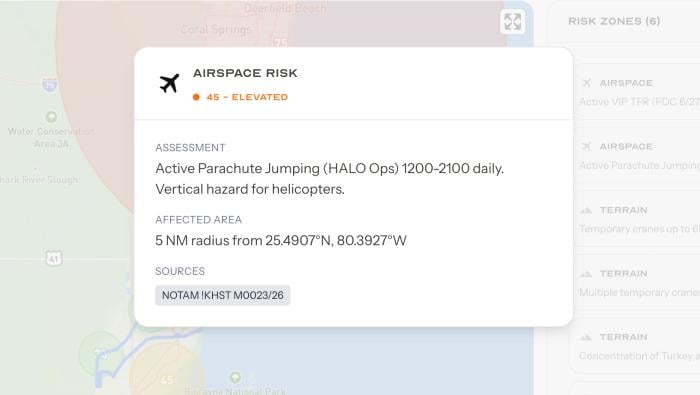
Insurance Co Develops Low-level Hazard Warning Tool
App’s heat map highlights risks in areas where helicopter might fly
Safety
NBAA: Q1 Review Shows Need for Stabilized Approaches
Resource details 15 incidents and 25 accidents involving business aircraft in first quarter
Safety
Safety Experts Stress Culture Drives Brand, Vitality
ACSF experts called on industry to look at their culture and those around them
Safety
Micro Sensors Could Deliver More Consistent Air Data
UK/Canadian technology avoids vulnerability to vibration and pitot tube blocks
Safety
NTSB Shines Spotlight on Wet Runway Safety
Recommendations follow analysis of 11 runway overruns from 2008 to 2022
Safety
AINsight: Unlicensed Activity in Aviation
Pilot certification and experience lapses lead to two fatal accidents
Safety
FAA Progressing on NTSB KDCA Recommendations, but Much To Do
Agency has checked off a few recommendations but many are in process from NTSB’s KDCA investigation
Safety
Bird Strike Prevention Radar Deployed in South Africa
Radar provides 360-degree coverage with 15-kilometer range
Safety