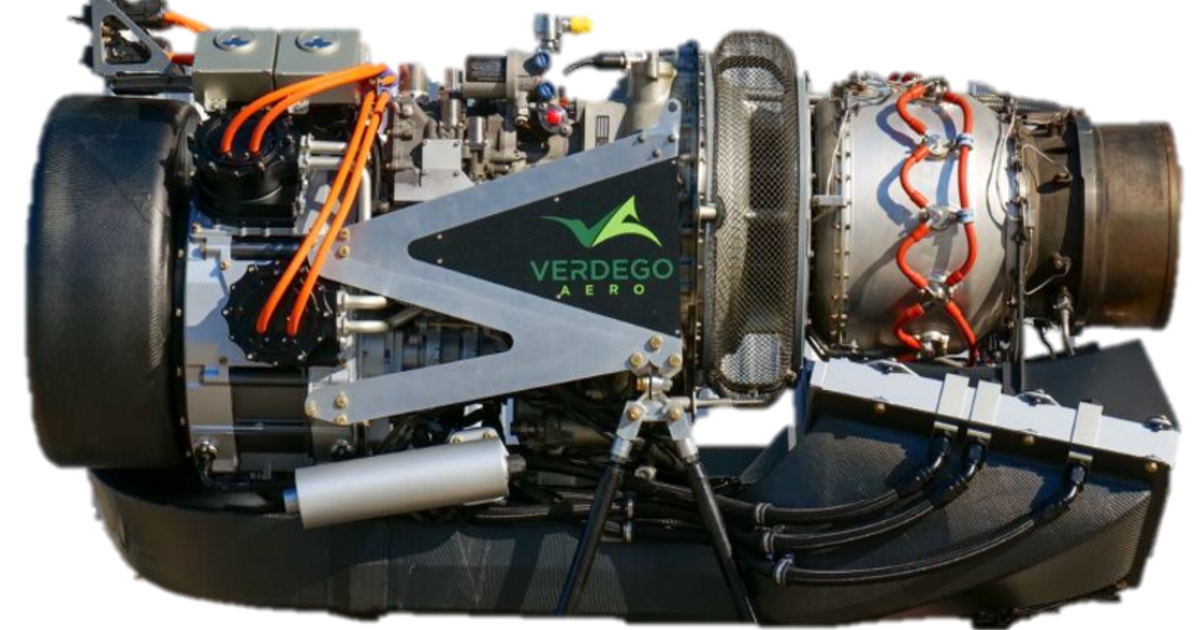
VerdeGo Aero has announced that its VH-4T hybrid-electric powertrains delivered earlier this year are now approaching first flight with an undisclosed airframer. The U.S. company, which since April has delivered several of the 400-kilowatt units for ground testing, is raising fresh capital as it scales up production capacity over the next 12 to 18 months.
According to VerdeGo, the VH-4T is now available in multiple configurations that can be customized to aircraft developers’ specific requirements, including fixed-wing and VTOL operations for both civil and military applications. Because of non-disclosure agreements, the company said it cannot reveal the identities of most of the companies and organizations planning to use its propulsion systems.
The Florida-based company’s co-founder and CEO Eric Bartsch said the array of potential applications has diversified significantly over the last couple of years to match the growing investment in new military and cargo aircraft. Over that period, it confirmed development agreements with the U.S. Air Force and NASA.
Earlier examples of the powertrain have been flown on aircraft since 2025, logging more than 460 piloted flight hours so far. Total runtime for the technology, including ground test rigs, is now more than 1,700 hours.
“One reason we decided to go with this size [of powertrain] as our lead product line is that it is the ideal size for most of the new hybridized eVTOL aircraft design in recent years, with power for five or six seats,” Bartsch told AIN. “The military market is moving fast with new requirements for contested logistics with payloads large enough to matter, so 1,000 pounds or so and able to fly hundreds of miles while being smaller and more nimble than a [Sikorsky] Black Hawk [helicopter].”
VerdeGo Aero’s portfolio also spans the 185-kW VH-3 powertrain, the new VH-4T-415 unit, the production-intent configuration of the 400-kW VH-4T and the VH-5 “blended turbofan” developed for new high-speed vertical takeoff and landing aircraft as well as high-speed drones that need more electrical power. The VH-5 can also operate as a turbofan or turbojet during the cruise phase of flight.
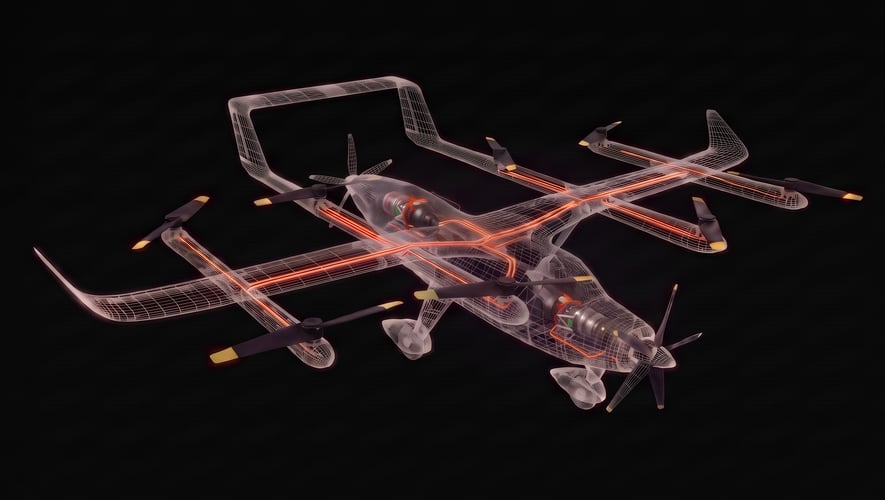
According to VerdeGo Aero co-founder and chief technology officer Pat Anderson, its powertrains are designed to be versatile to meet the energy needs of multiple applications. The standard 800 volts can be increased to 1,000 volts for customers needing variable voltage.
“We are now offering a base model that can come with add on [features], bringing the weight down and increasing the power output,” he said. “It is 480 pounds and with 1.49 kilowatts per kilogram, and you can add a pump kit if you want mechanical cooling or a hover kit for longer duration flights.”
VerdeGo Aero’s approach to hybrid-electric propulsion is based on a primary power unit, it says, that amounts to a new class of powerplant that can be installed in either series or parallel configurations.
“Over the past year we have been shifting its mindset from the R&D phase of hybrid power to the product and production side of hybrid flight,” Bartsch explained. “As VerdeGo-powered aircraft are now taking flight at customers, it is critical to have the products, support, and configurability to address the needs of a diverse array of aircraft and drones. Just as our team has led the development of hybrid technologies since the very first hybrid flight in 2011, we are now leading the way toward production of mature hybrid propulsion systems that give our customers the mission capabilities they need to succeed, with support behind it through all phases of a program.”
More In Engines