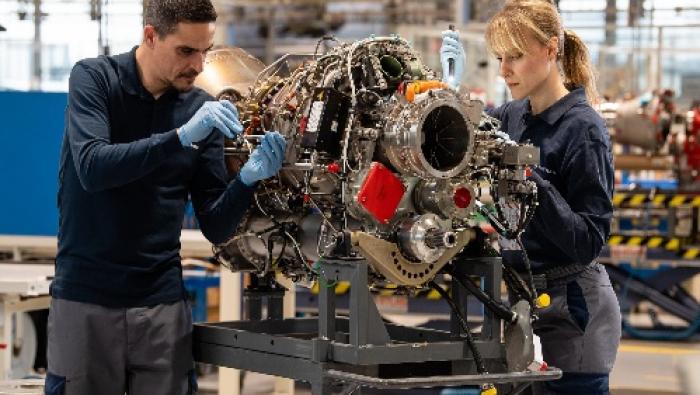
Heart Aerospace has won a $2.9 million award from the FAA to develop and flight-test the turbogenerators for its ES-36 hybrid-electric regional airliner. The award comes from Phase IV of the agency’s Continuous Lower Energy, Emissions, and Noise (CLEEN) program, Heart announced Monday, saying it will match the award for a $5.8 million, 24-month development and test effort called Project Hyper (short for “Hybrid Propulsion Environmental Readiness”).
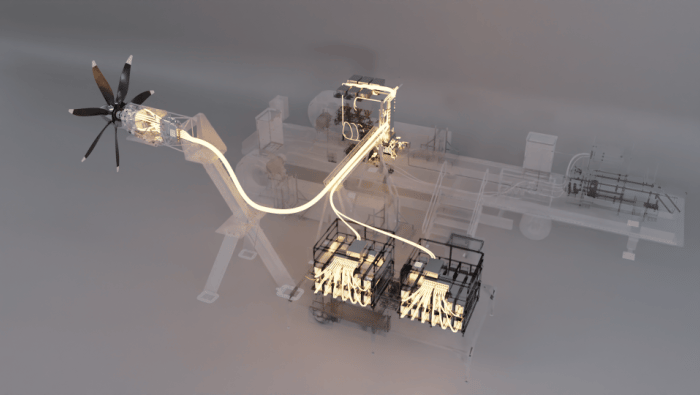
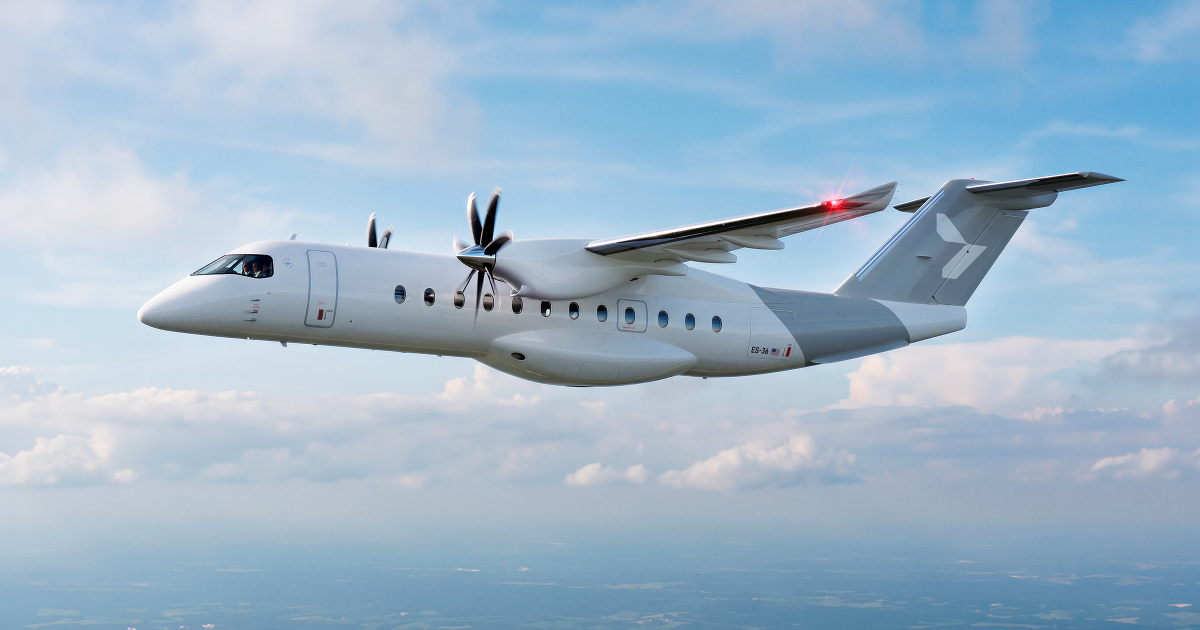
The 36-seat ES-36, which Heart unveiled alongside a purchase agreement from regional carrier JSX on September 23, has a series-hybrid powertrain: two 1.65-megawatt electric motors drive its propellers, and a megawatt-class turbogenerator in each nacelle burns Jet A or sustainable aviation fuel to generate electricity in flight and extend the aircraft’s range. California-based Heart is targeting 125 miles of all-electric range and up to 745 miles in hybrid mode, both plus reserves.
Ground tests will come first, examining how the turbogenerator, batteries, and motors work together, followed by demonstration flights on a pre-production ES-36 that Heart plans to fly in 2028. Heart said the data will support ES-36 certification and inform FAA certification of future hybrid-electric aircraft. The company plans to certify the ES-36 under FAA Part 25 and put it into service in 2031.
With the ES-36, Heart has returned to the series-hybrid architecture it first proposed for the 30-seat ES-30 in 2022 before switching to an “independent hybrid” layout in 2024. That switch eliminated the turbogenerators the original ES-30 carried in its rear fuselage, replacing them with two turboprops that drove the outer propellers directly while electric motors turned the inner pair. The ES-36 brings back the turbogenerators, with one in each of its two nacelles. Heart calls the turbogenerator its own design, though it said in September that each unit runs on a commercially available gas turbine. It has not revealed the supplier.
The CLEEN award follows a $4.1 million grant the FAA gave Heart in August 2024 under its $291 million Fueling Aviation’s Sustainable Transition (FAST) program. That grant funded development of Heart’s Total Hybrid Electric Management and Integration System (THEMIS), a power management system originally intended for the ES-30. Heart now says THEMIS will coordinate the ES-36’s motors, turbogenerators, and batteries.
Heart is one of five U.S. companies that received two-year agreements when the FAA launched CLEEN Phase IV in September and the only one developing a hybrid-electric airliner. The others are Boeing, GE Aerospace, Honeywell Aerospace, and blended-wing airliner developer JetZero. Since 2010, the program has mostly funded established manufacturers and suppliers working on conventional engines, airframes, and sustainable aviation fuel.
In this article
More In Engines