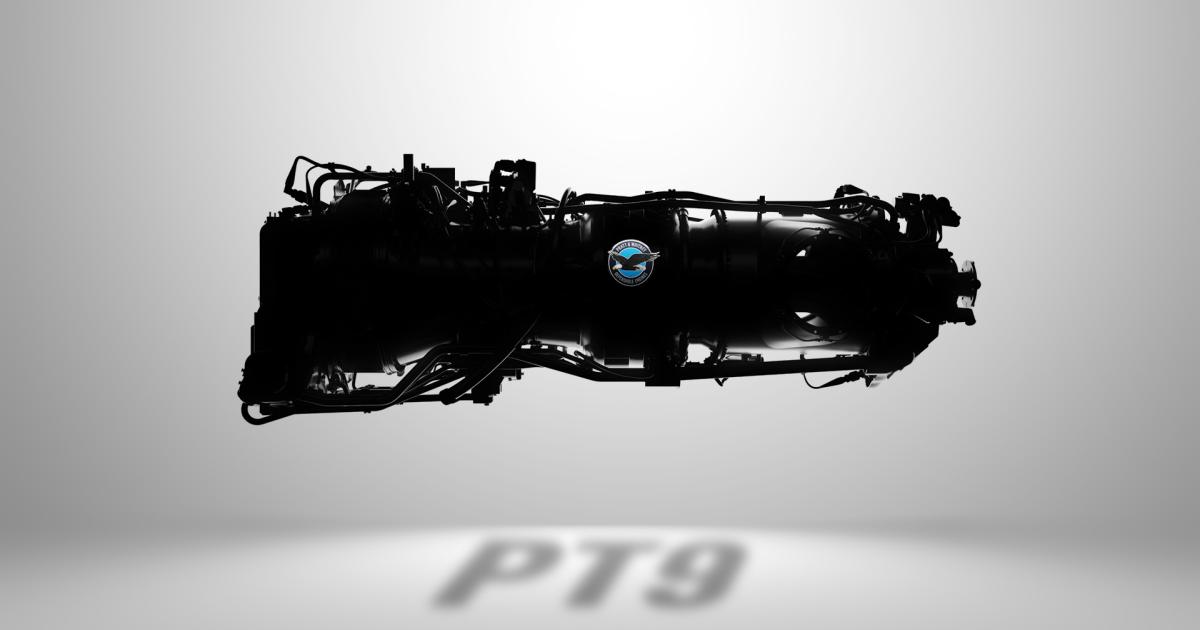
Pratt & Whitney Canada (P&WC) has taken the wraps off the PT9, a 2,000-shp clean-sheet turboprop engine that draws on the PT6 name but incorporates new architecture scalable to multiple platforms. The engine maker unveiled the centerline powerplant today at NBAA-BACE 2026, and with Transport Canada certification already in hand.
P&WC president Satheeshkumar Kumarasingam stressed the engine is neither a replacement for, nor a successor to, its venerable PT6 line, but is designed with new technologies that could adapt to future applications such as hybrid operations. With the PT9, Kumarasingam said, “We leaped ahead in this next-generation architecture and product line” to bring more modularity, scalability, and maintainability.
“The PT9 engine represents the next evolution of turboprop propulsion, delivering significant advances in performance, efficiency, and adaptability to meet the needs of modern aviation,” he said. “Designed around evolving customer needs, including advanced digital capabilities and future-ready hybridization, its architecture can be tailored to diverse airframe types and provides a strong foundation for continued innovation and technology integration.”
P&WC is not yet ready to announce an aircraft platform for the PT9 engine, but Kumarasingam told AIN the company has been in discussions with most major manufacturers and has received feedback from potential customers that shaped the direction of the development.
“Based on the market feedback—we have been in conversations with the audience for a while—this has given us the confidence to continue to invest and bring this to certification,” he said, adding parent RTX supported this development based on P&WC’s track record and discipline.
“We feel that this is really well set up in terms of power range and its capabilities for the next generation of turboprop aircraft,” he said, adding the company expects a range of applications. “Our pedigree has always been that it’s never a single engine, single application. It’s always based on a platform capability, both from the ability of the engine to grow in power and capability, as well as multiple applications.”
Positioned in the 1,700- to 2,300-shp range, the centerline turboprop combines jet-like performance with turboprop efficiency, offering 33% more power at altitude and reducing fuel consumption by 20% compared with previous-generation engines, according to the Canadian engine maker. The engine employs advanced materials and manufacturing techniques, including select use of additive manufacturing.
Designated the PT9-11A, the engine was certified with an electronic engine control unit (EECU) that protects the engine from overtemperature and overspeed and combines the propeller control lever, throttle lever, and condition lever into a single lever in the cockpit. “For the pilot, the workload just goes down tremendously,” Kumarasingam said, noting that this is one of the key features carrying over from P&WC’s PT6E-67XP engine
It also has a data collection and transmission unit. “It’s very digitally connected, allowing more than 300 parameters that could be monitored, and this will actually lead to early prognostics of the engine, how it’s faring, and the health,” he explained. In addition, the engine can fly on sustainable aviation fuel.
Another commonality with the PT6 is the 19-inch outer diameter, “but otherwise, when you look at the cross section, I think the market will be pleasantly surprised, and we’re excited about what it’s going to do.”
While not yet revealing further details, he added that the “architecture has been carefully designed to minimize the life-limited parts and make maintenance easy for operators, thereby also managing costs.”
Awarded on September 30, certification followed more than 14,000 development hours in a program that involved an estimated seven articles and 30 specific certification tests. Kumarasingam said the company’s engine development programs typically run about four to five years. P&WC is pursuing FAA and EASA certification.
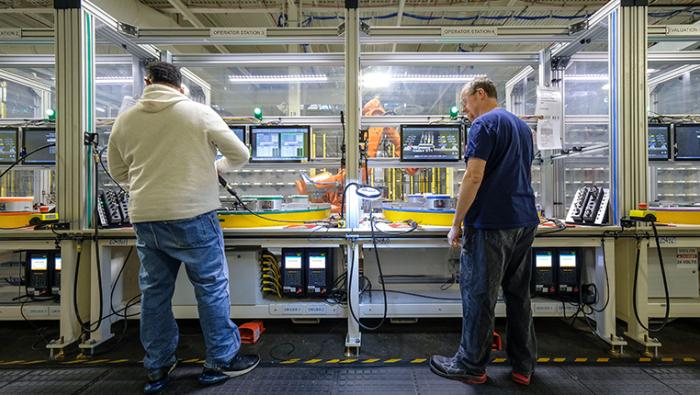
P&WC will produce the engine at its plant in Lethbridge, Alberta, Canada, which houses its global center of excellence for the PT6 family. It is in the process of signing up suppliers and is looking at investments necessary to industrialize the engine.
As for the PT6 line, he said: “We continue to invest in the PT6, and the PT6 still has a very long life ahead of it, both in sustainment as well as new product opportunities.”
In this article
More In Engines