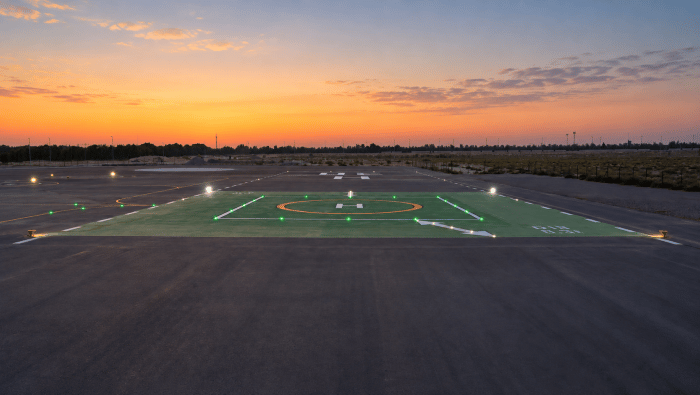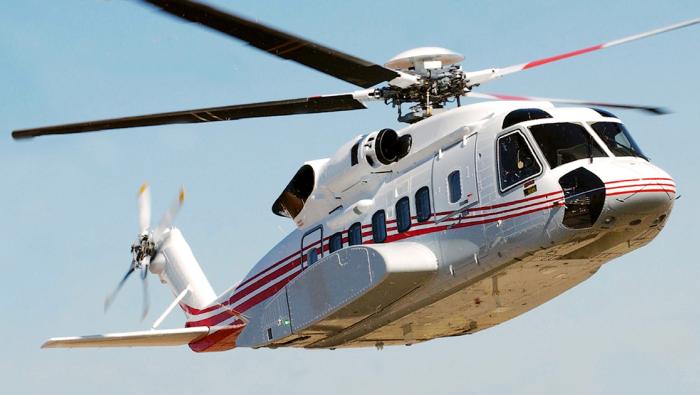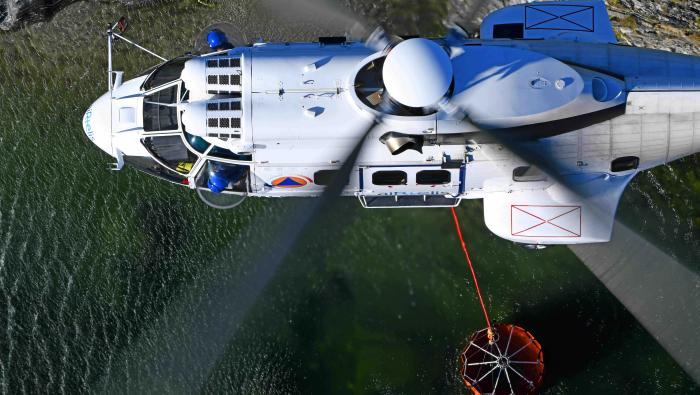

Aurora Flight Sciences has completed a successful final demonstration of its autonomous Bell UH-1H Huey testbed, wrapping up a five-year program for the Office of Naval Research (ONR). The December 13 demo proved that the Autonomous Aerial Cargo Utility System (AACUS) can progress to field testing by the U.S. Marine Corps. The Marines plan to begin two years of trials at their combat training center in Twentynine Palms, California, this spring.
AACUS is a sensor and software package that can be integrated into any rotary-wing aircraft. It combines a sensor suite, supplied by Near Earth Technologies, a spin-off from Carnegie Mellon University, with a digital flight control system and autonomy technology developed by Aurora. The combination allows a rotorcraft to fly an autonomously planned mission and to receive basic instructions—such as to fly to a specific coordinate and land within a 50-meter radius. Onboard Lidar, a visual-spectrum camera and a polarized camera—primarily for detecting shallow water and mud—allow the aircraft to detect and avoid en route obstacles, such as wires and trees, and select a suitable landing area within its target, with no onboard map or pre-mission guidance.
In this article
More In Rotorcraft