The French private charter flight sector could almost disappear in the next two or three years if the country’s elevated per-passenger charges under the “solidarity tax” are maintained, according to EBAA France. The industry group is lobbying hard for relief from rates of up to €2,100 ($2,400) per passenger as the French government seeks to set its 2027 budget amid extreme political and financial pressure.
At a recent meeting at Paris Le Bourget Airport (LFPB) with Philippe Juvin, who oversees government finances for the French National Assembly, EBAA France officials believe they convinced him that applying the solidarity tax to charter operators is both unfair and counterproductive. Passenger duties for private charter flights can be as much as 30 to 50 times higher than those charged for scheduled airline flights.
In his recent parliamentary report on the application of the tax, Juvin acknowledged the damage the elevated rates have done to French charter operators since they took effect in March 2025. He also confirmed that foreign-registered charter aircraft have increased their market share at the expense of French operators, which EBAA France says is because tax officials focus on charging home-based companies.
“The tax is definitely killing French companies,” EBAA France president Charles Aguettant told AIN. “We are happy to have non-French companies [competing] but it is French companies that have employees in France.” Historically, France has accounted for one of the largest contingents of business aviation employees across Europe.
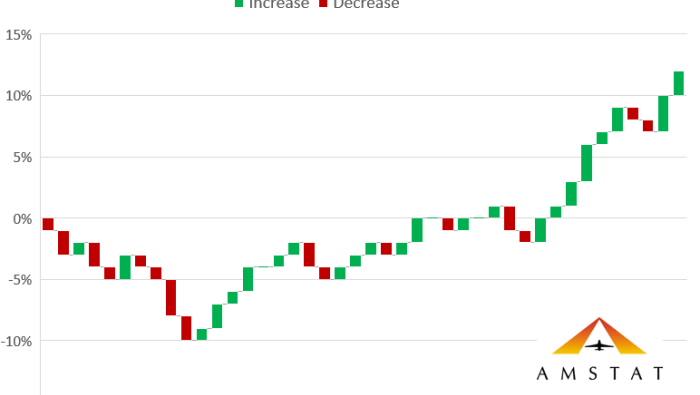
EBAA’s local chapter has carefully tracked the tax’s impact on its members, noting that French operators’ share of charter activity has declined from 14% to 9%. The group says activity has fallen by 10% to 15% each quarter during 2026, and that if this continues, the French industry faces an existential threat. Aguettant said that at least two operators have gone out of business since the tax was introduced.
Economic Lifelines
The group fears that if charter services become nonviable, many smaller and remote French communities will lose effective transportation links, which could undermine local economies. According to Aguettant, 90% of business aviation flights from French airports are heading to cities within France or to other European countries.
The National Assembly—one half of the French parliament alongside the Senate—is set to debate the proposed 2027 budget in a process expected to run into late November. France’s green party, Les Écologistes, wants the passenger duties for private jet flights to be increased over current rates.
If lawmakers cannot reach a consensus, the impasse could lead to the collapse of the country’s coalition government, which is under intense political pressure over public spending demands. Alternatively, the government could decide to press ahead with the budget in the face of opposition and President Emmanuel Macron has the option to dissolve the National Assembly, triggering an election.
EBAA France is pressing for a more balanced approach to applying the passenger tax, which it says has resulted in far lower revenue for the public coffers than the government had anticipated. According to the parliamentary report, the government has collected only €42 million from business aviation, against a target of €150 million. The tax collection target for scheduled airlines is €850 million.
At the same time, it wants authorities to do more to ensure non-French operators cannot avoid payment in the interests of ensuring fair competition. Aguettant said it is far too easy for non-French companies to simply avoid reporting flights and passenger counts, with local tax officials apparently paying little attention to them. EBAA France has considered whether airports could be required to collect taxes directly, but the group accepts this could be impractical for smaller airports.
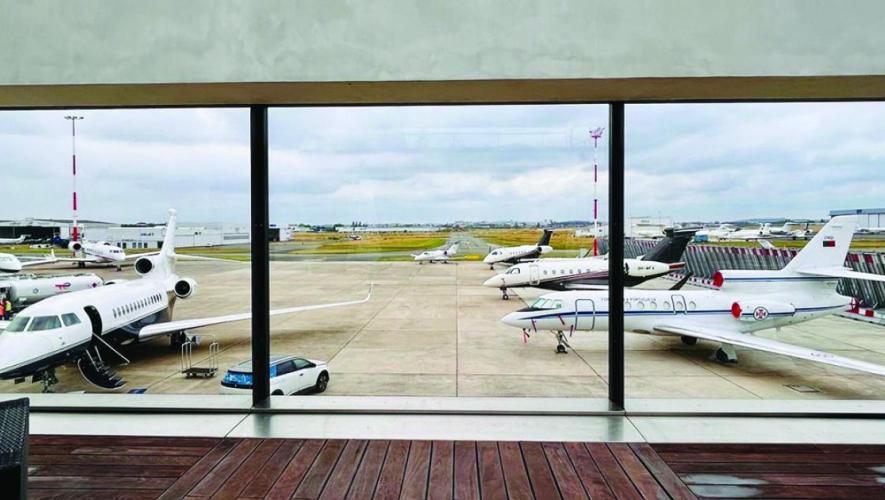
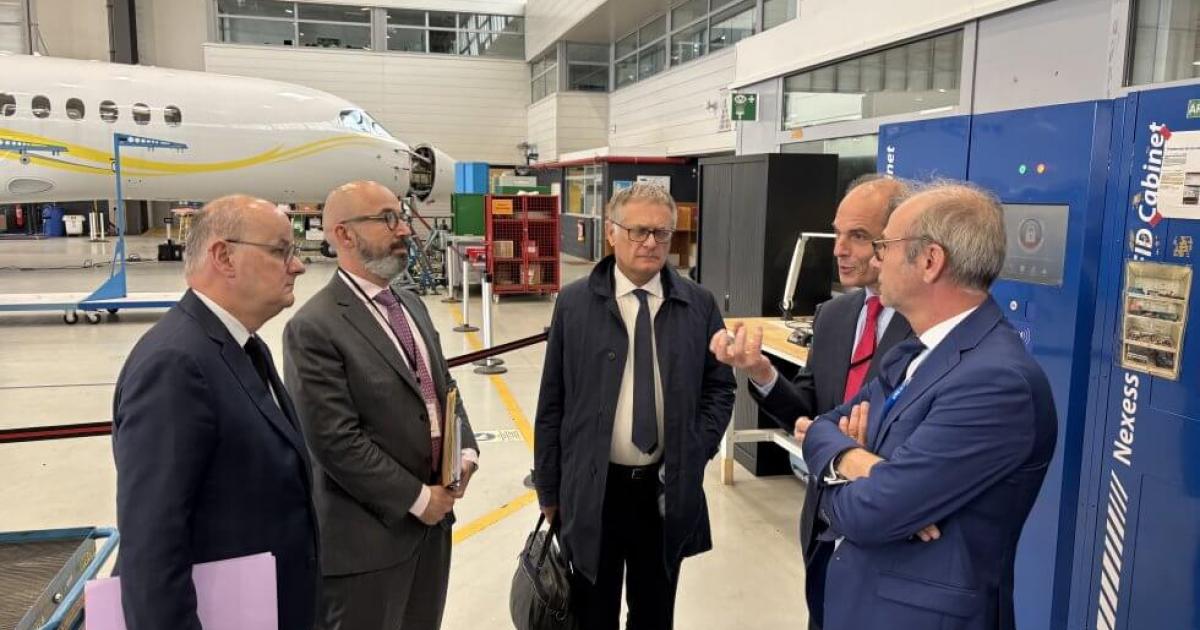
When Juvin visited EBAA leaders at a meeting hosted by Dassault Falcon Service, he was shown a Falcon 8X, but also a smaller Cessna Citation CJ1 and a Pilatus PC-12 to illustrate the wide scope of business aviation’s impact on the economy. He was briefed, for example, on how the PC-12 is used to fly a team of eight surgeons between Dijon and Nevers.
More In Finance, Taxes, Insurance