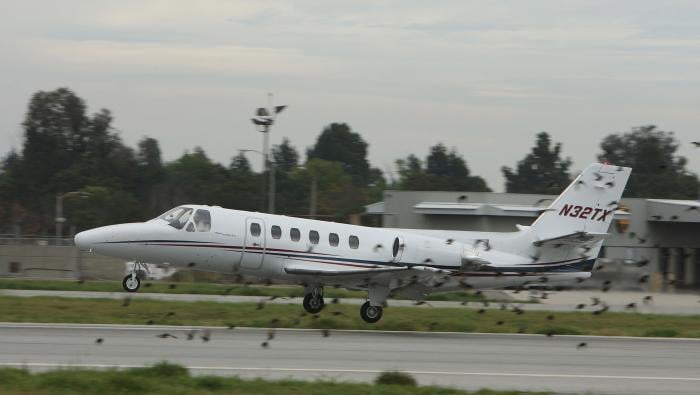
The US Airways flight that splashed down safely in the Hudson River drew renewed attention to the longstanding problem of birdstrikes. It’s tempting to call the ditching the ultimate birdstrike event. But thankfully, everyone lived, unlike the 62 souls in an Eastern Airlines Lockheed Electra that in 1960 was downed right after liftoff by a flock of starlings–a bird much smaller than the Canada geese that are blamed for the damage to Flight 1549. The Electra’s crash into Boston Harbor marked the highest death toll to date for birdstrike accidents. Yet almost 50 years later, even with warnings of birds in the vicinity, there’s still uncertainty about the actual threat they present until they’re unavoidable, or almost so. What can be done about that? One promising answer is bird-tracking radar.
In the early days following radar’s invention during World War II, researchers regarded the birds it detected as unwanted “clutter” that obscured important information. Only much later were those nuisance returns on the screens of “skin paint,” or primary radars recognized as potentially valuable alerts to pilots, particularly during spring and fall, when millions of migrating birds were on the move. So while today’s primary radars, such as the 200-plus-mile range Nexrad and the FAA’s 60-mile-range ASR-9 and ASR-11 terminal radars, track birds in conjunction with their basic weather role, they only skim the surface at close ranges and, due to the earth’s curvature and the need to avoid ground clutter, their scans soon rise above 3,000 feet agl. But it is at that height and below that most birdstrikes occur.
More In Safety