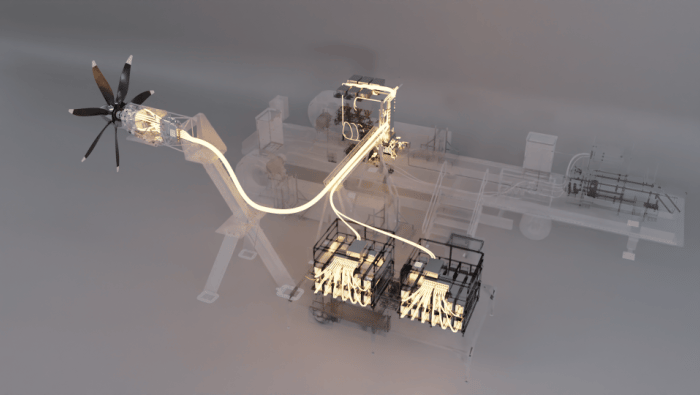

MTU Aero Engines is highlighting at its Dubai exhibit a pair of new propulsion concepts it views as strong prospects for decarbonizing air transportation starting in the 2030s. The German manufacturer is now accelerating engineering collaborations with multiple partners to advance both its Water-Enhanced Turbofan (WET) and Flying Fuel Cell (FFC) innovations.
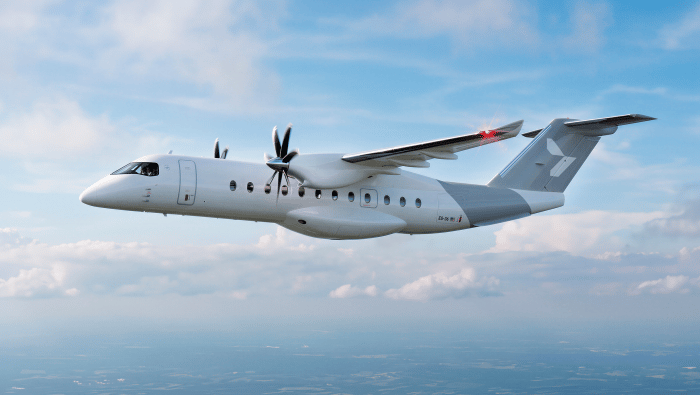
The FFC will convert hydrogen into electricity to support future powertrains that MTU believes could advance the industry beyond the range and payload limitations of battery-electric aircraft. According to innovative propulsion director Fabian Donus, initial applications of the fuel cell technology to be ready for entry into service around 2035 will center on aircraft carrying up to 100 passengers on flights of up to 1,000 nm. Since the FFC would emit only water, its developers expect the innovation to reduce climate impact by as much as 95 percent.
More In Engines