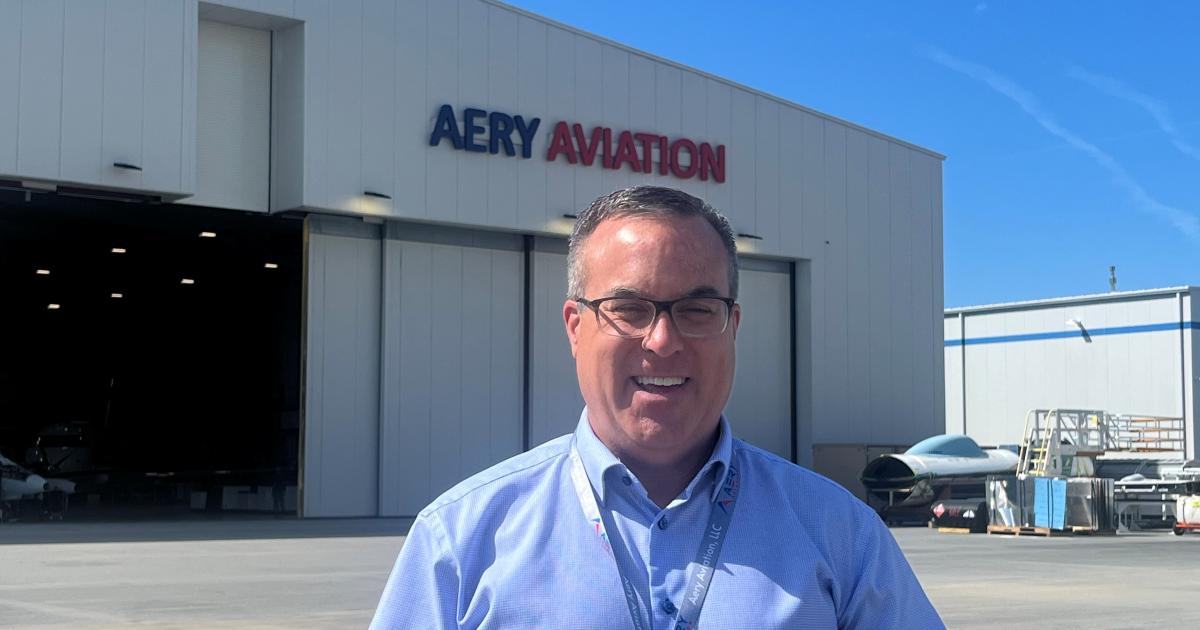
The FAA has withdrawn a civil penalty letter issued to Aery Aviation on Dec. 22, 2025 and will not pursue one of the highest-ever proposed penalties for a non-airline operator: $15,744,352.50 covering 431 flights between July 2021 and April 2022 that the FAA alleged were flown with unairworthy airplanes. “After full consideration of the above-referenced case and the evidence presented, we have determined that it is not in the interest of justice to pursue this matter,” the agency’s College Park, Georgia, Aviation Litigation Division, southern team, wrote to Newport News, Virginia-based Aery Aviation on September 14.
The alleged violations related to Aery Aviation’s work flying banner- and target-towing flights in Bombardier Learjets for the U.S. Navy. Aery Aviation president Scott Beale had already responded to the FAA in 2022 about a possible enforcement action, and the FAA said it didn’t need any more information, so he thought the issue was over.
But then 38 months later, the FAA, without any prior communication, filed the $15.74 million civil penalty. Beale has long maintained that the FAA does not have jurisdiction over public aircraft operation flights for the U.S. Navy and also said the FAA’s charges included significant factual inaccuracies.” The FAA never gave Aery Aviation any opportunity to respond to any concerns before the civil penalty notification, he said.
“It felt like a lifetime,” Beale told AIN, when nothing happened after Aery Aviation met with the FAA in April in a so-called settlement conference. However, Aery had made no effort to negotiate a lower penalty, and Beale believes that this took the FAA by surprise.
After the meeting, Aery tried calling FAA officials, and no one would return his calls. “When they wouldn't return a phone call, we started going to the top and working our way down with [Department of Transportation secretary Sean] Duffy and the [FAA] Administrator and our congressmen, and finally, apparently we reached enough people that they decided to make a decision.”
Aery not only wrote letters and contacted legislators but also dug through thousands of pages of documents in response to Aery’s freedom of information act request. “We did a very deep dive, and we proved [it],” he said. “We stood by our review and provided them all the facts.”
However, this sequence of events cost Aery a significant amount of time and money. “First and foremost, our brand, our reputation, our integrity,” Beale said. Since the FAA publicized the proposed $15.7 million penalty, the story spread that Aery was having safety issues.
“That cost us a lot of time and energy,” he said. “I can’t tell you how many hours of explanation, of emails, of just trying to recover from that headline. It's been very tough. Now, that's just not me. That's the whole company…to every employee who is trying to defend the company that they go to work for every day.” Some potential employees exited the recruitment process because they had heard the news about Aery.
In dollar terms, Beale calculated that the FAA action cost the company more than $500,000 in legal, communication, and other fees. “We took it very seriously, and we knew that this could potentially, if not handled right, have been not just significant, but potentially a company-ending finish. And we’ve had some customers that have turned turned down our services.”
This amounts to further millions of dollars, he said, and none of that is recoverable. The only recourse could be a procedure to expunge Aery’s FAA record through the administrative procedure act. “But there's no damages allowed, so you spend a lot of additional legal money, many tens of thousands of dollars, to process that, and in the end, it gets expunged, but you don't get any of the damages back.” In any case, the news has already spread, “so it’s a fruitless sort of process,” he added.
Not only was the cost to Aery for this FAA action significant, but so too was the amount of taxpayer money spent on a fruitless pursuit over five years. And if Aery was flouting the regulations, Beale asked, “Why did it take roughly 38 months to issue the proposed penalty? Why does the FAA not apologize to Aery (and the industry) for the damage it done to Aery or provide something more than a two-sentence letter after five years of work?
“From the beginning, Aery maintained that it did nothing wrong,” Beale concluded. “We stood behind our people, our operations, and the evidence we presented. We appreciate the FAA’s consideration of the case and evidence, and we respect the agency’s important aviation-safety mission.”