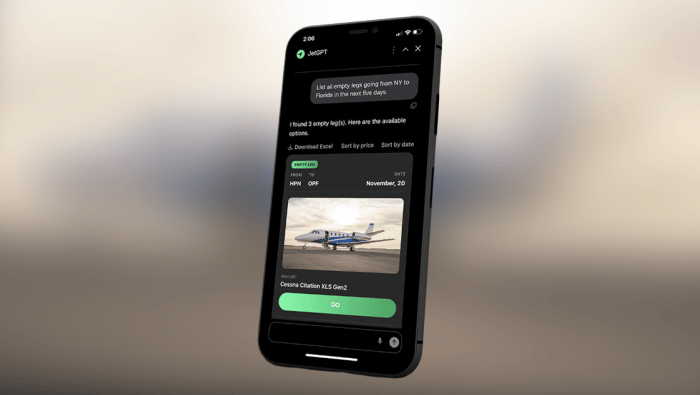
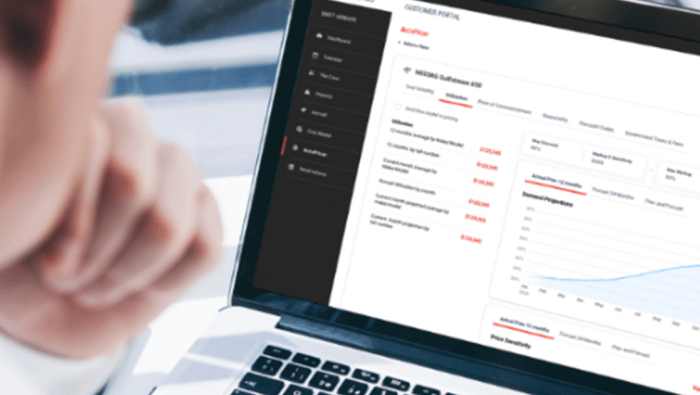
Aircraft scheduling software provider Floating Fleet AI (FFAI) is debuting an agentic scheduling workflow system next week at NBAA-BACE 2026. It claims the workflow helps teams evaluate scheduling options over a chosen planning window, giving them a faster way to balance service, cost, and capacity as air charter demand, operating costs, and schedule disruption put increasing pressure on fleet performance.
The White Plains, New York-based company uses agentic technology—autonomous or semiautonomous artificial intelligence (AI) systems that can plan, reason, decide, and execute multistep workflows to achieve high-level goals with minimal human supervision.
FFAI’s optimization agents generate and compare schedule scenarios and present the trade-offs side by side so schedulers can decide quickly. Unlike general-purpose AI assistants, which can occasionally offer options that break operational rules, FFAI’s optimization agents treat real-world constraints as hard rules, so every scenario presented is valid, and they show why each change is proposed.
Operators can see the schedule across aircraft and crew, understand the rationale and projected impact of proposed changes, and evaluate options with greater transparency.
In a demonstration using a representative dataset of 40 aircraft and 116 trip demands over three days, the company’s highest-performing scenario identified 51 schedule changes and reduced projected operating costs by approximately $86,000, or 5.78%, from about $1.48 million to $1.4 million. The system calculated the schedules in seconds.
According to the company, the product applies equally to home-base and floating-fleet operating models. Available now to FFAI customers, it extends the company’s aircraft scheduling, crew assignment, and crew rostering capabilities with a more adaptive approach to planning.
“Operators are balancing cost, customer commitments, and aircraft availability in an increasingly dynamic environment,” said FFAI founder and CEO Roger Zhan. “Agentic scheduling gives teams the ability to evaluate more possibilities in less time and to see the operational and financial implications of each option. The AI informs the decision; the operator remains in control of what gets approved and implemented.”
FFAI plans to launch additional capabilities, such as continuous reoptimization, early next year.
More In Charter & Fractional