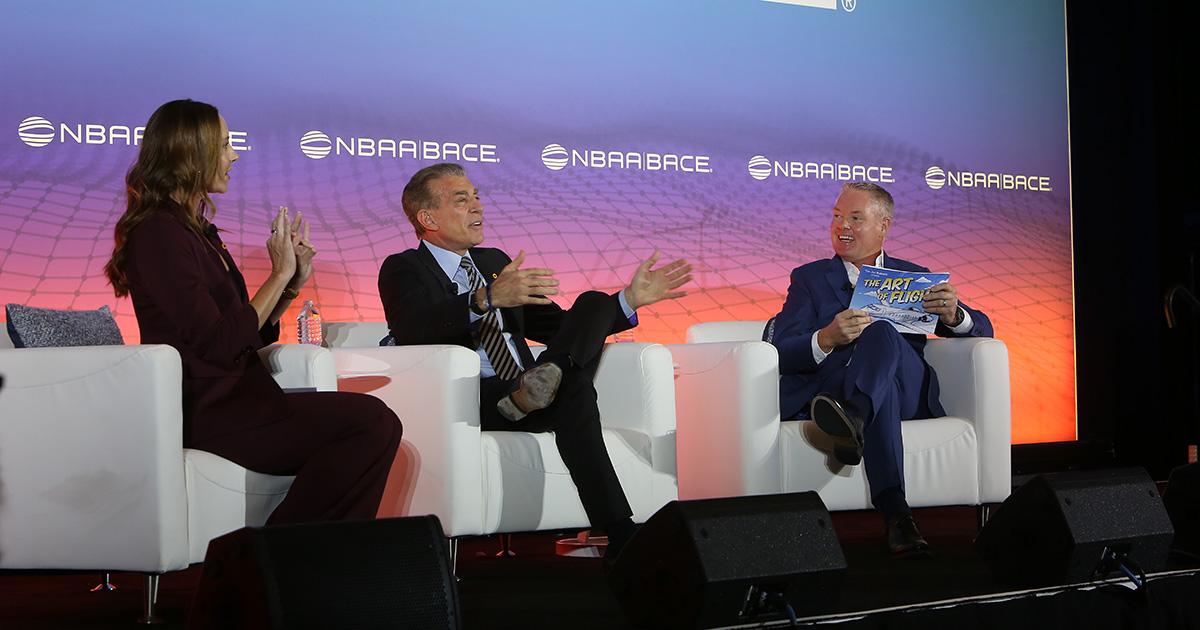
Business aviation’s future depends less on how much its companies grow than on keeping their cultures intact, building a deeper talent pipeline, and telling the industry’s story better, according to the executives behind two of the year’s biggest deals. Solairus Aviation founder and CEO Dan Drohan and Flexjet president Steve Varsano shared that outlook during the newsmakers kickoff lunch at NBAA-BACE on Monday.
Both are integrating recent acquisitions. Solairus, based in Petaluma, California, closed its purchase of Clay Lacy Aviation’s aircraft management and charter business less than three weeks ago, growing its managed fleet from 360 aircraft to 496, Drohan said. In June, Flexjet acquired London-based The Jet Business, which Varsano founded, and named him president.
Solairus has long pitched itself as “big enough to matter but small enough to care,” Drohan said. With the Clay Lacy deal, the challenge is staying small enough to care, he explained. The regulatory side of the integration, such as adding Clay Lacy’s aircraft to Solairus’ charter certificate, is going well, he added.
“When we look back 12 months from now and say, did this work or did it not work? It will not be about whether we moved airplanes to op specs quickly,” he said. “It’s going to be about how our employees feel when they bump into each other at an FBO.”
Varsano said demand for fractional shares at Cleveland-based Flexjet exceeds what manufacturers can deliver, so The Jet Business now finds preowned jets to sell to those customers until their new airplanes arrive. The Jet Business is known for its London showroom, and Varsano said the company plans to open a U.S. location. Asked by an audience member whether that would be in New York City, he replied, “Yes. Stand by.”
He also said the industry has been too timid about promoting itself for fear of criticism over wealthy fliers and emissions. He said his own social media videos aim to educate viewers about business aviation without showing off. They began with a TikTok clip, filmed in his showroom, that drew 30 million views, and they have since drawn nearly 2 billion. Many young viewers have told him the videos led them to attend Embry-Riddle, become charter brokers, or learn to fly.
Drohan said the industry is “hard on young people” and has done a poor job of building pathways for pilots early in their careers and for those leaving the military. Among 16 pilots in a typical military squadron, he said, maybe one knows something about business aviation, while most head to the airlines.
Rising pay has also kept experienced employees in place longer, he added, slowing advancement but leaving more mentors around. Solairus’ Atlas program, now in its second cohort, gives mid-level managers and junior staff up to two years of executive coaching. “I think the next CEO of Solairus works at Solairus today,” Drohan said.
More In Charter & Fractional