Training and Workforce
Aero Detailing Academy Raising Standards on Services
Academy founders look to standardize and increase professionalism of aircraft detailing services
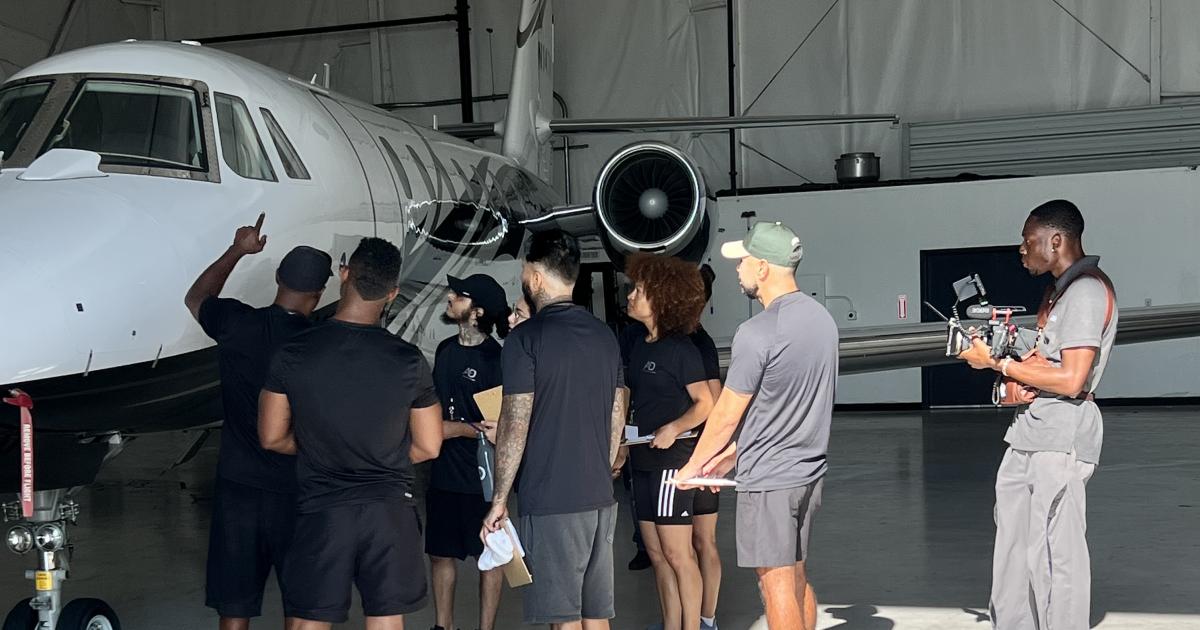
Aero Detailing Academy class
A class of students learns proper approaches to aircraft detailing. © Aero Detailing Academy

Do we need a certificate program for aircraft appearance? At first blush, the answer might seem like mere cosmetics, but considering that a private aircraft is a high-value asset, aircraft detailing could be as important as maintenance in retaining not only its value but also its safe operations. 

That is why founder and CEO Michaela “Miki” Thompson, along with her co-founders John Silver and Steven Chandler, created Aero Detailing Academy to train professional aviation detailers and provide them with an internationally recognized certificate program that protects the business aviation fleet.

“Business aviation has developed world-class standards for nearly every technical discipline, yet aircraft appearance has never been supported by the same level of structured education or professional development, despite the complexity of the specialization,” Thompson told AIN. “We want to eliminate the risk for aircraft owners and operators.”

Historically, aircraft appearance services have been handled by a combination of flight departments, FBOs, independent aircraft appearance specialists, or basic services at MROs or their vendors, according to Thompson. She pointed to the specialized paint systems, acrylic windows, polished aluminum, composite materials, sensitive antennas, pitot tubes, and static ports, in addition to the numerous flight-critical components that require aviation-specific procedures and products. 

Thompson also noted the damage caused by the use of the wrong products or lack of training in working around aircraft. For instance, improper procedures and inappropriate products can lead to damage such as scratching acrylic windows or polished aluminum, staining interior materials, or prematurely wearing protective finishes. The use of caustic products around sensitive aircraft components can create operational concerns. With windows in short supply, this becomes more important.

“Our goal is not to replace those providers,” she said. “It’s to help strengthen the profession by establishing consistent training and standards that benefit everyone involved. The level of training and specialization varies considerably across the industry. Unlike aircraft maintenance, there has never been a universally recognized educational pathway or certification standard specifically focused on aircraft appearance. Our hope is to elevate aircraft appearance into a recognized specialty within private aviation while providing owners, operators, and employers with access to highly trained professionals.”

International Standards

Aviation requires a disciplined understanding of approved products, contamination control, documentation, and adherence to established procedures, Thompson continued. “Aviation moves globally. Owners cross borders and operators work across markets. Aircraft are sold, serviced, detailed, protected, and presented in different cities, countries, climates, and aviation environments. That’s why we need standards,” she said. “Aviation may look different from country to country, but professionalism transfers. Awareness transfers. Integrity transfers. Responsibility transfers. Respect for the aircraft transfers. Safety awareness transfers. Product knowledge transfers. A real standard can travel.” 

Thompson and her partners—founder and director of field operations and industry access John Silver, whose background is serving the elite entertainment industry, and chief training officer and lead instructor Steve Chandler—combine expertise in business development, operations, and aviation experience. In addition, they have partnered with Jetstream Aviation Products to deliver professional products from the beginning. 

They are also working on opening a training center in Ghana, reflecting the demographics of Thompson’s first class of seven in Orlando and 10 in Las Vegas, and her belief that people are looking for practical, professional ways to enter aviation. 

“Our students didn’t come from one city or state or country,” she told AIN of the first cohort. “They came from Canada, Ecuador, Ghana, and across the United States. Students were not just learning how to clean or detail aircraft. They were being introduced to a professional environment. They were learning what it means to move around an aircraft with awareness. They were learning why product choice matters. They were learning why communication matters and why cabin care, exterior presentation, brightwork, and aircraft surfaces require a different level of respect. They were learning that aircraft appearance is not casual work but trust-based work.”

Thompson wants to see standardized education and continuing education opportunities along with stronger employer partnerships and meaningful career pathways for individuals entering the industry. Certification is intended to complement experience, not replace it, she said. The goal is to establish a common professional standard that gives students a strong educational foundation while giving employers greater confidence in the training their teams have received.

“It’s all about protection,” Thompson continued. “If someone wants to operate like a professional, they need to think like one from the very beginning. That means understanding risk, coverage, and why insurance is not just paperwork. Understanding that when you are working around aircraft, high-value assets, operators, owners, and businesses, professionalism must include protection. Working around aircraft means not only how to perform appearance care, but also what should never be touched, how to recognize sensitive systems, and when a task falls outside their scope. Many talented automotive detailers successfully transition into aviation, but they benefit from specialized training that prepares them for the unique materials, environments, and responsibilities associated with aircraft.”

She reported growing interest from aviation organizations recognizing the value of standardized training and workforce development.

“Those conversations reinforce what inspired us to create Aero Detailing Academy in the first place,” Thompson explained. “We know there is a genuine need for structured education and professional standards in this area of business aviation. For us, success is measured not simply by enrollment, but by whether we’re helping build a stronger, more professional workforce that serves the aviation industry for years to come.”