Aviation Performance Solutions (APS), a provider of upset prevention and recovery training (UPRT), has launched a spatial disorientation awareness and training program that combines instructor-led academics, immersive virtual reality, controlled in-aircraft physiological demonstrations, and structured debriefs. The program helps pilots experience selected sensory conflicts, recognize when their perception is unreliable, disregard misleading cues, and rely on dependable flight information.
“Knowing that your senses can mislead you is different from experiencing how convincing that misinformation can be,” said APS chief executive officer Paul “BJ” Ransbury. “The objective is not simply to expose pilots to illusions, but to connect that experience to sound operational decisions: avoiding conditions that invite disorientation, recognizing when perception is unreliable, and maintaining aircraft control using reliable, cross-checked flight information, even when it contradicts what feels right.”
In January, the FAA published Information for Operators (InFO) 26003 recommending spatial disorientation training for Part 91, 91K, and 135 operators. According to this bulletin, “To reduce the possibility of spatial disorientation accidents in the future, the FAA recommends that operators and training providers incorporate spatial disorientation theoretical and practical training into their operations.”
Thus, the architecture of APS’ spatial disorientation program aligns closely with recommendations outlined in InFO 26003 for theoretical, ground-based, scenario-based, maneuver-based, and in-flight spatial disorientation training.
APS plans to add the program to its existing FAA Part 141 certificate as an Appendix K special operations course. The proposed course is being coordinated with the FAA and remains subject to agency review and approval.
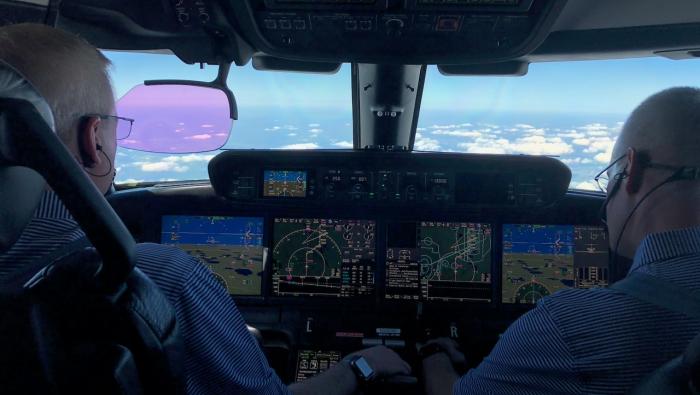
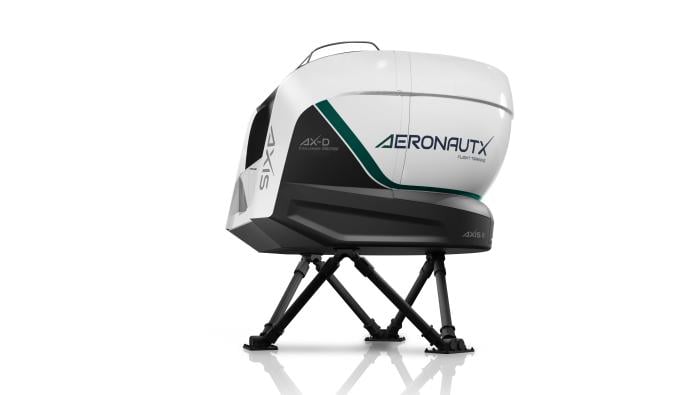
Beyond academic classroom instruction, the APS spatial disorientation program includes immersive virtual reality (VR) simulator visual-illusion scenarios and controlled in-aircraft physiological demonstrations. Current VR experiences include black-hole nighttime approaches, narrow- and wide-runway geometry, and flight in cloud and heavy snow.
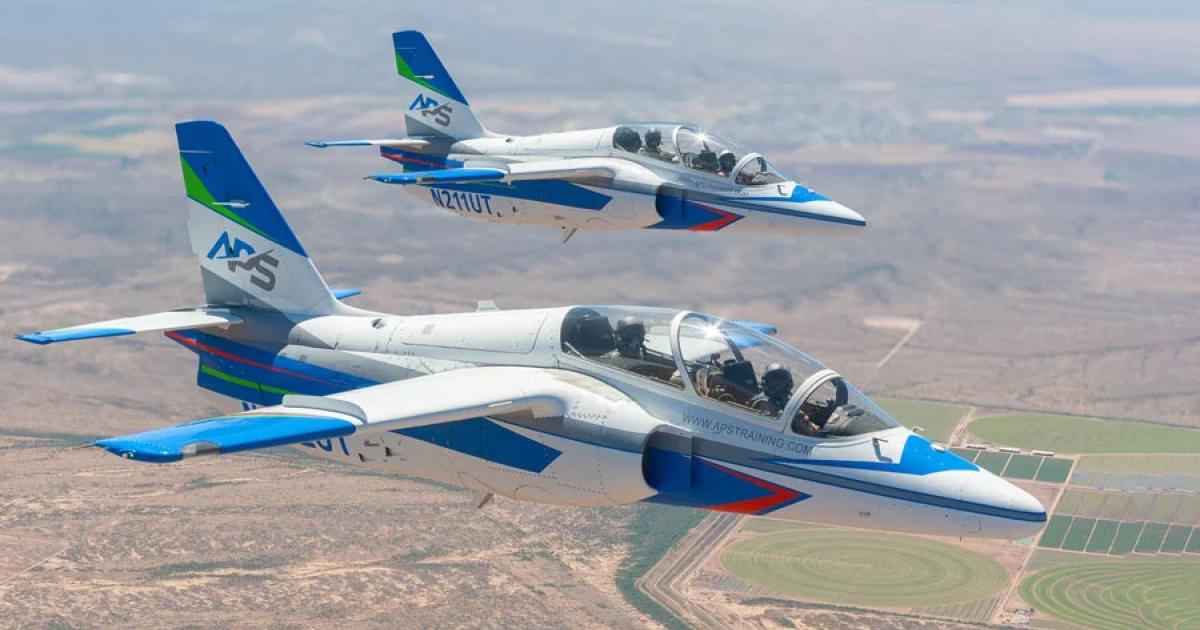
The aircraft training component—either in an Extra 300L or SIAI-Marchetti S.211 jet—includes controlled demonstration of the leans, graveyard spiral/spin, and flicker vertigo. According to APS, each event follows a common disciplined progression: experience, recognize, reject, and recover.
APS’ spatial disorientation training program operationalizes recommendations of the FAA and FAA Air Carrier Training Aviation Rulemaking Committee concerning physiology, threat avoidance, onset recognition, reliance on instruments, mitigation, and recovery. The course builds on and expands spatial disorientation training that is already integrated into APS UPRT courses.
Its spatial disorientation training program is led by APS v-p of flight operations Norm “DQ” Dequier, a former Canadian Snowbirds demonstration team pilot and advanced UPRT instructor. Dequier served three seasons with the Snowbirds and has flown professionally for more than 30 years.
Dequier told AIN, “The VR black-hole approach and runway-size demonstrations have produced particularly strong results where pilots experience how a convincing visual picture can lead them away from the intended flight path.”
He continued, “Aircraft testing in the Extra 300L and S.211 has produced meaningful motion and vestibular experiences, including demonstrations associated with the leans and a graveyard-spiral scenario in the S.211. Together, these complementary environments connect theoretical understanding with practical recognition and response.”
Spatial disorientation has been linked to several fatal accidents, including the 1999 general aviation crash that killed John F. Kennedy Jr., his wife, and his sister-in-law, as well as the 2020 helicopter crash that killed Kobe Bryant, his daughter, six family friends, and the pilot.
It may also have contributed to the Jan. 31, 2025 Learjet 55 air ambulance crash in Philadelphia, which killed all six onboard and two on the ground. The accident occurred at night in IMC with a 400-foot overcast ceiling. (The NTSB published a preliminary report in March 2025 and released investigative documents two months ago, but it has not yet determined a probable cause.)
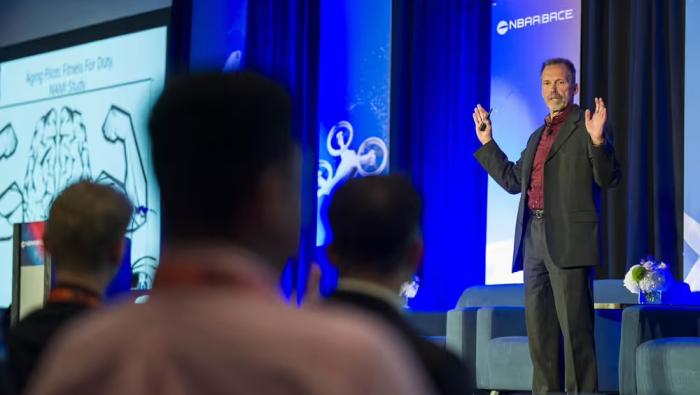
This week at NBAA-BACE, attendees can take a guided “ride-along” in APS’ Learjet VR simulation to experience the visual conditions of a nighttime departure in IMC and discuss spatial disorientation hazards. Dequier is offering demonstrations and discussing the new spatial disorientation program at the company’s booth.
More In Training and Workforce