Since the Colgan Air accident near Buffalo, New York, on Feb. 12, 2009—which had its own part to play in today’s pilot training milieu—the aviation industry has witnessed accident after accident where training, or lack thereof, was a significant factor.
That training works is not in doubt. The rise of sophisticated full-motion flight simulators, spurred by an insurance industry tired of paying out for the many accidents that were occurring, is one piece of incontrovertible data about the benefits of training. Another point on the data spectrum is what happened to members of the Citation Jet Pilots (CJP) Association after it implemented a program to improve training and reduce accidents that were common in the light-jet arena.
At the recent CJP annual event, the association revealed that members who participate in the Gold Standard program of frequent recurrent training and other training events have had zero accidents and incidents in the nine years since the program launched. Members who participate in CJP’s flight operational quality assurance program, in place for five years, have also not had any accidents or incidents. CJP’s Safe to Land initiative contributed to that success and gave pilots a comprehensive set of tools to help prevent runway excursions.
Even with such tools, however, runway excursions seem to be taking place at a significantly high rate recently.
Recent Events
On Sept. 1, 2026, a Cessna 560XL overran 5,960-foot Runway 12 at Porterville Municipal Airport (KPTV) in California. According to the NTSB preliminary report, “On about a 1 nm final approach, the airplane’s altitude was about 1,000 ft msl and the groundspeed was about 245 knots. The last data point, about 1,800 ft from the runway threshold, showed the airplane at about 600 ft msl, with a groundspeed of about 234 knots.”
A typical approach reference speed (Vref) for the 560XL is 100 to 115 knots. “On the visual straight-in approach, the airplane was estimated to cross the runway threshold between 225-250 knots and floated about a third to halfway down the runway,” according to the NTSB. The two pilots and four passengers were not injured in this accident.
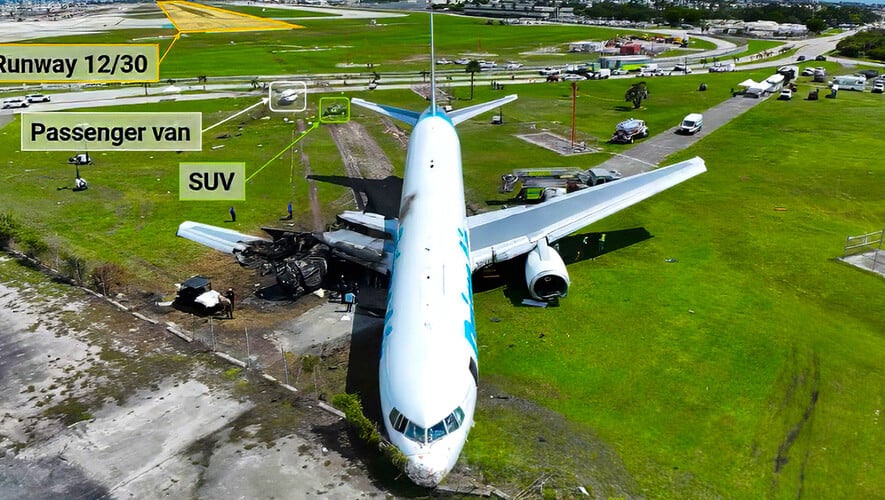
On September 6, a 21 Air Boeing 767 overran Runway 30 at Miami International Airport (KMIA) after arriving over the runway threshold at 200 feet msl, 180 knots, and a descent rate of 1,536 fpm, according to flight tracking data. A typical Vref for this airplane is 130 to 145 knots. Near the end of the runway, at 120 knots and 15 seconds before the cockpit voice recording ended, one crewmember called for a go-around; then the brakes were released, and power was added. They then retarded power and stepped on the brakes again near the end of the runway. Five seconds after the go-around call, the 767 went off the end of the runway, killing five people in a vehicle.
Another business jet runway excursion took place on September 21 in Libya. Three crewmembers survived the accident and resulting fire after the Citation Latitude veered off Misrata International Airport’s Runway 15 around 4,600 feet from the threshold before crossing the runway shoulder and then catching on fire. It is not known how fast the Latitude was flying during the approach and landing because its tracking information is blocked.
While runway excursions comprise a high number of fatalities, according to NTSB data analyzed by upset recovery and prevention training provider Aviation Performance Solutions (APS), loss of control in-flight (LOC-I) remains the leading fatal accident cause in business aviation Part 91 operations. During the study period from 2016 through 2025, there were two LOC-I accidents, one of which was fatal, with six killed.
Runway excursions tallied six accidents, with one fatality in one of the accidents. “Its lower fatality count does not diminish its operational relevance, but it represents a different consequence pattern from loss of control in-flight,” according to APS.
Warnings Ahead of LOC-I
LOC-I certainly has taken its toll on airline and business aviation operations. Harbingers of such events have surfaced during training.
After an Atlas Air 767 crashed out of control near Houston on Feb. 23, 2019, killing both pilots and a third in the jumpseat, the NTSB final report cited as contributing factors deficiencies in the selection of the first officer (FO) and measurement of his performance, “which failed to address the first officer’s aptitude-related deficiencies and maladaptive stress response.”
In the report, the NTSB outlined problems with the FO’s past experience, including checkride failures and the need for remedial training to pass the oral examination for his 767 type rating, as well as remedial fixed-base simulator training before starting full-flight simulator training.
The FO failed his type rating checkride, according to the NTSB, “due to unsatisfactory performance in CRM [crew resource management], threat and error management, non-precision approaches, steep turns, and judgment. During a post-accident interview, the Atlas check airman who was the FO’s examiner said the FO was very nervous, had ‘very low’ situational awareness, overcontrolled the airplane, did not work well with the other pilot, omitted an emergency checklist during an abnormal event, and exceeded a flap speed. The examiner said the FO was not thinking ahead, and, when he realized that he needed to do something, he often did something inappropriate, like push the wrong button. The examiner said the FO’s performance was so poor that he worried that the FO would be unable to ‘mentally recover’ enough to complete the course.”
There was information about the FO’s previous airline jobs, but Atlas never received it, even though those details related to “lack of progress in training,” an incomplete FO training event, failed oral and practical tests during his airline transport pilot (ATP) checkride, an unsatisfactory grade during a line check, and an unsuccessful captain upgrade.
Instructors interviewed by the NTSB reported that “when presented with something unexpected in the simulator, the FO would get extremely flustered and could not respond appropriately to the situation. She [one of the instructors] said that when the FO did not know what to do, he became extremely anxious and would start pushing a lot of buttons without thinking about what he was pushing, just to be doing something. She noted that the FO lacked an understanding of how unsafe his actions were, and he could not see why he should not be upgraded to a captain.”
The Safety Board pointed to similar notes logged by others, including at the FO’s former employers Mesa Airlines and Air Wisconsin Airlines. “Another check airman at Mesa said the FO’s stick and rudder skills were weak, and he also struggled with basic flight management system tasks. This check airman described the FO’s piloting performance as among the worst he had ever seen and noted that the FO tended to have an excuse for each of his poor performances, such as blaming his simulator partner, his instructor, or the hotel.
“A third check airman at Mesa said that the FO had weak situational awareness, did not realize what was going on with the airplane at times, and had difficulty staying ahead of the airplane. She said the FO was completely unaware that he lacked skills, unwilling to accept feedback, and unhappy with her about his failure to upgrade to captain.
“An instructor who taught cockpit procedures on the flight training devices at Air Wisconsin Airlines recalled that during one emergency procedures training scenario, the FO made abrupt control inputs that triggered the stick shaker and overspeed alerts. The instructor said that instead of staying engaged in the scenario and addressing the problem with his training partner, the FO just stopped what he was doing and turned around and looked at the instructor. The instructor found this reaction highly unusual.”
Origins of the 1,500-hour Rule
The NTSB’s Colgan Air accident final report identified significant issues with the training background of the flight’s captain. However, the backlash to that accident had more to do with pilot hours.
The victims’ families promoted a legislative effort that resulted in forcing the FAA to change the minimum flight time requirement for Part 121 airline first officers to 1,500 hours, up from 250 hours, despite the fact that both pilots in that accident had logged more than 1,500 hours. The so-called 1,500-hour rule includes provisions allowing less flight time for college graduates and military pilots. Detractors of the rule say it has created an environment where prospective airline pilots are focused on quantity of hours over quality of training and have pushed for relief for those who receive simulator training. However, that continues to meet stiff opposition on Capitol Hill.
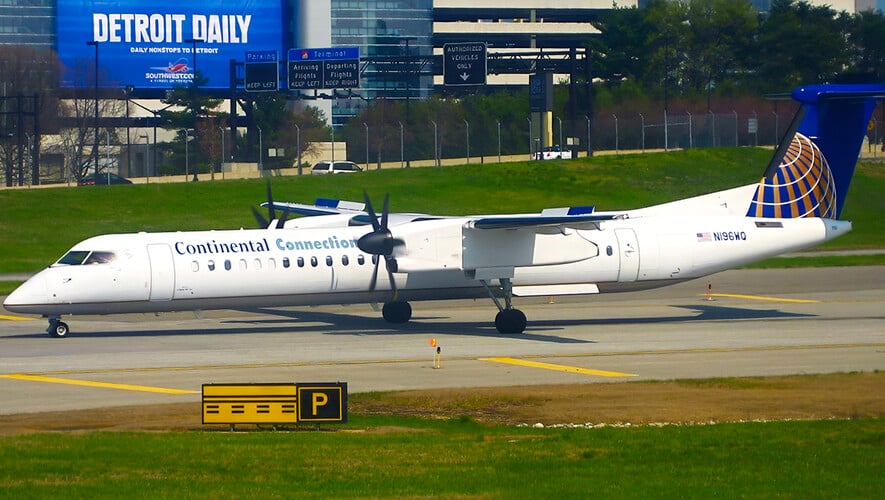
As for the Colgan accident, the NTSB stated, “The probable cause of this accident was the captain’s inappropriate response to the activation of the stick shaker, which led to an aerodynamic stall from which the airplane did not recover.” The NTSB didn’t address training deficiencies specifically as a contributing cause. When the Bombardier Q400’s stick shaker activated after an autopilot level-off with no subsequent addition of power, “the captain’s subsequent control inputs were also not appropriate because he pulled back on the column rather than pushed forward to reduce AOA.”
In the final report, the NTSB identified remedial training and stall training as safety issues. “The NTSB concludes that the captain had not established a good foundation of attitude instrument flying skills early in his career and that his continued weaknesses in basic aircraft control and instrument flying were not identified and adequately addressed.”
This was evident throughout the pilot’s career. He failed his first instrument checkride. He failed his first commercial single-engine land checkride, and he failed his first commercial multi-engine land checkride.
While the FAA, in a response to an NTSB safety recommendation, pointed out “that multiple checkride failures showed no correlation with pilots’ accident and incident records…the captain’s established pattern of first-attempt failures might have indicated that he was slow to absorb information, develop skills, and gain mastery or that the training he received was not adequate.”
In 2004 and 2005, the captain logged second-in-command multi-engine turbine time with Gulfstream Training Academy, which was known for its “pay for right-seat time” program at Gulfstream International Airlines (GIA). During his initial training at GIA, training records “revealed his continuing difficulties with aircraft control. During two simulator periods, he was graded unsatisfactory in ‘approach to stall-landing configuration.’ During a later simulator period, he demonstrated unacceptable altitude and airspeed control. During the final planned simulator session, the instructor noted basic attitude flying problems and repeated deviations.”
The captain attended Gulfstream Training Academy from August 2004 to April 2005 and completed initial training at GIA (which was directly associated with the academy) in December 2004.
When he was hired at Colgan Air, he met the airline’s minimums of 600 hours total time and 100 hours multi-engine time, having logged 290 hours with GIA and a total of 618 hours. (Editor’s note: perhaps this is part of the reason the Colgan families derived the 1,500-hour requirement.) In his application for employment, he was asked whether he had ever failed any proficiency check, FAA checkride, IOE [initial operating experience], or line check. He left out any mention of his multiple failures except for the instrument rating checkride failure.
“At the public hearing for this accident,” according to the NTSB, “the company’s vice president of administration stated that, if the captain’s incomplete answer had previously been known, it would have resulted in his dismissal from the company.”
Although he didn’t fail the initial proficiency check for a first officer position on the airline’s Saab 340, he was required to obtain additional training on normal and abnormal procedures. During his first recurrent proficiency check in the Saab 340, “the captain received an unsatisfactory grade” for rejected takeoffs, general judgment, landings from a circling approach, oral exam, and nonprecision approach. He had to stop the recurrent training and conduct requalification proficiency training. “However,” the NTSB report said, “no evidence showed that Colgan considered the captain’s performance (as a Saab 340 first officer) to be a concern, even with the problems he demonstrated during the initial and recurrent proficiency checks.”
When it came time for upgrade training in the Saab 340, the pilot failed his checkride, which was for the ATP certificate and Saab 340 type rating. The failure was because “the captain’s airspeed was too slow on a second missed approach while attempting to complete a single-engine ILS approach.” He did pass the recheck three days later.
“Even though the captain had demonstrated problems with the three checkrides he had performed, Colgan was not proactively addressing his training and proficiency issues,” the NTSB noted.
Having completed recurrent training and a line check, the captain was approved to upgrade to the Q400 and “satisfactorily completed his line-oriented flight training, IOE, line check, and type rating.” Yet, according to the NTSB, “Interviews with Colgan instructors revealed that, even though the captain had progressed significantly in terms of his confidence, crew management, and execution of procedures, some of his problems with aircraft control remained. For example, the Q400 simulator instructor stated that, during unusual attitude training, the captain was ‘very rough’ on the controls and had somewhat overcontrolled the roll axis.”
When the accident happened, the captain had been flying the Q400 for a bit over two months “and thus was still new to the airplane,” the NTSB report noted.
More recently, another accident occurred when the pilot pulled the yoke full aft, but this time in a Hawker 900XP. On Feb. 7, 2024, the pilots were conducting a post-maintenance stall flight test because of work done on the wings.
Flight data captured by the jet revealed that after the jet stalled, it rolled quickly to the right, and the crew then input full left wing-down aileron, full power, and then pulled the yoke full aft, which was exactly the opposite of the way the elevator control needed to move. The result was an out-of-control spin and impact with the ground.
Training Issues
The above accidents are cited because they all either had training issues documented in accident reports or appear to be related to training. While final reports are not complete on some of these accidents, the fact that some involved hugely excessive speeds on final approach or mistaken fundamental moves—like pulling instead of pushing the elevator controls during a stall—raises questions about not only how individual pilots were trained to fly but also how they were trained to operate as a crew, with proper adherence to standard operating procedures and CRM protocols. Another factor to consider in the high-speed overruns is why these crews did not initiate a go-around from such wildly unstable approaches and whether their training included go-around criteria and practice.
Lack of Experience
The problems that the industry is seeing with poor-quality flying come down to the lack of experience among the flight instructors who are teaching low-time pilots to be instructors, according to Pat Cannon, a longtime designated pilot examiner (DPE) and MU-2 expert. New pilots are transitioning too quickly through the system, he said.
As a DPE, he sees two trends: flight instructor candidates who still don’t know how to use the rudder and poor understanding of short- and soft-field landings.
One multi-engine instructor candidate was clearly struggling to hold rudder pressure during a single-engine ILS approach, although he was able to pass the checkride. Afterward, Cannon asked the candidate why he didn’t use rudder trim, and the response was that his instructor had told him never to use it. “If we don’t learn it, we don’t teach it,” Cannon said.
He is seeing pilots try to gentle the airplane down to the ground for a soft arrival when asked to perform a soft-field landing, but not touch down until halfway down the runway. Or they are zooming up to the aim point close to the ground for a short-field landing, then smashing the landing gear onto the runway.
Although DPEs can’t teach during a checkride, when he sees problems, Cannon offers to go to the flight school and help educate the instructors.
A Decent Wage
Katherine Odland is founder and CEO of Myotis Aviation, a unique flight-training concept that upends the traditional approach, at least on the Part 61 side of the training industry that comprises smaller flight schools as well as independent instructors. Part 141 schools are FAA-approved pilot schools, featuring college and university programs as well as large flight academies and flight schools focused on training career pilots.
Most flight schools charge a significant amount for flight instructor time and give a small fraction of that amount to the instructor. It is well understood that many instructors are teaching in order to log the flight time to reach the magic 1,500-hour level. This way of logging flight time is a result of strong airline hiring, which has encouraged people to pursue piloting careers, and the lack of job opportunities for low-time commercial pilots. There just aren’t that many parachute jumping, banner towing, aerial surveying, cargo carrying, or other non-airline opportunities for low-time pilots. Charter operations do offer some opportunities, but insurance requirements often are far higher than FAA minimums. The result is that many pilots aspiring to business aviation or airline jobs teach to gain hours, and they are willing to do this for very low pay.
Odland doesn’t think this is a good way to develop high-quality, dedicated master instructors, so she has set up Myotis Aviation in a completely different structure. “The values I want are that you’re learning from a master,” she said, “and they love what they do. It’s not a means to an end [type of] job. The CFI job should not be the McDonald’s fast food worker of the aviation industry. We’re also on a mission to make the most hirable pilots anywhere.”
Instead of buying or leasing a fleet of airplanes and hiring instructors on the cheap, she created Myotis as a network of training locations. If Myotis sees demand at an airport somewhere in the U.S., Odland will find an airplane—perhaps leasing it from a local owner—and a qualified CFI, who gets all of the money charged for flight instruction (many are making more than $100,000 a year), and then make training available at that airport. So far, Myotis has airplanes and instructors in 41 states, she said. And because of the simple structure, the local Myotis operation can provide quality training at about one-third to half the cost of competitors while compensating instructors properly. “We’ve removed the lobby overhead,” she said. “We don’t need a lobby; we need somebody who knows what they’re doing.”
Odland is careful not to hire instructors who just want to build flight time, and she is wary of those who come from Part 141 schools.
From banning Myotis airplanes from flying to certain airports that are clogged with large-school students to vetting instructors to find those who truly want to teach, Odland is determined to help people learn to manage risk and not be afraid to fly to a new airport, fly safely when the wind is gusting, log time at night beyond the FAA minimums, and expand their skills by flying in challenging locales such as Denver.
As Odland sees it, not only is Myotis providing high-quality instruction, it is also helping underused airports gain flying activity. “I’m passionate about rebuilding the general aviation community. It’s dying, and we need to save it. I’m helping rebuild that and make it more accessible.”
Shortage of Qualified Pilots
Nick Sanderson is trying to fix the many problems that face aviation, including those surrounding training, and founded Unrestricted Airspace to tackle some of the industry’s biggest issues. These include “the FAA medical certification process and the growing mistrust surrounding deferrals; the 1,500-hour rule and whether it meaningfully improves safety or simply restricts access; insurance requirements quietly shaping hiring decisions and operational limits; the gap between training environments and real-world flying; and the economics of simply trying to operate in today’s system.”
The 1,500-hour rule’s effect has been a renewed focus on teaching to gain flight hours, but this means that future professional pilots are “in a training bubble,” he explained. At these schools, he argued, “there is not a lot of room for them to fly in negligible weather or take risks.” The students and instructors fly to the same specific airports with tightly controlled minimums for weather and crosswinds. “How do you learn to fly in crosswinds if you can’t land in crosswinds?” he asked. “Nobody talks about it, but the first time they see hard IMC [instrument meteorological conditions] is in an airliner.”
From Sanderson’s perspective, “We don’t have a shortage of pilots; we have a shortage of qualified pilots.”
For new pilots to gain the experience they need, Sanderson has pitched the idea of “135 lite.” This would be a simpler way for people to start a small charter operation without the burdensome regulations and FAA approval delays that make the process extremely costly. This concept would put more fresh commercial pilots to work and enable underutilized airplanes and airports to thrive. “This would get general aviation airplanes flying, and people in and out of rural areas,” he said.
Sanderson isn’t arguing for eliminating FAA oversight and regulation, just common-sense rules that would allow any commercial pilot to fly someone somewhere in good weather in a properly maintained airplane. The fact that light aircraft flight-sharing operations in Europe work safely supports the 135 lite concept, he said. “Airplanes [there] aren’t falling out of the sky.”
Such flight experience would do far more to prepare pilots for professional pilot jobs, he explained. Under the current scheme, “They don’t learn go-/no-go decision-making until they get to the airlines. Decisions are always made for them; there are hard limits at the academies, imposed by insurance companies.”
This lack of experience shows in airline new-hire washout rates, where the candidate fails to make it through the training process. “Airline washout rates are through the roof,” he said.

Airline-oriented Safety
ATP Flight School, probably the largest training academy, with 85 locations in the U.S. and 658 aircraft that fly more than 600,000 hours a year, graduates more than 2,000 pilots per year from its professional pilot training program.
The company disagrees with critics who claim that low-experience instructors are just passing on their lack of knowledge to new pilots. In response to questions from AIN, ATP said, “Each ATP instructor must successfully complete an intensive instructor indoc program and evaluation, where they must demonstrate professionalism, proficiency, adherence to standard operating procedures, and uncompromising attention to safety-focused decision-making at all times. ATP graduates more CFIs than any other school in the nation and only hires those who meet the standards required to train the next generation of airline pilots.”
According to ATP, 25% of all regional airline new-hire pilots are ATP graduates. “Further, ATP is the only school with formal agreements in place with all three major airlines—American, Delta, and United—meaning these airlines have independently vetted the quality of ATP’s training and instruction.”
As for the issue of new commercial pilots gaining experience toward the 1,500 hours (or fewer, for a restricted ATP) needed for Part 121 jobs, “ATP partners with corporate and cargo carriers to provide alternate career opportunities and paths to the airlines. For the vast majority of graduates, however, flying as a flight instructor with ATP allows them to retain a high level of proficiency and a strong knowledge base in a structured, airline-oriented environment, while opening opportunities to participate in airline cadet programs.”
The training academy’s flight operations are supported by “an airline-oriented safety management system, real-time ADS-B monitoring, data-driven safety enhancements, and 26 Tech Ops aircraft maintenance bases,” the company said.
Part of the 1,500-hour rule requires that candidates take the ATP certification training program (ATP CTP) before the multi-engine ATP written exam. ATP’s ATP JETS division offers ATP CTP training and recently lowered the price to $2,995. The training must include advanced aerodynamics, meteorology, air carrier operations, and crew resource management, as well as time in a full-flight simulator.
“Beyond the CTP course, ATP works directly with airline partners to develop specialized jet transition training programs,” the company said. “Leveraging the capabilities and full-motion simulators at ATP’s Part 142 airline training center, ATP JETS, these tailored, airline-specific courses transition pilots from general aviation flying to airline operations.
“Further, ATP’s career services team works closely with airline partners to provide a continuous feedback loop with ATP’s flight standards team, incorporating airline feedback and areas of emphasis directly into students’ training.”
Higher Education
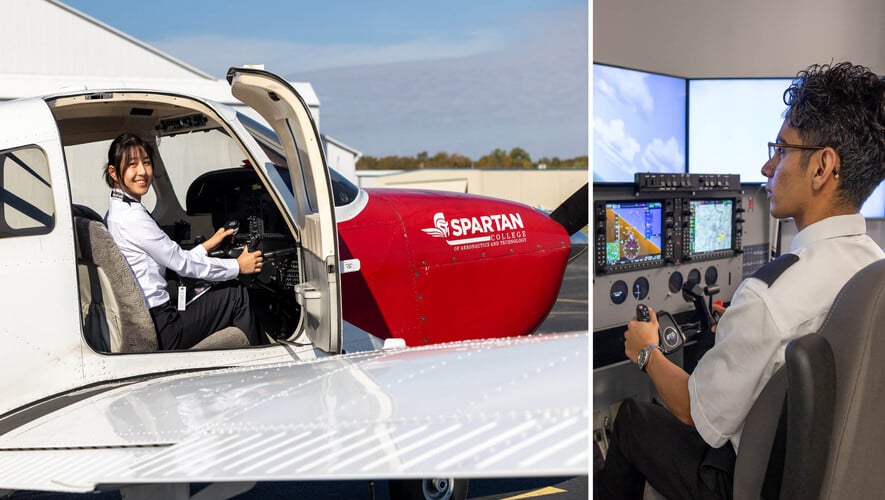
At Spartan College of Aeronautics and Technology, teaching new pilots is not just about stick-and-rudder skills, according to Spartan Education Group CEO Rob Polston, but about preparing them for leadership roles. “We come from higher education,” he said, “and we’re applying those principles to the training of pilots, which nobody else does. We’re training people to be leaders in the cockpit.”
To help prevent washout at the airline training level, Spartan partners with airlines such as Allegiant Air, which helps the school with student assessment, development of personal skills and leadership training, and invites students to interact with the airline’s management and flight operations personnel and spend time in its Airbus A320 simulators. “When you get your first job as a first officer in an A320, you’ll be more acclimated to that environment,” he said.
Recently, Spartan and the airline announced an expansion of that program, the Allegiant Altitude Pilot Pathway, which expands “access to a structured pathway connecting flight training with potential professional pilot opportunities at Allegiant Air.”
Spartan doesn’t have a quality problem with low-experience instructors, according to Polston. “That’s a problem that maybe affects smaller schools,” he said. “We have hundreds of graduates going through the program every year and becoming CFIs. That’s part of the journey: to go on to the airlines. We have the ability to have the best because we’re producing more CFIs than required for our classes.” This allows Spartan to hire instructors who are able to give their students the best training experience that meets Spartan’s standards.
“If they’re not living up to that expectation, they don’t have a job at the school,” he said. “We’re also giving continuous feedback, and we’re watching their performance.”
The Spartan student experience is enhanced with the application of technology, including further integration of Pilotbase’s flight operations and safety software platform. Pilotbase started as Flight Schedule Pro, which acquired LogTen logbook software company Coradine in 2022.
Now Pilotbase helps Spartan students during their entire journey, from student loans to career matching, ensuring accurate flight time logging, and helping with resume preparation and job searching. On the operations side, Pilotbase provides safety features, visibility on aircraft availability, and real-time discrepancy reporting and management, according to Pilotbase CEO Nick Wegner.
“AI has facilitated a lot of this,” he said. “We’ve integrated maintenance software with safety management systems and flight data monitoring. This allows us to create a whole picture from before the flight when the student is checking weather, filling out the flight-risk assessment, checking aircraft statuses, and doing the weight and balance. It’s all integrated into the flight operations system, and they’re getting a complete view of what’s going on from the weather to the mental and personal and aircraft perspective.”
Instructors also get visibility into the student’s decision process and can intervene, if needed. Data recorded during the flight is analyzed in Pilotbase’s postflight debriefing tool, which provides 3D visualizations of maneuvers and shows exceedances of specified criteria—for example, generating an alert if a student lands two-thirds of the way along the runway.
This isn’t meant to be a negative experience, Wegner emphasized, but an opportunity to teach the student how to improve. “It’s a big safety loop that continuously cranks,” he said.
“This is about eliminating the friction of information to make real-time and postflight decisions. This puts together an information picture so we can enhance training.”
Competency-based Training
Training organizations are moving into more modern protocols with the implementation of competency-based training and assessment (CBTA). Boeing has adopted CBTA, and recently the Civil Aviation Authority of Thailand became the first regulator to implement Boeing’s CBTA learning library in its national flight training system. According to Boeing, “CBTA focuses on observable, measurable competencies that reflect real-world performance.” Boeing has implemented CBTA in its initial and recurrent training programs.
California Aeronautical University (CAU) is the first U.S. flight training organization to deploy Boeing’s CBTA learning library. According to CAU, “The Boeing CBTA learning library provides aviation students with access to learning resources designed to strengthen key pilot competencies, including decision-making, communication, leadership and teamwork, situational awareness, workload management, and threat-and-error management.”
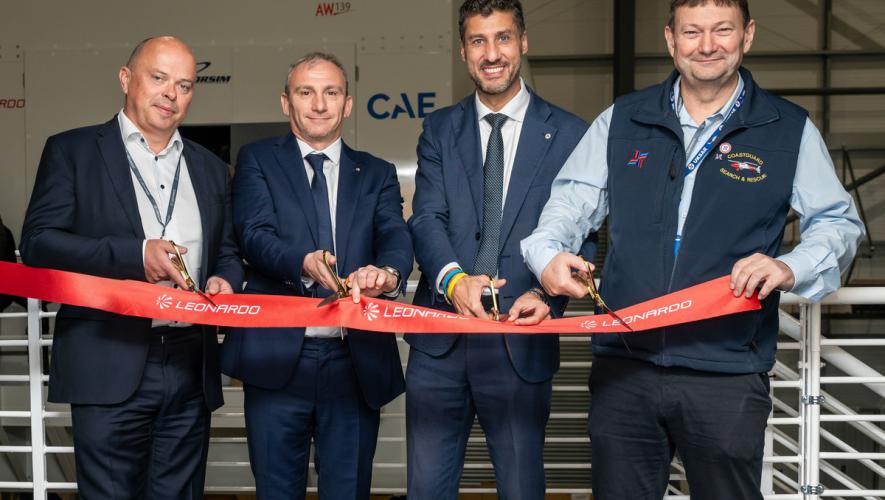
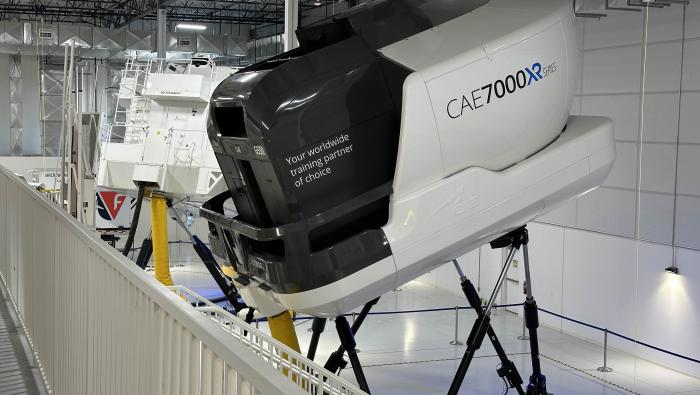
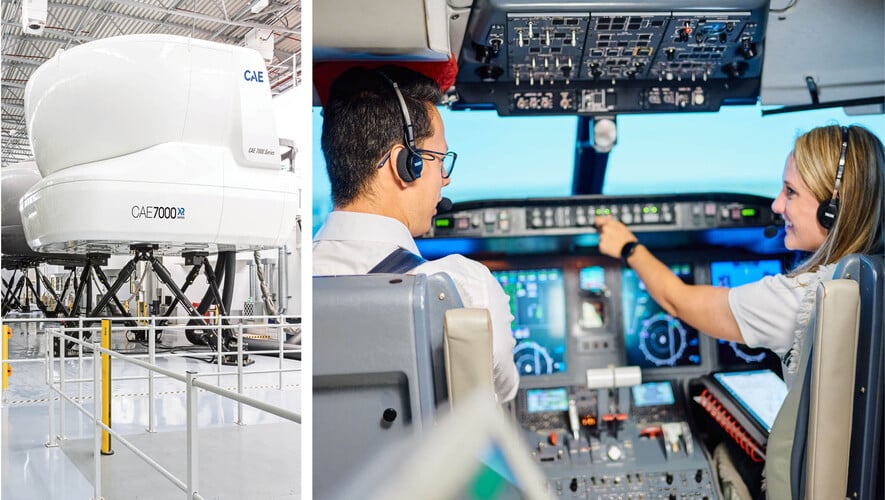
CAE—which operates ab initio flight academies, manufactures flight simulators, and provides simulator training—has also made a large investment in CBTA. The process is integrated into initial pilot training at CAE’s academies and in type rating and recurrent training at CAE simulator centers.
“Today, CBTA is embedded across multiple phases of pilot development, helping ensure training is aligned with operational needs and focused on enhancing aviation safety,” according to the company. “CAE was also the first approved training organization to introduce a fully CBTA-based initial type rating program for the Embraer E2.”
An example of the practical application of CBTA at CAE is its continuously optimized recurrent (CORe) training: “transforming recurrent training from an event-focused exercise into a competency-focused learning experience,” according to CAE. “CORe training goes beyond standard compliance; it identifies real-world risk factors and equips pilots with the skills needed to handle them effectively.” This includes using realistic scenarios to help pilots learn how “to manage a wide range of situations, including problem solving, situational awareness, communication, and workload management. By exposing pilots to relevant and contemporary operational scenarios before simulator training, CORe strengthens the link between classroom learning and operational performance, creating a more engaging and effective training experience that aligns with the principles of CBTA.”
This approach is much different from the traditional focus on task completion, which has long been a complaint of business aviation pilots undergoing recurrent training that is repetitive and merely a “box-checking” exercise. CAE explained, “This gives instructors deeper insight into performance trends and allows training to be tailored to individual needs. The result is a more personalized learning experience that strengthens both technical skills and the non-technical competencies critical to safe and effective flight operations.”
What this means for business aviation clients is “a more meaningful and operational training experience,” CAE said. “When combined with CAE’s CORe methodology and realistic scenario-based training, operators increasingly see recurrent training as an opportunity to strengthen pilot capabilities and enhance safety, rather than simply meet regulatory requirements.”
CAE continues to develop CBTA and CORe. “The next phase of CBTA will focus on improving the consistency and value of competency assessments across training organizations. A key priority is ensuring instructors apply competency standards consistently while exercising appropriate professional judgment. As more competency data becomes available, organizations will be able to use analytics to identify trends, support instructor calibration, and continuously improve training.
“Looking ahead, the combination of competency data, analytics, and emerging technologies will enable more personalized training, advancing CBTA toward a truly data-driven approach to pilot development.”
Is Training Working?
Jessica Webster, a corporate pilot who flies the latest fly-by-wire Gulfstreams, is a behavioral scientist and founder of Hera Aviation Group, which helps women and primary caregivers with job retention issues in business aviation. Much of Hera’s work involves helping companies retain valuable personnel by helping them manage employees’ family and life issues that frequently lead to people leaving jobs. The same problems affect student pilots, and she worries that the industry is losing excellent candidates because no one is helping them.
“I think what’s wrong with flight training is that we often put all our attention on whether the student meets the standard and too little on whether the training system is working,” she said. “The standard must remain high. But we should measure where students stall or leave, develop instructors as teachers, make feedback and evaluation consistent, and intervene before a student disappears from the pipeline.
“Women are an important test of that system,” she added. “In the FAA’s 2025 snapshot, women were nearly 16% of student pilots but only about 9% of private pilots and 5.5% of ATPs. Those figures are not a graduation-rate calculation, but they should make us ask better questions. Hera’s own research found that barriers accumulate from initial training through the workplace. If we improve the experience and progression of people who face those barriers, we will build a stronger training system for everyone.”
Managing Energy
The topic of energy management was a key part of the Sept. 22, 2026 Sporty’s Pilot’s Discretion podcast featuring aerobatic champion and airshow pilot Mike Goulian. What he discussed with podcast host John Zimmerman seemed to close the loop on the aforementioned accidents, especially those involving excessively high speed on final approach.
“I feel like we have lost the understanding of pitch, power, and performance,” Goulian said. “What we do see in all facets of general aviation is this energy management problem…it’s when all of the electronic protection is gone near the runway: takeoffs, landings, go-arounds.
“For me, that all goes back to an understanding of pitch, power, and performance. So, where is my nose? What is my power setting? What is the desired result? How do I get there? And an understanding of all of those things. I think we just have lost that relationship.
“We see airplanes running off the sides of runways, and overruns. I fly with a lot of people [who think] that if a little speed on final is good, more speed is better. Like, no, it’s not.”
Goulian believes that training must start with the basics, especially understanding stalls, or as he puts it, “How much energy is left in the wing? And understanding the pitch of the airplane, the power that’s applied, the attitude that the airplane has, the position of the stick. How close am I to a stall? How much can I ask of this airplane in a turn, in a stall, in some bad weather, in anything that we might have? We’ve lost that.”
Mike Goulian Aviation teaches aerobatics and tailwheel flying in Aviat Husky two-seat utility airplanes, showing pilots who have learned in modern, technologically advanced airplanes that they can fly with the airspeed indicator covered and with the stall horn blaring all the way to touchdown.
“[We’re going to] try to land this airplane in 400 feet and understand how does my sink rate work. What is my pitch attitude? What does the backside of the power curve look like, and how do we control that? All of these little things that I think we have just forgotten. Today we’re probably a generation or two into people who never learned it properly in the first place.
“It’s a great reminder that what gets passed down today becomes the flight instructors two years down the road, and before long, it’s easy for new habits and norms to get established, and you don’t realize it’s happened until it’s too late.
“We’ve created a couple of generations of pilots that stare inside the airplane all the time, and I get it. But when we really need our skills, they’re not there.”
At the same time, Goulian recognizes that people want to use their high-performance airplanes to travel, and the company also teaches in Cirrus airplanes, incorporating longer trips and the necessary risk management.
“Traditional flight training, it’s about the ACS [airman certification standards], it’s about the checkride, it’s about maneuvers and stalls and steep turns and landings,” he said. “But once you get past that, you actually have to go out and use an airplane to go somewhere.
“This is scenario-based training done in a real-world environment. The biggest difference for us is we try to implement decision-making skills from the very beginning, because they are going to go fly through a weather system if they’re gonna go 500 miles to the west or up north…we’re trying to give them the tools to make the right decision when they don’t have an instructor sitting next to them.”
More In Training and Workforce