Cessna Citation 550, Fort Yukon, Alaska, Sept. 30, 2005–The NTSB has concluded that the University of North Dakota icing research jet accident was caused by the pilot’s improper use of anti-icing equipment during cruise, which resulted in ice ingestion into both engines and the complete loss of power. Factors were the icing conditions, inadequate crew resource management and failure to use a checklist.
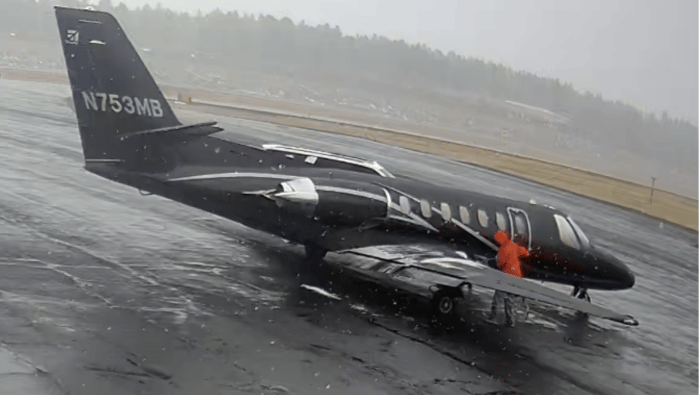
The UND Citation was locating icing conditions in Alaska for in-flight icing tests for a prototype helicopter. The Citation accumulated about an inch of ice on the leading edges of the wings and the captain said he activated the wing de-icing pneumatic boots, shedding the ice. About four minutes later, after he heard a loud “bang” at the rear of the airplane, both engines quit. A researcher on board took photographs that showed the ice was removed from the booted portion of the wing but it remained on the inboard, anti-ice part. Attempts to restart the engines were unsuccessful and the airplane made a forced landing in the snow-covered terrain, striking several small, burned trees. The Citation was substantially damaged, but the four people aboard sustained only minor injuries.
More In Accidents