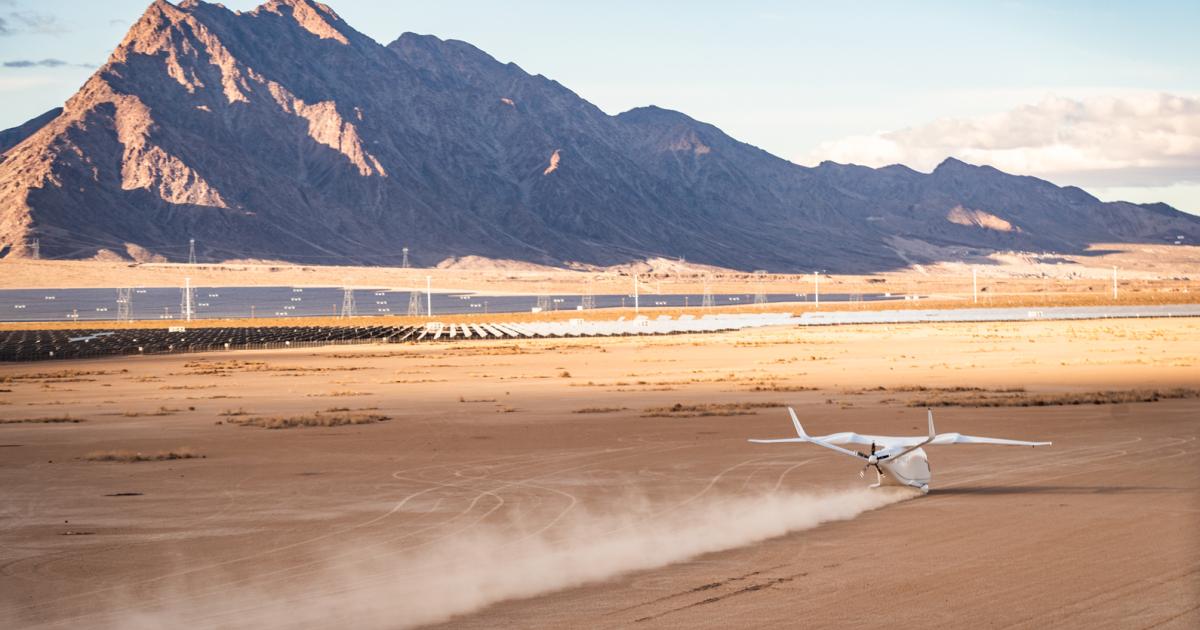
Beta Technologies wrapped up a five-day flight demonstration campaign in Utah on October 7, using its Alia CX300 electric airplane to show how electric aircraft could deliver radiopharmaceuticals and other time-sensitive medical cargo across the state. The Vermont-based aircraft manufacturer conducted the flights with cargo airline Alpine Air Express of Provo, Utah, as part of the uFLY project under the FAA’s eVTOL Integration Pilot Program (eIPP).
Many radiopharmaceuticals contain radioactive isotopes that decay within hours, which limits how far they can travel from where they are produced. As an example, Beta pointed to fluorodeoxyglucose, a tracer substance widely used in cancer imaging, which loses half its radioactivity in about 110 minutes. Alpine Air currently carries such shipments over longer distances in conventional aircraft, and the two companies are evaluating whether electric airplanes could supplement those operations and reach additional communities.
“When you are dealing with radiopharmaceuticals, you are on the clock the second they are produced,” said Alpine Air CEO Michael Dancy. “This limits how many patients you can treat and how far away from the production location you can go.”
FAA Administrator Bryan Bedford said the demonstration “provides data to help turn these concepts from trial to deployment.” According to Beta, the operations will generate data on flight times, dispatch reliability, turnaround and charging times, weather, aircraft performance, and cost to help identify routes where electric aircraft can deliver operational and economic value.
Beta flew routes linking Salt Lake City International Airport (KSLC) with Provo Airport (KPVU) and Logan-Cache Airport (KLGU), according to the company. Publicly available flight-tracking data shows the CX300, registered N401NZ, making daily round trips from KSLC in early October. Legs between KSLC and KLGU took 32 to 42 minutes, while hops between KSLC and KPVU lasted 20 to 26 minutes.
“Radiopharmaceuticals are a powerful example of what electric aviation could mean for patients,” said Beta founder and CEO Kyle Clark. “Many decay within hours, so they need fast, reliable transport, and Utah’s regional routes are well suited to electric aircraft.”
Utah is Beta’s latest eIPP deployment; the company is participating in seven of the program’s eight projects and has also flown missions in Virginia, Maryland, Louisiana, Texas, and North Carolina. In July, Beta flew the program’s first operational missions, carrying manufactured organ products in development by United Therapeutics across four airports in Virginia and Maryland.
Helping Remote Communities
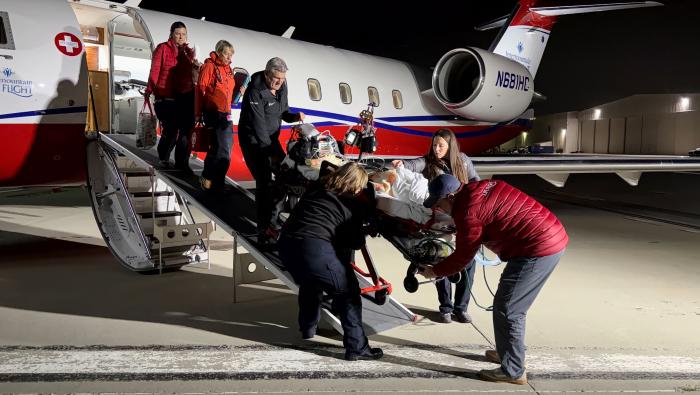
Last month, Louisiana-based air medical operator Metro Aviation flew the Alia CX300 on at least 16 medical and disaster-response missions under North Carolina’s eLIFT-NC project, connecting Raleigh-area hospitals with rural and coastal communities. Before heading to Utah, N401NZ flew Beta’s Texas eIPP missions with Metro and Washington County Emergency Medical Services.
Beta’s work in Utah dates to January 2025, when the company signed a memorandum of understanding with Utah and 47G, the state’s aerospace and defense association, to install electric aircraft chargers at airports statewide in preparation for the 2034 Winter Olympic Games. Weeks later, a CX300 stopped in Utah during a cross-country tour, flying more than 350 miles among six airports. Beta said future uFLY flights will expand to other parts of Utah to explore how advanced air mobility can better connect rural communities.
Other uFLY participants have also started flying. In August, Long Beach, California-based hybrid-electric propulsion developer Ampaire began eIPP demonstration flights in Utah with its EEL technology demonstrator, a modified Cessna 337 Skymaster.
Alpine Air’s interest in electrified aircraft predates the eIPP. In 2024, the Part 135 cargo operator, which then flew mostly Beechcraft 1900 turboprops for customers such as UPS and the U.S. Postal Service, signed a letter of intent to buy up to 75 of Aura Aero’s hybrid-electric ERA airplanes. That made Alpine Air the first customer for a freighter version of the 19-seat ERA. Neither company has publicly announced a firm order since.
In this article
More In Operations