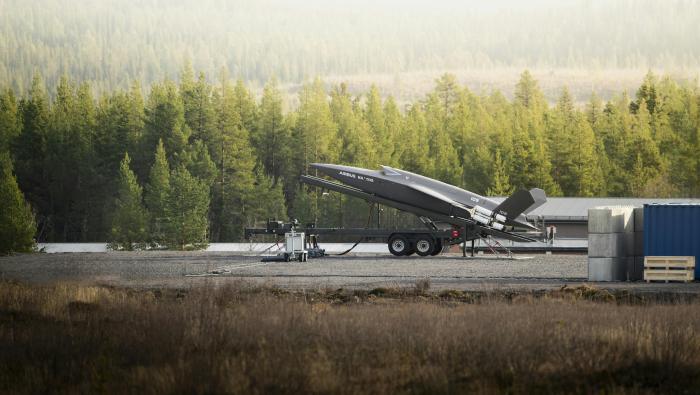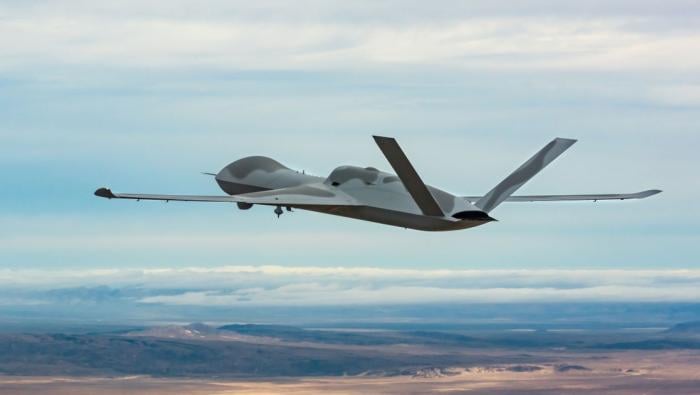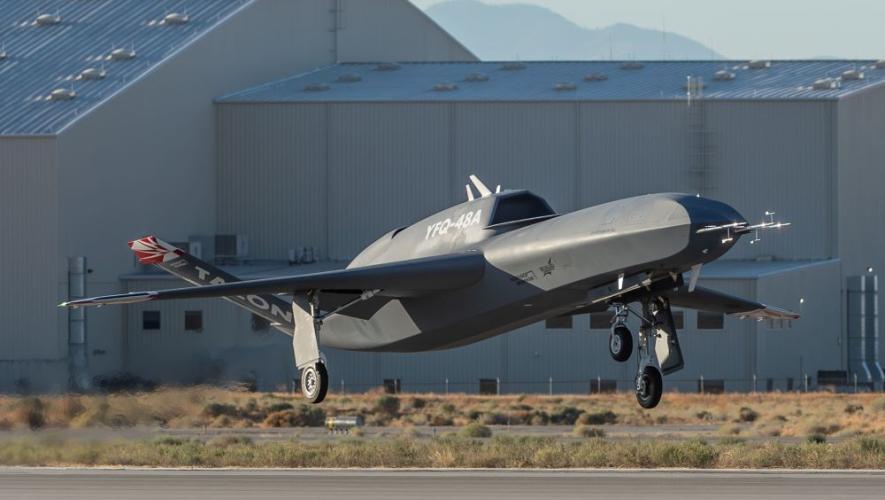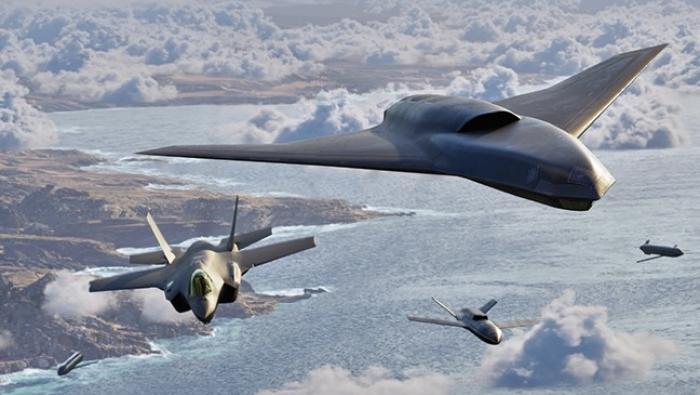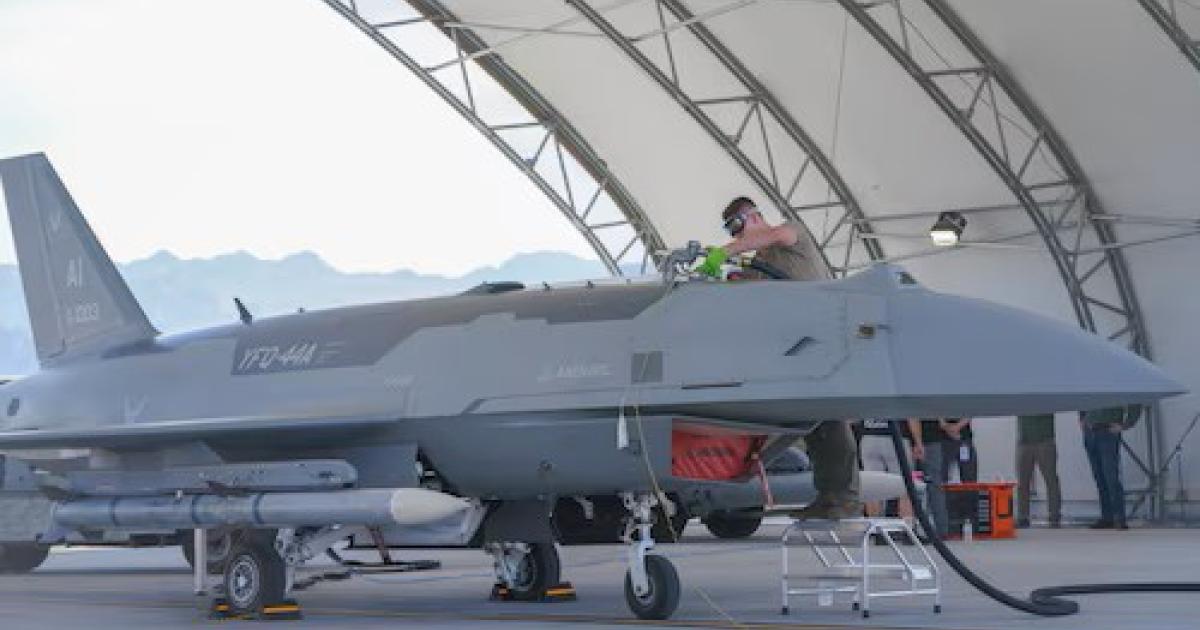
The U.S. Air Force (USAF) has conducted work to control an airborne Anduril Industries YFQ-44A Fury collaborative combat aircraft (CCA) in flight. The trial took place earlier this month and involved a Lockheed Martin F-22 Raptor.
In a statement issued on October 16, the USAF announced the fighter jet had “executed airborne tactical command and in-flight control” of the uncrewed aircraft. It explained that the YFQ-44A’s onboard autonomy system was able to interpret and execute directives from the F-22 in real time, “conducting dynamic flight manoeuvres and simulated combat tasks.”
The exercise builds on ongoing efforts to develop and demonstrate mission teaming capabilities for CCAs. The USAF said it intends to procure over 150 combat capable autonomous systems operational by the end of the decade.
Commenting on the most recent exercise, air force secretary Troy Meink stated that the U.S. is “driving urgency into every part of acquisition from rapid integration and flight learning to disciplined assessment.”
The U.S. defense department added that it will use data from this test milestone to inform continued software integration, developmental testing and the air force’s future CCA concepts.
In June, Anduril and General Atomics Aeronautical Systems were both awarded engineering, manufacturing development, and production contracts from the USAF to build an unspecified number of their respective FQ-44 and FQ-42 CCAs. These were awarded as part of the ongoing Pentagon program’s ‘Increment 1’ round, four months ahead of schedule. Six OEM’s designs are expected to be selected as part of the upcoming Increment 2 phase.
The following month, the USAF also flew the YFQ-44A alongside unspecific uncrewed fighters in what it termed “a realistic operational environment.” At the time, the air force explained that the multi-day exercise was devised with “the primary goal of building the foundational tactics, techniques and procedures that will define how CCAs are integrated into the force.”
More In Unmanned Aerial Vehicles