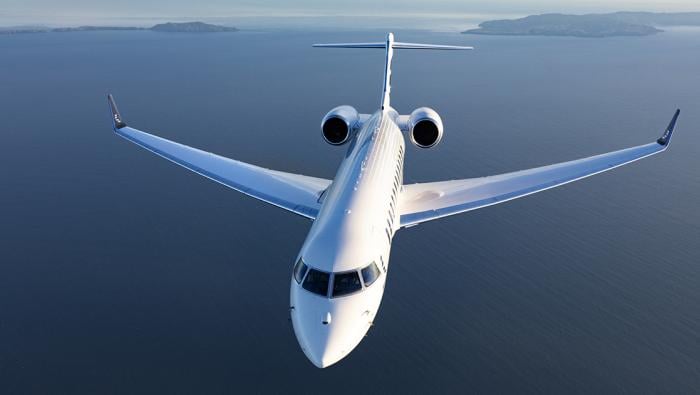
Amid growing global demand for Saab’s GlobalEye Airborne Early Warning and Control (AEW&C) aircraft—a missionized Bombardier Global 6500—the Swedish OEM is seeking ways to boost deliveries. While Saab maintains it is committed to delivering four GlobalEyes a year starting in 2030, it stressed that “production is not fixed,” with a likely Canadian production facility established to augment output.
In August, Saab CEO Micael Johansson said the company was already investing to increase GlobalEye production capacity. However, the “industry setup to create scale in Europe is maybe the most challenging thing we have now,” he suggested.
David Moden, senior sales director for GlobalEye, confirmed that—subject to a firm Canadian contract—Saab is “committed to build GlobalEye in Canada.” This, he affirmed, “would allow the production of up to a third of the global demand for GlobalEye [aircraft] over the next 15 years.”
Although no timeline has been suggested for the potential Canadian GlobalEye facility, “Those discussions are ongoing now, and once the contract is signed, there would be a discussion on how quickly we would be able to establish that production line,” Moden continued. Conversion of Bombardier-supplied aircraft takes place at Saab’s Linköping, Sweden headquarters.
Moden suggested that Saab’s production approach is “based upon a scalable industry and a flexible architecture, which allows [it] to meet future market demand.” Although customers can opt for a tailored setup, a standard baseline configuration takes around 48 months from order placement to delivery. Despite the recent market entry of the larger Global 8000, Moden maintained that Saab remains committed to the Global 6500 platform “for the foreseeable future.”
Against a backdrop of escalating global tension, GlobalEye has seen notable successes this year. In May, Canada selected Saab as the preferred supplier for its upcoming AEW&C fleet, while NATO in July named GlobalEye as the intended successor to its aging Boeing E-3A Sentry. Also in July, an undisclosed Middle Eastern customer placed a firm order for two, followed by the Netherlands’ letter of intent to acquire one. These join an existing order backlog for GlobalEyes from Sweden and France.
Bombardier is also searching for a Canadian location to perform various modifications to its portfolio of special-mission Global 6500s. During a second-quarter earnings call, CEO Éric Martel confirmed that Bombardier has a “strong desire” to replicate defense-specific conversion work currently undertaken at its Wichita facility.
Martel added Bombardier is also in “very active” discussions with Saab, explaining, “It makes a lot of sense…we know the plane more than anyone else to make structural modifications, provision, and potentially even installation of some of that equipment.”
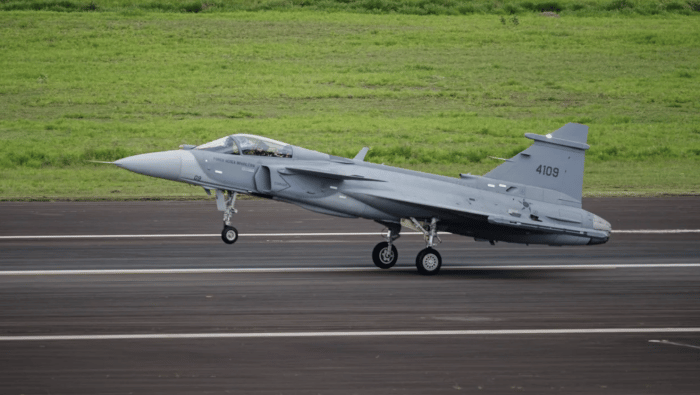
Saab declined to confirm whether a sovereign Canadian GlobalEye line depends on a Canadian purchase of Gripen E fighters—which would see the nation review its acquisition of up to 72 Lockheed Martin F-35 Joint Strike Fighters in favor of a Swedish solution. Johansson said a “fully-fledged [GlobalEye production] hub in Canada” could be up and running within five years.
In this article
More In Aircraft