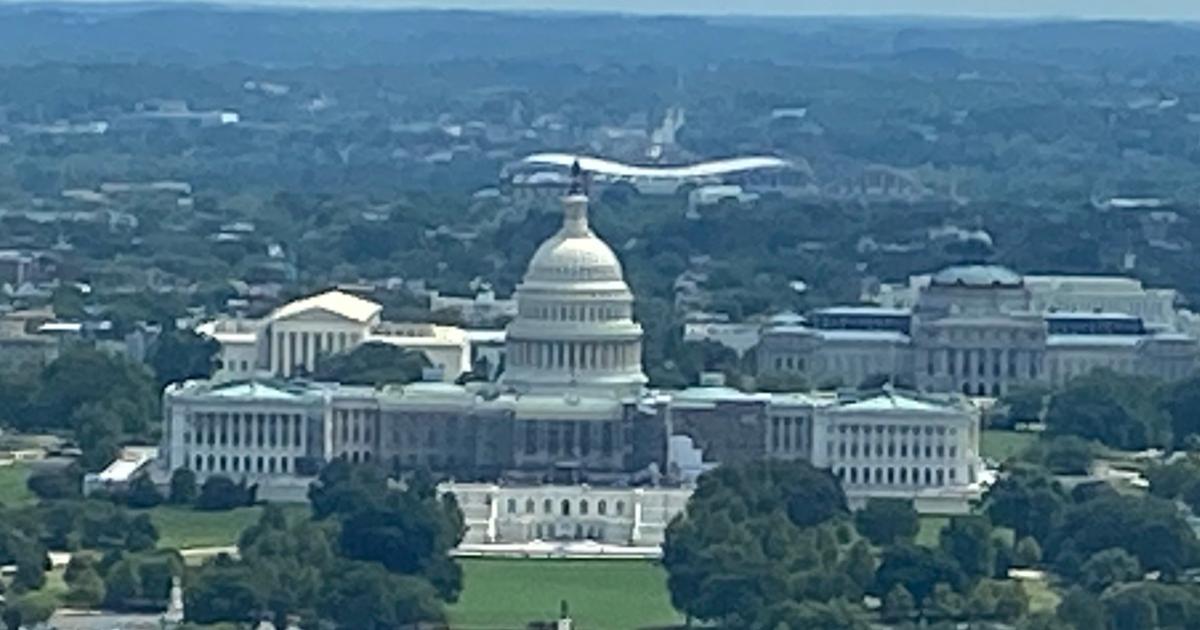
The U.S. elections this week are bringing a major change to Capitol Hill. Not only did both chambers flip, but they did so in an emphatic way. But what does it mean for aviation? And specifically for business aviation? A lot and a little all, at the same time.
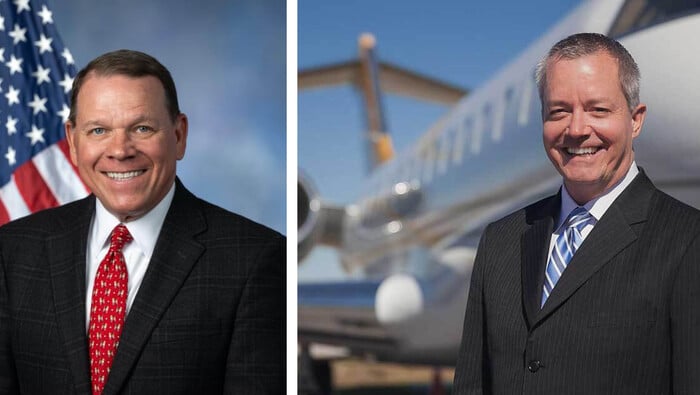
On the “a lot” front, these changes began long before November 3—notably, with the announcement in March that House Transportation and Infrastructure Committee Chairman Sam Graves (R-Missouri) had decided to retire after serving in Congress for 26 years. Graves has been a staunch advocate for general aviation issues in the House, creating and chairing the House General Aviation Caucus because he believed there was a lack of fundamental understanding about the industry.
He also was the architect of the first-ever title dedicated to general aviation in a reauthorization bill (FAA Reauthorization Act of 2024). One lobbyist called this departure a “sea change” on Capitol Hill because of the loss of that advocacy.
But he is not alone. Other retirements include House aviation subcommittee chairman Troy Nehls (R-Texas), who has authored bills and backed efforts supporting supersonic operations over land, transparency in the certification process, and updating the FAA’s maintenance documentation. Another key retirement on the subcommittee is Eleanor Holmes Norton (D-Washington, D.C.), who for years has watched over aviation safety and access issues in the capital region.
In the Senate, Appropriations Committee Chair Susan Collins (R-Maine) lost her bid for reelection. Collins is another with significant aviation industry knowledge, a member of the general aviation caucus who led the transportation appropriations subcommittee at one point. Further, Sen. Jon Husted (R-Ohio), who advocated for Burke Lakefront Airport and has collaborated with groups including NBAA, and Sen. Roger Marshall (R-Kansas), who intervened to defend Bombardier against a White House effort to curb the OEM’s sales, lost their elections.
These are just a few of scores of members departing this year. While the final numbers are not in, Capitol Hill may see its largest freshman class in decades, with the still-incomplete count upwards of 130 in the House and Senate combined. For business aviation, the loss of institutional knowledge coupled with a massive influx of new members means 2027 will be a critical year on the educational front. The sector for years has fought to increase understanding of what it is and how it impacts the economy and the greater good. Huge turnover translates into a huge effort on the advocacy front ahead.
This is especially important because Capitol Hill is entering another FAA reauthorization cycle beginning with the 120th Congress. The FAA Reauthorization Act of 2024 runs through fiscal year 2028, or Sept. 30, 2028. The year prior to such a lapse is typically a fact-gathering year; it is a year of hearings, meetings, and gatherings to understand what critical issues need to be addressed in the next reauthorization bill. The year of the lapse is often when the legislation surfaces and captures many of the issues that have been bandied about up to that point.
That doesn’t mean Congress will hold off on any aviation legislation in 2027, pending such a bill. Congress has a lot of lingering issues that it has not yet tied up this year, and some of those may be pushed off to the new Congress.
Along with the new faces is a shift in power, with Democrats firmly taking control of the House and Senate. Ironically, this is where the “a little” part of the changes comes in. As much as there was a knowledge bleed from the elections and retirements, the Democratic leadership brings long-established, well-known members to the chairmanships.
In the House, Rep. Rick Larsen (D-Washington) has sat next to Graves at the helm of T&I and worked collaboratively with him on an array of issues. The same lobbyist who mentioned the sea change also mentioned that “we’re lucky to have Larsen.” He has served on the committee for 25 years and either chaired or was the top Democrat on the aviation subcommittee for a decade. He is known for a thoughtful approach to legislating and, importantly to business aviation, he has opposed air traffic control privatization, as well as aviation user fees.
In the Senate, Maria Cantwell (D-Washington)—another lawmaker from the state of Washington—would be in line for the chair’s position on the Commerce Committee. She has served on that committee for 25 years and has led it either as chair or ranking member since 2019.
While the partisanship has surfaced more on the Senate side than in the House on issues such as nominations and airline pilot qualifications, by and large both chambers have worked together collaboratively on most issues. Again, this is another area where “a little” comes in as far as the changes ahead.
What this may mean is increased scrutiny on FAA and Department of Transportation moves, including efforts to move forward on air traffic control modernization. Key Democrats are already holding agency officials’ feet to the fire for not involving air traffic controllers enough on certain key changes and for how the FAA is awarding contracts. The administration is seeking $30 billion to keep up with its rapid ATC overhaul, but it may be a much harder climb to get additional funding on that front if it doesn’t happen before the end of the year and Democrats remain skeptical about stewardship.
The FAA’s safety oversight is another area Congress will continue to scrutinize. Certain efforts, such as changing the 1,500-hour rule for Part 121 copilots, will have little momentum. Yet other areas, such as improving mental health support, likely would have strong momentum. In addition, Cantwell has long made aviation safety a priority as more pieces of the spectrum are auctioned off and likely will keep a watchful eye as that becomes more prevalent in the coming years.
Meanwhile, the current Congress still has lots to do. The House and Senate are anticipated to introduce a compromise bill shortly that would address recommendations from the NTSB surrounding the Jan. 29, 2025 midair collision near Ronald Reagan Washington National Airport. There will be a push to get it wrapped up before year-end.
As for funding, the FAA is urging Congress to furnish the additional ATC funds sooner rather than later. Possible vehicles could be the National Defense Authorization Act or a budget reconciliation bill.
Also, Congress is facing another funding showdown, since it passed a stopgap measure funding the federal government through December 11. This includes FAA funding. Whether lawmakers can get a full-year appropriation bill through or will be forced to approve another temporary extension is still unknown. While there is little appetite for it, a partial shutdown could also be a concern.
But in all, there is a lot for this Congress to wrap up in just a few weeks that will be interrupted by holidays. That brings us back to the “a lot” front.
More In Regulations and Government