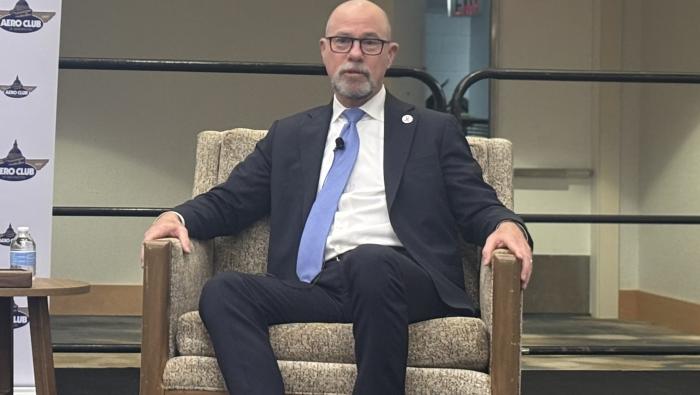
Even as U.S. and European regulators continue to warn operators about conflict risks in Middle East airspace, the head of MEBAA told NBAA-BACE attendees that the region is open for business and that his group’s December show in Dubai will be its biggest yet.
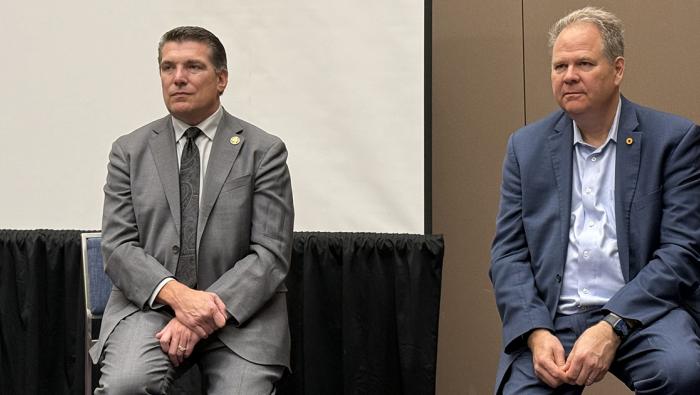
Ali Ahmed Alnaqbi, chairman of the Middle East and North Africa Business Aviation Association (MEBAA), acknowledged during Wednesday’s “Ask the International Experts” session that regional events affect business aviation, though he argued that media coverage has overstated the danger. He urged operators to contact MEBAA directly for information about conditions on the ground.
The war that began with U.S. and Israeli strikes on Iran in February has reshaped flying in the Gulf. EASA still advises operators to avoid Iranian and Iraqi airspace, as well as the airspace over Persian Gulf waters off Bahrain, Kuwait, Qatar, and the UAE. The agency narrowed that advice in August from those countries’ entire airspace to the Gulf waters, and it allows flights arriving at or departing from airports there, including Dubai’s, if operators keep their risk assessments up to date.
For U.S. operators, the FAA prohibits flights in Iranian airspace. On October 11, a day after a strike claimed by Yemen’s Houthis killed 13 people at Riyadh King Khalid International Airport (OERK), the agency told operators to use caution when flying to or over Saudi Arabia through December 10. In September, London-based consultancy IBA reported that Gulf traffic volumes remained suppressed by at least 3.5%.
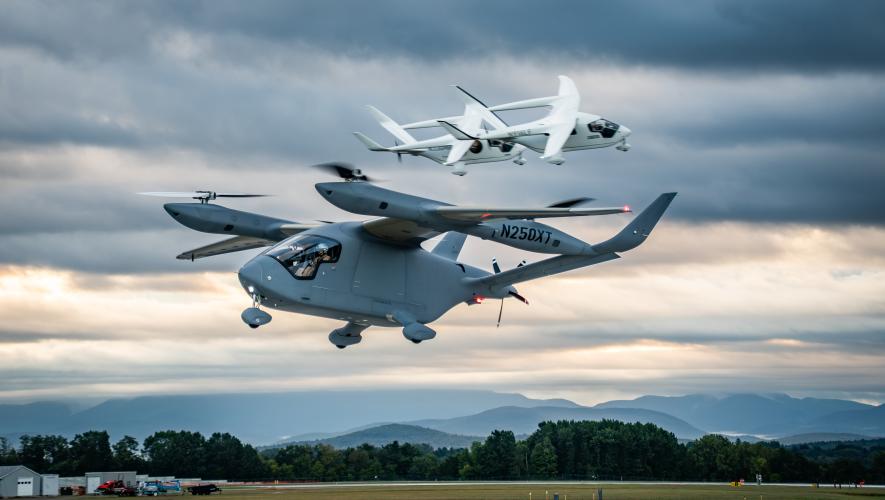
MEBAA Show is set for December 8 to 10 at Dubai Al Maktoum International Airport (OMDW). Alnaqbi said registrations so far point to 10,000 to 15,000 attendees and that the planned advanced air mobility pavilion will feature eVTOL aircraft and other emerging technologies.
The show’s website listed about 130 exhibitors as of Wednesday. Organizers had reported more than 100 in August, and the 2024 show drew 10,000 attendees and 145 exhibitors. Bombardier, Dassault, Airbus, and Boeing Business Jets appear on this year’s exhibitor list; Embraer, Textron Aviation, Rolls-Royce, Pratt & Whitney Canada, and GE Aerospace have not yet confirmed any plans to exhibit.
“We have to defend our industry very, very hard,” Alnaqbi said, adding that the show is less a trade show than a networking venue.
Asked about overflights, Alnaqbi said air traffic controllers in the region have grown adept at rerouting aircraft on short notice over the past 20 years, and that MEBAA works with roughly two dozen governments to keep operations running smoothly.
Other panelists said governments often disagree on whether, and at what altitudes, operators can safely fly over conflict zones. European Business Aviation Association chairman Juergen Wiese said European states set different minimum altitudes for overflying Iraq, with France and the UK at FL320 and Germany at FL280.
International Business Aviation Council (IBAC) director general Kurt Edwards said an ICAO effort to share risk information among states stalled because some governments did not want to be named or to take part, and that the Iran war has drawn attention away from other work there. Edwards is scheduled to speak at MEBAA Show’s BizAv Talks program.
Responding to an operator who asked why the FAA’s guidance on overflying Iraq differs from Europe’s, British Business and General Aviation Association managing director Lindsey Oliver advised operators to consult their insurance brokers. The landscape of where operators can fly is “changing by the hour,” she said, and brokers work with risk-management firms that monitor government advisories.
More In Regulations and Government