Electric and hybrid-electric aircraft have now flown in nearly a dozen states under the FAA’s eVTOL Integration Pilot Program (eIPP). Much of that flying has passed through airports that business aircraft use every day. Five of the program’s nine aircraft manufacturers have flown under eIPP so far. One of them—Santa Cruz, California-based Joby Aviation—is exhibiting this week at NBAA-BACE 2026 alongside Blade, the helicopter charter company it owns.
Under eIPP, advanced air mobility (AAM) aircraft have visited Washington Manassas Airport (KHEF), Virginia’s largest general aviation airport; Raleigh Executive Jetport (KTTA) in North Carolina; and Perot Field Fort Worth Alliance Airport (KAFW) in Texas.
Established operators are participating, too. Air medical operator Metro Aviation has flown Beta Technologies’ Alia on medical and disaster-response missions, and Provo, Utah-based cargo airline Alpine Air Express has teamed with Beta on medical cargo flights in Utah. Helicopter operator Bristow is working with Elroy Air and Beta in Louisiana. Signature Aviation, also exhibiting at NBAA-BACE 2026, is a partner in the Port Authority of New York and New Jersey project.
The U.S. Department of Transportation and the FAA selected eight projects for eIPP in March, and they now span 28 states. Each project pairs aircraft manufacturers and operators with a state transportation department or other local authority. Those teams can fly real-world operations before their aircraft earn type certification, and the FAA will use what they learn to write the rules for AAM.
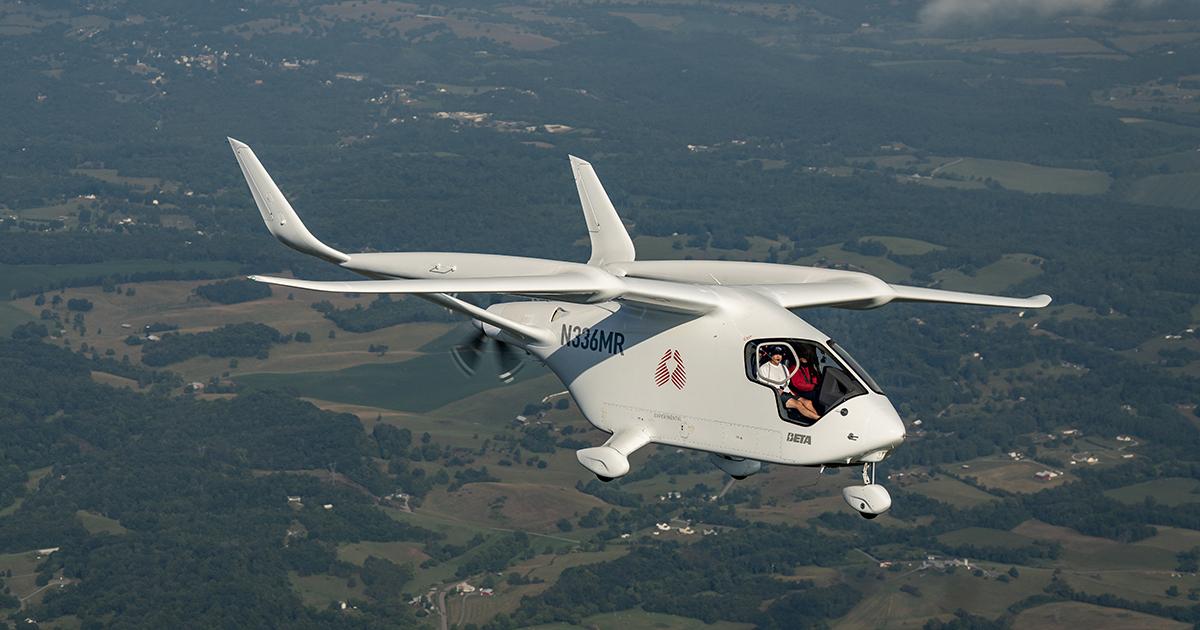
South Burlington, Vermont-based Beta flew the first eIPP missions in July. Two of its all-electric Alia CX300 airplanes relayed a manufactured animal organ for United Therapeutics from Virginia Tech/Montgomery Executive Airport (KBCB) in Blacksburg, Virginia, to Baltimore Martin State Airport (KMTN). Beta holds a place in seven of the eight projects, more than any other manufacturer.
Metro has since flown the Alia in Texas, testing disaster-response logistics with Washington County Emergency Medical Services in Brenham. In North Carolina, flights began September 17 on routes linking KTTA with Pitt-Greenville Airport (KPGV) and Dare County Regional Airport (KMQI) on the Outer Banks. Beta has also flown in Louisiana, where it works with Bristow and Metro on logistics for offshore energy production in the Gulf of Mexico.
Long Beach, California-based Ampaire, the program’s only hybrid-electric powertrain manufacturer, began flying under uFLY, a five-state coalition led by the Utah Department of Transportation, on August 6. The company flew its EEL, a hybrid-electric Cessna 337 Skymaster testbed, from Salt Lake City to Cedar City.
Beta followed with five days of uFLY flights the first week of October, testing how the Alia could carry radiopharmaceuticals for Alpine Air. These radioactive drugs, used to diagnose cancer and other diseases, decay within hours and must reach patients quickly. Flight-tracking data shows the airplane shuttling between Salt Lake City International Airport (KSLC) and airports in Logan and Provo.
Manassas, Virginia-based Electra flew its EL2 hybrid-electric, ultra-short takeoff and landing technology demonstrator in August under the multistate collaborative led by the Pennsylvania Department of Transportation (PennDOT). Its route linked KHEF with Philadelphia International Airport (KPHL), stopping at two New Jersey airfields and Northeast Philadelphia Airport (KPNE).
It then flew the EL2 to heliports and taxiways at Virginia airports, including Roanoke-Blacksburg Regional Airport (KROA), in coordination with the eIPP and PennDOT to test procedures for its planned nine-passenger EL9.
In late August, Elroy Air and Bristow flew the autonomous Chaparral cargo aircraft at Houma-Terrebonne Airport (KHUM) in Louisiana. Elroy Air said these represented the first uncrewed flights under the eIPP.
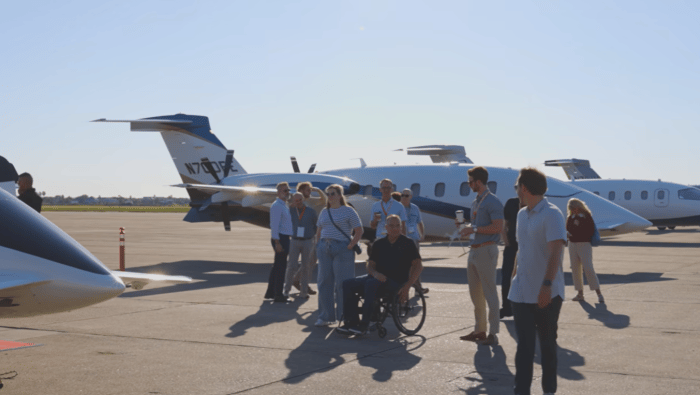
Transportation Secretary Sean Duffy and Sen. Ted Cruz (R-Texas) formally kicked off the Texas project on September 10 during an event at KAFW, where Joby flew its piloted eVTOL air-taxi prototype. Beta also took part with an Alia CX300, and autonomy developer Merlin attended as an invited guest and flew its own autonomy-equipped Caravan.
Joby last month sent the J208, its autonomous Cessna Grand Caravan, on a coast-to-coast tour with eIPP flights in North Carolina, Arizona, Oklahoma, Utah, and Oregon. A pilot on the ground commands the aircraft, with a safety pilot aboard as a backup.
Archer Aviation holds places in three projects and says it will fly its four-passenger Midnight eVTOL under eIPP in Texas, Florida, and New York. The San Jose, California-based company has agreed to acquire Wisk Aero from Boeing. Mountain View, California-based Wisk has previously said it plans to fly its autonomous, pilotless Gen 6 eVTOL in Texas.
Pivotal, of Palo Alto, California, joined PennDOT’s multistate collaborative in May. Its single-seat BlackFly flew to two 911 calls for Hyde County, North Carolina, emergency medical services this summer, but neither party tied those flights to eIPP.
Mountain View, California-based Reliable Robotics and the city of Albuquerque lead the only city-run project, which aims to bring remotely piloted cargo flights to New Mexico. Duffy toured Reliable’s autonomous Caravan at Albuquerque International Sunport (KABQ) in June.
More In Operations