Safety
Confusion Reigns after FAA Drops Single-pilot Exemption
Questions arising over FAA's review of pertinent accidents

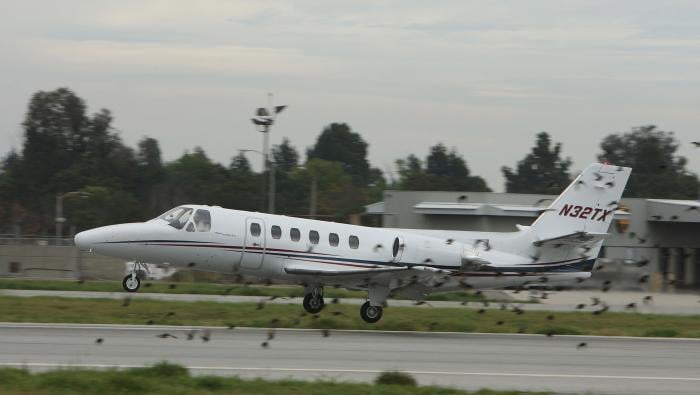
The FAA’s plan to rescind all single-pilot exemptions for certain legacy Cessna Citations certified under FAR Part 25 has generated confusion and questions from pilots and industry associations. The ruling, which becomes effective on September 29, affects the following CE-500 variants: “Model 500—Citation and Citation I; Model 550—Citation II; Model S550—Citation S/II; Model 552; Navy T-47A; Model 560—Citation V and Citation Ultra; Model 550—Bravo; Model 560—Encore; and Model 560—Encore+,” according to the FAA.

“NBAA supports the FAA’s responsibility to examine safety concerns and to take appropriate action as supported by the evidence,” said NBAA senior v-p of operations Heidi Williams. “At the same time, the FAA’s decision to rescind these exemptions in full, effective immediately upon publication in the Federal Register, and without direct notice to affected operators, raises serious questions.”

According to the FAA, in the notice about the exemption being rescinded, “In addition to the widespread non-compliance described above, a review of CE-500 accidents over the last 18 years indicates that, even with conservative assumptions about crew configuration, Part 25 CE-500 aircraft operated with a single pilot are involved in approximately twice the rate of accidents as Part 23 CE-500, 510 and 525 aircraft flown with a single pilot.”

The Citation Jet Pilots Association (CJP) has submitted a Freedom of Information Act request for the data the FAA used in its review of the CE-500 single-pilot exemption program. “Our goal is to understand the facts and analysis behind the FAA’s actions so we can assess their impact on our members and respond constructively,” said CJP CEO Rob Balzano. 

“We urge the FAA to promptly share its supporting safety analysis with industry stakeholders, communicate directly with affected operators, and explain the basis for the immediate effective date,” Williams said. “We are ready to work with the agency and the Citation community on a response that addresses documented risks, strengthens training, and gives pilots clear, timely guidance.”

“Textron Aviation is aware of the FAA notice regarding exemptions that have allowed certain legacy Cessna Citation 500-series aircraft to be operated by a single pilot,” a Textron Aviation spokesperson told AIN. “Textron Aviation supports the FAA’s commitment to aviation safety and stands ready and available to support customers.”

Online commenters were critical of the FAA’s action. In the Private Jet Pilots forum on Facebook, a member wrote, “This new rule is ridiculous, it’s a straight-wing jet, not a rocket ship. Single pilot in a King Air is more dangerous than [single pilot] in a Citation.” 

Unlike the FAA, other regulatory frameworks such as EASA’s require type ratings in most high-performance aircraft. When the Mitsubishi MU-2 twin turboprop suffered a series of accidents, the company, which still supports the aircraft, formally asked the FAA to mandate a type rating pilot training program. Instead, the FAA imposed a special regulation for training, and since then the number of MU-2 accidents dropped significantly.

At the recent CJP annual event, the association revealed that members who participate in the Gold Standard program of frequent recurrent training and other training criteria have had zero accidents in the nine years since the program launched. Members who participate in CJP’s flight operational quality assurance program, in place for five years, have also not had any accidents.

In its notice about canceling exemptions, the FAA cited the Dec. 18, 2025 Citation II accident in Statesville, North Carolina, that killed Nascar driver Greg Biffle, his wife,  two children, and both pilots. While the pilot was type rated in the CE-500, his type rating included a limitation, “CE-500 second in command required.” The pilot in the right seat of the accident airplane, who did not hold a multiengine rating nor a CE-500 SIC type rating, “was not qualified to perform second in command duties per Title 14 CFR part 61.55,” according to the NTSB preliminary report. 

The FAA did not say whether the type-rated pilot was operating the CE-500 under a single-pilot exemption, nor why this accident relates to the decision to rescind the exemptions for all affected aircraft.