Safety
FAA Floats Allowing Jet Pilots To Forego Wearing O2 Masks
Part 91 pilots would not have to wear masks "just in case," while 135 rules would allow higher altitudes
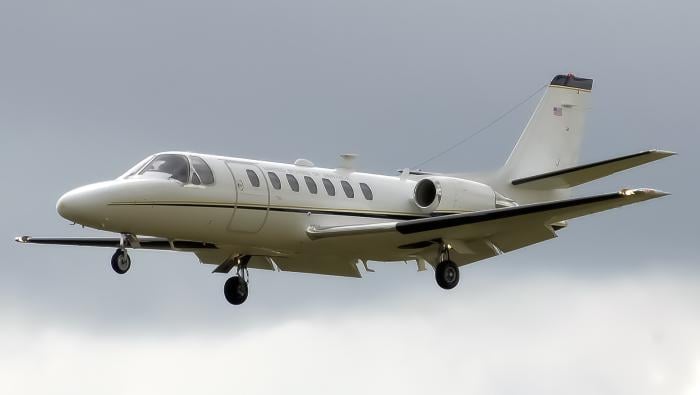
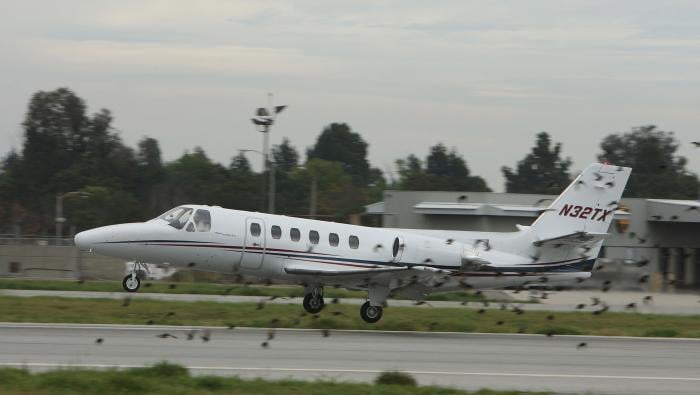
Cessna Citation 560 business jet accident
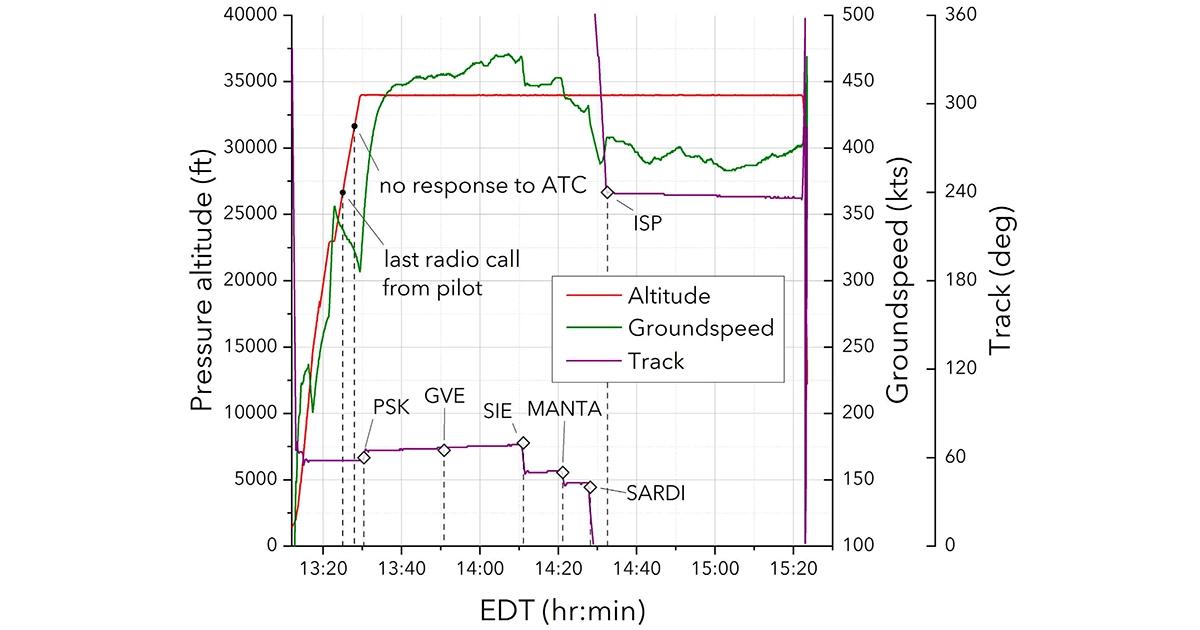
About 2 hours after the pilot made a final call to ATC, the Cessna Citation 560 crashed. The NTSB determined that “the owner/operator's decision to operate the airplane without supplemental oxygen onboard contributed to the outcome.”

The FAA has proposed a rule change that would simplify oxygen-mask regulations for Part 91 and 135 operations, raising the altitude at which one pilot would have to wear a mask during commercial operations and eliminating the requirement to wear a mask at any altitude for Part 91 pilots. It comes with a stipulation that quick-donning oxygen masks be available in case of an emergency. Comments on the proposed rule are due November 23.

The NBAA Safety Committee, through the High Altitude Supplemental Working Group, had been urging the FAA since at least 2018 to update these regulations. The requirement to don a mask above certain altitudes is widely recognized as one of the most ignored FAA regulations, and some pilots have even admitted that instead of wearing a mask and using oxygen, they have instead drained some oxygen from their airplane’s tank in case they were confronted by an FAA inspector, to make it look like they were using masks as required. Other, more law-abiding pilots would fly most trips at FL410 (under Part 91) to avoid any disagreements about whether one of the pilots should don a mask.

Standards set by the International Civil Aviation Organization (ICAO) are not as stringent as FAA regulations and recommend that participating states’ regulations not require wearing a mask above FL250 as long as a quick-donning mask is available. The current FAA Part 135 rules require one pilot in a two-pilot cockpit to wear a mask at and above FL350, which would change to FL410. Part 91 pilots are now required to don a mask at FL350 when by themselves or FL410 for a two-pilot operation.

The FAA’s proposed rules would more closely align with ICAO standards and EASA regulations, although there still would be a requirement for Part 135 pilots to wear a mask when they are the only pilot on the flight deck at FL350 and above, up from FL250.

For Part 91 operators, the new rule would require that quick-donning masks be available but with no stipulation to wear them either when flying single pilot or when one crewmember is on the flight deck. This even applies to the FL510 maximum altitude of some modern business jets. At 50,000 feet, the time of useful consciousness during a gradual decompression is nine to 12 seconds, according to the FAA. In a rapid decompression from 40,000 feet and above, there is no time of useful consciousness; the FAA characterizes this as “Nominal/likely immediate loss of consciousness.”

In proposing to change these rules, the FAA explained that it was required to review the oxygen-mask regulations by the FAA Reauthorization Act of 2024. The agency also examined 10 years worth of pressurization-related events and found that the new rules would not increase risk substantially. Operators would save from $100 to $400 per oxygen fill up, which the FAA explained, “for every percentage point decrease of the roughly 4.7 million Parts 91 and 135 turbojet and multiengine turboprop operations that no longer require servicing due to this rulemaking, applicable aircraft operators would save between $4.7 million to $18.6 million in oxygen servicing fees annually.”

The crash of a Cessna Citation 560 on June 4, 2023, didn’t apply to this analysis because the airplane wasn’t airworthy at the time of the accident. “NTSB concluded that the probable cause of this accident was pilot incapacitation due to loss of cabin pressure for undetermined reasons and that the owner/operator's decision to operate the airplane without supplemental oxygen onboard contributed to the outcome,” according to the FAA.

In a 10-year period, Part 91 and 135 airplanes flew more than 20 million flight hours at FL250 and above. There were 200 reports of decompression events, with 25 percent above FL410. Three of the 200 events were possible rapid decompressions and one an explosive decompression. Two of the rapid decompressions resulted in accidents, including the Citation 560, and one rapid and the explosive decompression incident airplanes landed safely.

One of the other decompressions occurred in a Cessna Citation 501SP, however, the FAA said, “the pilot delayed the donning of his oxygen mask. Had he immediately donned his oxygen mask after noticing the depressurization, it is likely that the event would not have resulted in damage to the airplane. There were no fatalities or serious injuries resulting from this accident; however, the pilot and two passengers sustained minor injuries.

“In summary, due to the rarity of decompressions occurring above FL250, combined with advances in aircraft design and safety standards, FAA finds that increasing the minimum altitude at which oxygen masks must be worn continuously will not adversely affect safety.

“FAA concludes that the proposed rule would not have changed the outcome of either event. In all other cases, the aircraft that experienced a decompression event landed successfully without further incident, and in several cases, the pilots admitted they were not wearing their oxygen masks prior to the occurrence.”

The FAA does mention automatic emergency descent mode systems in many modern autopilots, but not necessarily as a mitigation measure for mask requirements. Among the 46 petitions for exemption filed since 1979 against the Part 135 oxygen mask rules, there is no mention of emergency descent mode as a mitigation. The U.S. Air Force has addressed this, too, in Air Force Manual 11-202 Volume 3, Flight Operations, in which it “permits operations up to and including FL500 in pressurized airplanes without requiring at least one pilot wearing an oxygen mask, provided the airplane is equipped with an automatic emergency descent mode.”

No matter what the rules say and how the airplane is equipped, pilots need to know that the first move in any pressurization problem is to don the mask, then try to troubleshoot the problem. The FAA emphasized this when it mentioned the accident that befell golfer Payne Stewart on Oct. 25, 1999. This accident didn’t fall into the 10-year review period but was considered as part of the FAA’s risk analysis for this rule change.

The Bombardier Learjet 35 that Stewart was flying in crashed after it depressurized for “undetermined reasons,” and all six occupants died when the jet ran out of fuel and crashed. The probable cause of this accident was “pilot incapacitation due to failure to receive supplemental oxygen.” 

Whether or not oxygen was available to the crew, it turns out that the Learjet 35 flight manual emergency procedure did not require pilots to immediately don oxygen masks when the cabin altitude warning activates. “The AFM contained an abnormal procedures checklist allowing the flight crew to troubleshoot the pressurization system before donning oxygen masks,” according to the FAA.

The agency issued an airworthiness directive on the Learjet35/36 series in November 2000 to update the emergency procedures so that the first step is to don the oxygen mask. The agency also reviewed flight manuals for all Part 23 and 25 airplanes certified to fly above FL250.

pilot wearing a quick-donning oxygen mask in the cockpit
© AOPA