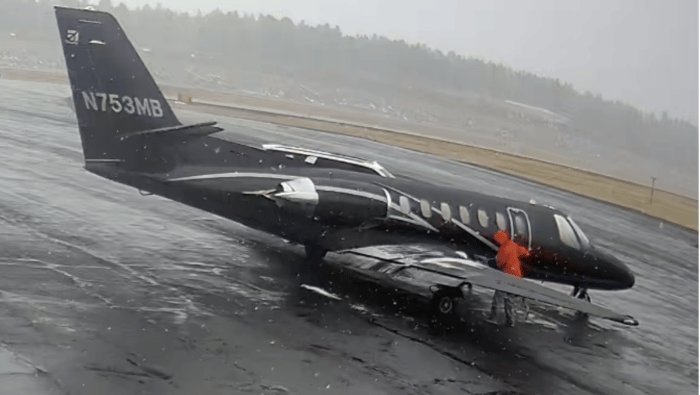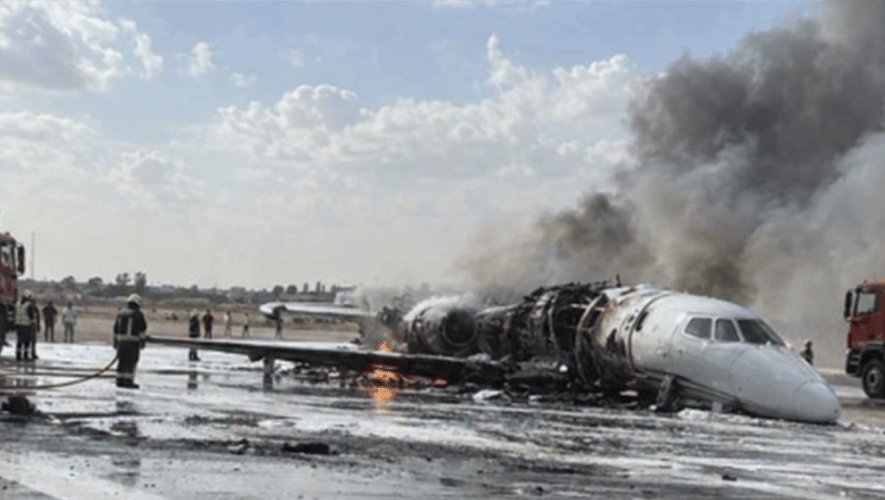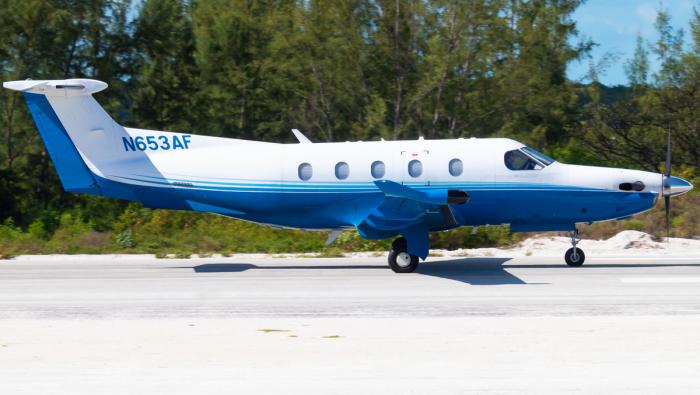
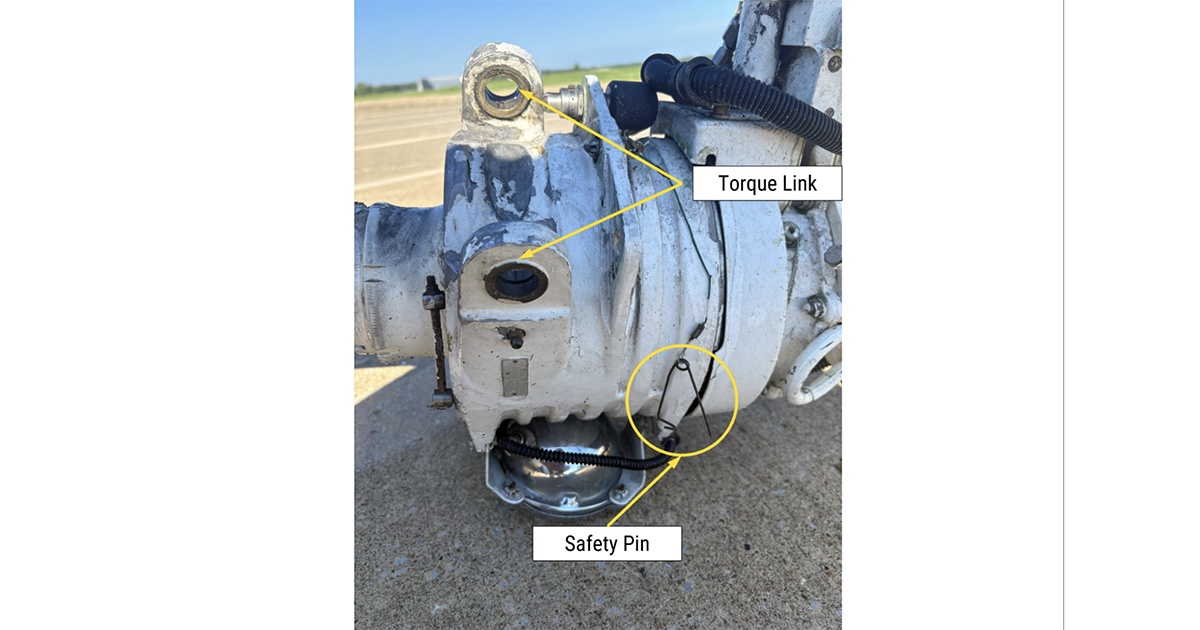
A Gulfstream IV’s nose landing gear pip pin was found separated after a runway excursion on landing at Spirit of St. Louis Airport (KSUS) in Missouri, according to a newly released NTSB preliminary report. The airplane sustained substantial damage to the lower fuselage and left wing in the Aug. 14, 2026 accident. None of the three crewmembers or seven passengers aboard were injured.
According to the pilot, ground crew personnel at Eagle County Regional Airport (KEGE) in Colorado were unable to install the pip pin, a component used to engage and disengage the scissor link with the nose wheel steering actuator, into the nose landing gear (NLG) torque link during the preflight inspection. The pilot then installed the pip pin himself. The pip pin has a secondary safety pin normally installed to help ensure it remains engaged; the pilot reported that he forgot to install it.
Before departure on the Part 135 on-demand air taxi flight, the crew received a “STEER BY WIRE FAIL” Crew Alerting System message. They completed the appropriate checklist and the message cleared. While on approach to KSUS, after lowering the landing gear, the crew received the same “STEER BY WIRE FAIL” message again. This time, though the crew completed the checklist, the message did not clear.
As the nose wheel touched down on Runway 8R at KSUS, it began to shimmy; the nose landing gear then separated from the airplane, and the left main landing gear collapsed, sending the airplane veering left into the grass, where it came to rest upright with significant damage.
Examination of the runway and surrounding grass turned up several pieces of debris. The pip pin, normally seated in the NLG torque link, was found separated from the gear with three of its four ball locks remaining; the missing ball lock and the NLG’s upper scissor link were not recovered. Examination of the nose gear itself revealed that the safety pin was “found intact in the open position,” the report noted, “and with the separated NLG still attached to its lanyard cord.”
The airplane’s cockpit voice recorder and flight data recorder were removed and sent to the NTSB’s Vehicle Recorders Laboratory in Washington, D.C., for download. The NTSB retained the wreckage for further examination, and the investigation is still ongoing.