At this year’s recently-concluded FlightSim Expo in Houston, it became clear that the training technology lines between hobbyists and licensed pilots are becoming increasingly blurred. Major OEMs including Boeing are licensing cockpit components to companies that heretofore catered exclusively to enthusiasts, while FAA-certificated flight training device manufacturers are turning to architecture that more and more resembles the hardware from the gaming world.
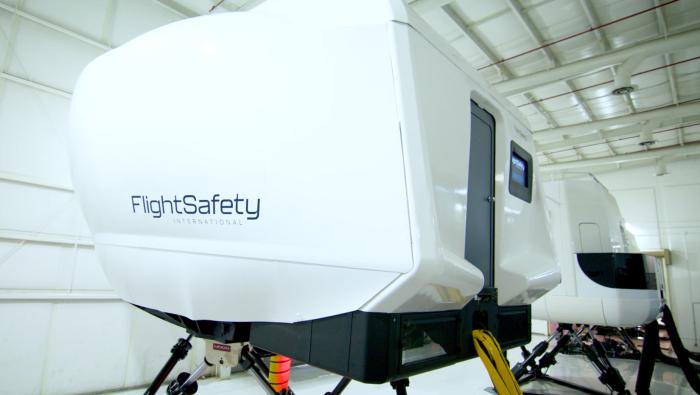
The trends are being driven by a variety of factors: the soaring cost of full-motion simulator training, where individual simulator units easily run into the millions of dollars, and simulator time slots increasingly hard to come by, as well as continuing advances in augmented/virtual reality (AR/VR) and artificial intelligence (AI). The trend was in many ways punctuated by FlightSafety’s 2022 acquisition of Frasca International, a company that provides a technology gamut of simulators and flight training devices but is perhaps best known for its comparatively inexpensive line of training devices used for private pilot primary and instrument training, as well as full-flight level-B,-C, and -D simulators for lighter aircraft including Cessna, Diamond, and Piper piston-engine aircraft and business aircraft including the Cessna Citation CJ1+, Beechcraft King Air, Cessna Caravan, and Bell helicopters.
More In Training and Workforce