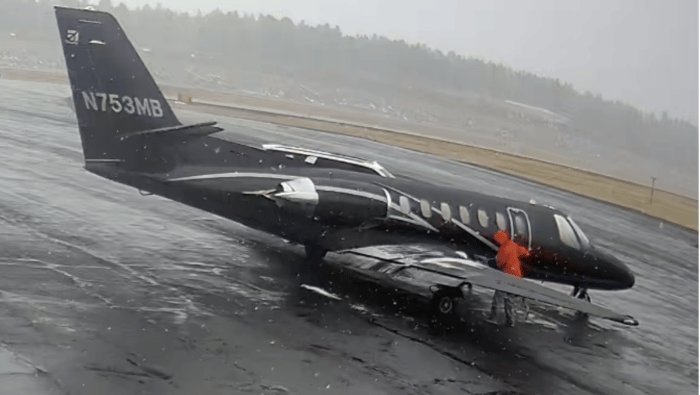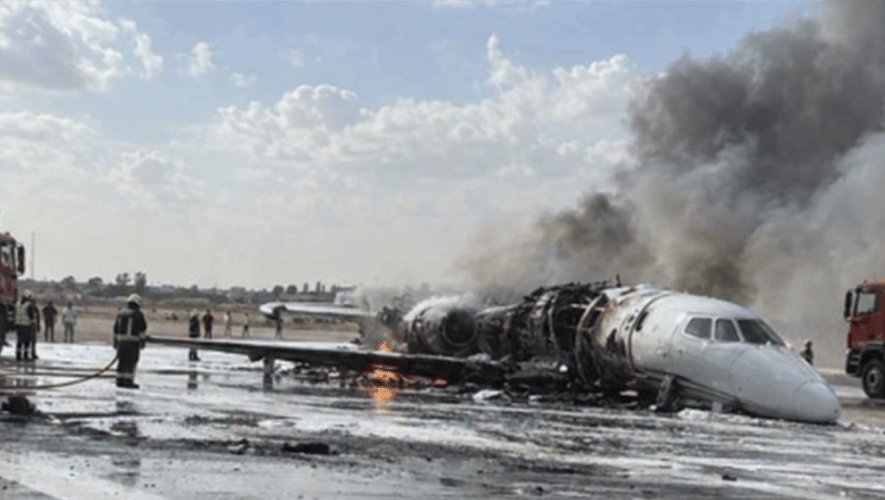

The March 3 Bombardier Challenger 300 in-flight upset occurred immediately following the pilots’ response to one of multiple engine indicating and crew alerting system (EICAS) messages, according to the recently published NTSB preliminary report. The report also said the aircraft took off after the EICAS advised of a RUDDER LIMIT FAULT, a message that is normally a no-go item on the Challenger 300 series if the aircraft hasn’t taken off. They also used the incorrect checklist in the air (PRI STAB TRIM FAIL) instead of the checklist for what the EICAS showed (AP STAB TRIM FAIL).
During the first takeoff attempt, the second-in-command (SIC) noticed an airspeed miscompare and the pilot-in-command (PIC) aborted the takeoff. After shutting down the left engine, the SIC exited the airplane and removed a pitot tube cover from the right side pitot probe. After restarting the engine and seeing the RUDDER LIMIT FAULT advisory message, according to the report, "The PIC reported that he attempted two ground avionics 'stall tests' to clear the message, as he had received this advisory message in past ground operations, however, the tests did not clear the annunciation. The flight was continued given that the message was an advisory, and not a caution or warning." During the second takeoff, the V-speeds were not set and displaying on the primary flight display, and "The SIC called V1 and rotate at 116 knots from memory and the PIC entered the climb without issue."
More In Accidents