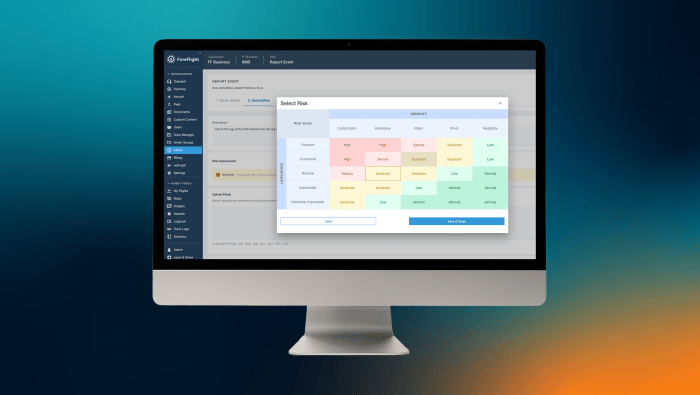
The safety benefits of maintaining a safety management system (SMS) in aviation should be well known at this point. An effective SMS provides an organization with a systematic approach to managing safety risks and making sound safety decisions. A functioning SMS begins with a commitment from the top of the corporation but engages workers at all levels of the company in identifying safety hazards so that their risks can be assessed, analyzed, and eliminated or mitigated. It will also ensure that risks are properly assessed over time and changing circumstances. Of course, the point of SMS is to reduce the potential for accidents or incidents but, in my experience consulting with airlines of all sizes, it also provides economic benefits unrelated to safety, such as improving efficiencies and promoting cost-savings.
But since the FAA doesn’t require SMS for corporate or Part 135 operators, I’m asked on a regular basis by these operators whether I think their company should voluntarily adopt an SMS program, whether the time and cost of adopting a program is worth the effort. Some have read something about SMS and are curious if they will soon be required by the FAA to have it. Based on the lengthy rulemaking process and the fact that there’s no rulemaking proposal out there, it’s pretty doubtful that any new SMS requirements would come out for operators in the next 5 or even 10 years. But some operators just want to know whether—and how—it could benefit them. A few Part 135 operators may have read the NTSB’s 2019-2020 Most Wanted List of Transportation Safety Improvements, which includes adopting SMS to improve the safety of Part 135 aircraft operations.
With more than 40 years experience in the aviation industry, The Honorable John Goglia, was the first and only Airframe and Powerplant mechanic to receive a presidential appointment to the National Transportation Safety Board (NTSB). He served from August 1995 to June 2004.
As a Board Member, Mr. Goglia distinguished himself in numerous areas of transportation safety. In particular, he was instrumental in raising awareness of airport safety issues, including the importance of airport crash fire and rescue operations and the dangers of wildlife at airports. He played a key role in focusing international attention on the increasing significance of aircraft maintenance in aviation accidents. He pressed, successfully, for greater integration of civilian and military safety information, becoming a featured speaker at national aviation symposiums attended by military leaders and major defense contractors. He is a leading proponent of airplane child safety seats.
Prior to becoming a Board Member, Mr. Goglia held numerous positions in the airline industry. He started as a mechanic for United Airlines and eventually joined Allegheny, which became USAir. Additionally, he was involved for more than 20 years as a union flight safety representative on accident investigation teams. There, he developed a safety program for his union, the International Association of Machinists, and was its representative for NTSB investigations. For twelve years, he operated his own aircraft service company.
Numerous prestigious groups have recognized Mr. Goglia’s contributions to aviation safety. Aviation Week & Space Technology awarded him a coveted 2004 Laurel for his outstanding service as an NTSB Board member. The Society of Automotive Engineers presented him with the Aerospace Chair Award for outstanding leadership in 2003 and the Marvin Whitlock Award for outstanding management accomplishment in 2002.

More In Safety