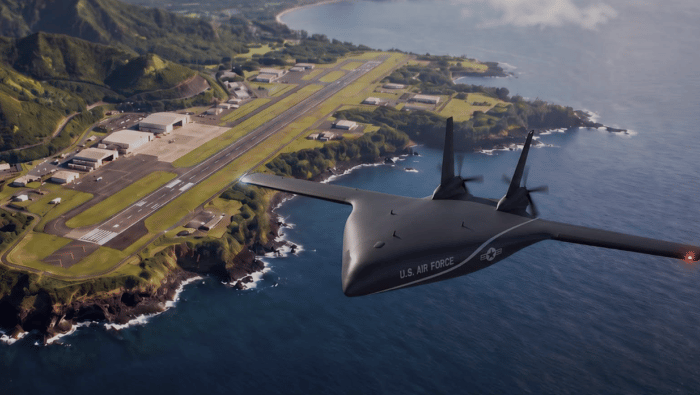
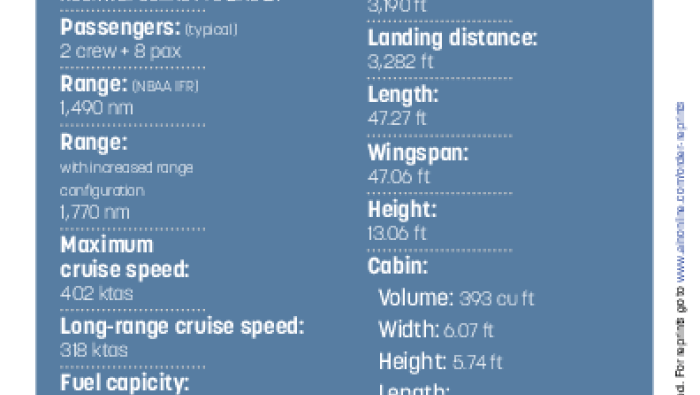
AIN 2018 Piaggio Avanti specs
The P.180 Avanti Evo has a “wow” factor that is not present with many other twin turboprops of a similar size. Yes, it does have three lifting surfaces, a T-tail and two pusher propellers but it’s how they are put together that is the important thing. The forward wing (not to be called a canard, as it has no moving flight controls other than forward flaps) is positioned on the underside of a gracefully sweeping nose and is home to two pitot tubes underneath and, unusually in Western types, has a significant anhedral. The windshield is deep and sharply raked back, which along with the ventral delta fins, perhaps alludes to the shared Learjet origin from the 1980s. The upper fuselage curves to a peak height just in front of and above the main wing leading edge and then slopes downwards to join the lower fuselage upward curve at a point below the trailing edge of the T-tail that stands with its sharply swept back horizontal tailplane some 13.06 feet above the ramp.
On the Avanti, each unique characteristic of the aircraft is firmly rooted in function. The anhedral of the forward wing ensures there is no aerodynamic interference with the engine intakes and assists in stall handling. The continuous curve of the fuselage generates approximately one-third of the overall lift, reducing the required size of the wings and thus minimizing drag. The sharp sweepback of the horizontal stabilizer ensures the elevators cannot be aerodynamically blanked by the main wing during a stall and thus remain effective throughout, and the main wing, with its high aspect ratio, is positioned behind the rear pressure bulkhead so that the spar does not pass through the passenger cabin, giving an uninterrupted length of 14.93 ft.
More In Aircraft