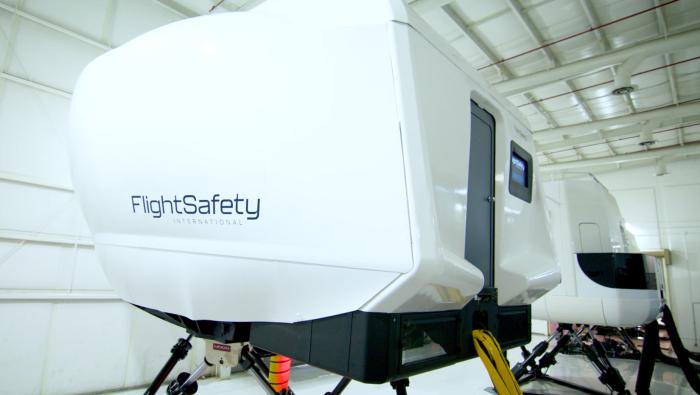


For the longest time, sophisticated and multimillion-dollar full-motion flight simulators have not been terribly useful for an important element of pilot training: flight outside the normal flight envelope and especially full stalls. Most simulators don’t have the aerodynamic modeling for beyond-the-normal-envelope flight, whether because the aircraft manufacturer didn’t supply this data or because the simulator manufacturer couldn’t justify the expense of doing its own flight-testing to support these flight regimes.
There is growing interest in using flight simulators for upset training and teaching pilots how to recover from loss of control, but to do so the simulators must be equipped with the proper aerodynamic modeling. This is now happening, and part of the reason is that beginning in March 2019, U.S. Part 121 pilots will be required to undergo full stall recovery training in simulators to conform with the mandate by Congress in the Airline Safety and FAA Extension Act of 2010, which is the same law that requires all Part 121 pilots to have an ATP certificate. The FAA has also updated Part 60 simulator rules to introduce “new technical standards for full stall and stick pusher maneuvers, upset recognition and recovery maneuvers, maneuvers conducted in airborne icing conditions, takeoff and landing maneuvers in gusting crosswinds, and bounced landing recovery maneuvers.”
Matt Thurber, editor-in-chief at AIN Media Group, has been flying since 1975 and writing about aviation since 1978 and now has the best job in the world, running editorial operations for Aviation International News, Business Jet Traveler, and FutureFlight.aero. In addition to working as an A&P mechanic on everything from Piper Cubs to turboprops, Matt taught flying at his father’s flight school in Plymouth, Mass., in the early 1980s, flew for an aircraft owner/pilot, and for two summer seasons hunted swordfish near the George’s Banks off the East Coast from a Piper Super Cub. An ATP certificated fixed-wing pilot and CFII and commercial helicopter pilot, Matt is type-rated in the Citation 500 and Gulfstream V/550. Based in the Pacific Northwest, Matt and his team cover the entire aviation scene including business aircraft, helicopters, avionics, safety, manufacturing, charter, fractionals, technology, air transport, advanced air mobility, defense, and other subjects of interest to AIN, BJT, and FutureFlight readers.

More In Training and Workforce