In recent months FAA Administrator Babbitt has promoted specific tailored hypoxia training, along with high-altitude handling, for commercial and private pilots who want to fly at high altitude. Indeed, FAA Title 14 of the Code of Federal Regulations (14CFR) establishes mandatory requirements for high-altitude training using military altitude chambers at 15 U.S. locations, but few chambers are available for candidates in other countries and theoretical presentation is often the limit of studies. However, Biomedtech Australia at Moorabbin, Melbourne, has developed a range of hypoxicators under the trademarks of “go2altitude” and “Altipower” that can provide an acceptable alternative to training in the chamber.
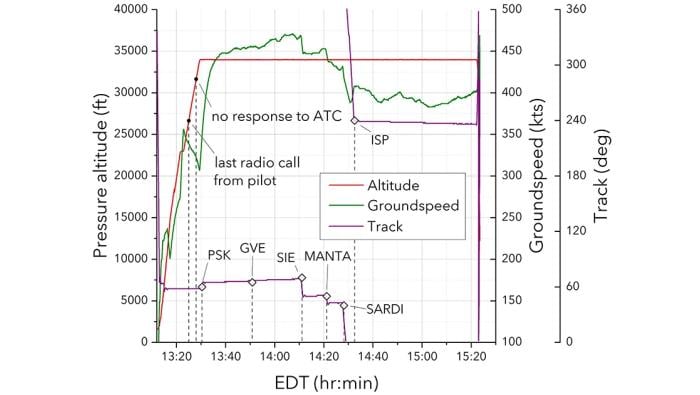
In the last 30 years several accidents have highlighted the importance of hypoxia training. On Sept. 25, 1979, an instructor and student on type conversion were killed in the crash of Beech King Air 200 G-BGHR. Investigators blamed the accident on oxygen system failure. Two decades later, on Oct. 25, 1999, Learjet 35 N47BA crashed, killing the crew and four passengers, including golfer Payne Stewart. The accident was attributed to the airplane’s failure to pressurize. The Sept. 4, 2000, crash of Beech Super King Air 200 VH-SKC killed the pilot and seven passengers. Investigators attributed the accident to a pressurization failure. Finally, a Boeing 737 (5B-DBY) crashed Aug. 14, 2005, killing the crew and 115 passengers. Failure to pressurize was listed as the cause.
More In Safety