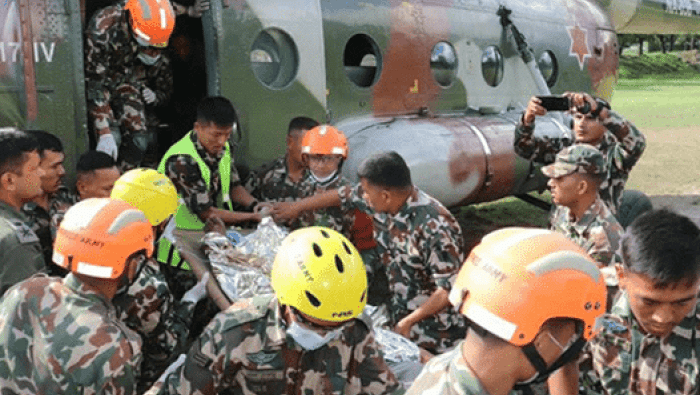
With a max gross weight of nearly 29,000 pounds, the Mil Mi-17 is no small helicopter. It is a workhorse that has gained a considerable following in most parts of the world. More than 10,000 Mi-17s and Mi-8s (from which it was derived) have been delivered for both military and civilian roles since the 1960s, including more than 2,400 for export. Some 200 are operating in Central America and the northern countries of South America.
Colombian helicopter operator Vertical Aviation, in operation for more than 20 years, flies 16 Mi-17s, mainly in oil-support operations. It was the first to operate the big 26-passenger Russian turbine twins in the Western Hemisphere and over the last 10 years has put about 75,000 hours on its fleet. Operating costs of the Mi-17 are so low that the company charges only $3,500 per hour, according to Fernando Lopez, president of Vertical Aviation. “If we were operating Eurocopter Super Pumas, which have roughly the same payload, we would have to charge $8,000 to $9,000 per hour,” he told AIN. Vertical’s successful experience with its Mi-17s, including flying troop and goods transport under contract for the Colombian army for about six years, convinced the army to buy its own Mi-17s from Kazan Helicopters. (Kazan in the Republic of Tartarstan has built and marketed Mil helicopters since 1951, including the Mi-17 since 1982. It also developed with Mil the 40-passenger Mi-17MD and 28-passenger Mi-17KF.)
More In Rotorcraft