The European Union has surpassed its minimum sustainable aviation fuel (SAF) requirement for 2025 under the ReFuelEU regulation, the EU Aviation Safety Agency (EASA) noted its newly released “ReFuelEU Aviation Annual Technical Report.” Of more than 39 million tonnes of fuel delivered to EU airports during the year, 2.79% was SAF—an almost sixfold increase from 2024. Despite reporting high operator and fuel provider compliance rates, EASA cautioned that more needs to be done to increase SAF production.
2025 marked the first year this regulation came into effect, with qualifying operators required to use a minimum of 2% blended SAF. This followed an initial 12-month reporting period running from Jan. 1, 2024. Fuel supplier reporting was close to 90% last year, while 93% of aircraft operators fulfilled their reporting obligation, up from 74% compliance during the initial voluntary period.
“Noncompliance with the aircraft operator reporting obligation was mostly linked to small business jet operators, nonscheduled operators, or third country operators that did not respond to the competent authorities’ requests,” the report states. However, it added that an overall “high reporting rate suggests that the majority of obligated owners are aware of the obligations and are engaged with their competent authorities.”
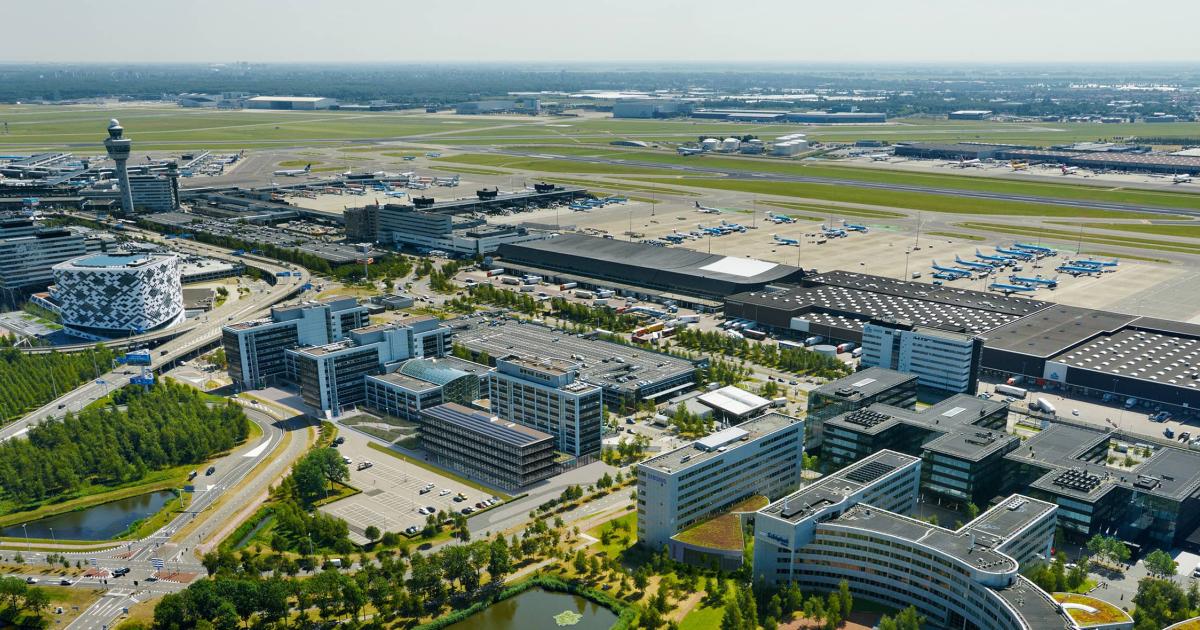
In 2025, SAF was supplied at 121 EU airports across all 27 member states, meaning that 79% of EU airports received SAF during the year. Amsterdam Airport Schiphol took 29% of the tracked supply, followed by Frankfurt, Germany, at 8%, and Paris Charles de Gaulle at 7%. Overall, the Netherlands received the largest share of SAF among EU member states (29%), followed by Spain (14%) and Germany (11%), with Italy and France at 10% each.
The Netherlands is also responsible for the largest production share, with 33% of all of Europe’s SAF produced at Neste’s Rotterdam facility. However, while EASA highlighted that at least eight EU member states had at least one SAF-capable production facility as of the end of 2025, no large-scale synthetic aviation fuel facility has yet reached final investment decision.
As it stands, almost all of Europe’s so-called “first-generation” SAF used in 2025 was produced during the HEFA pathway, requiring feedstocks such as biomass or used cooking oil. Eighty-five percent of all SAF supplied at EU airports relied on feedstock originating from outside the EU: notably China (61%), Malaysia, and Indonesia.