Aircraft
Will Embraer Go Big by Developing a Large Narrowbody Jet?
Industry experts privately debate whether the Brazilian airframer can take the risk
Embraer E195-E2 aircraft
Embraer's "Profit Hunter" E195-E2 on static display at the 2025 Paris Air Show in Le Bourget. © AIN/David McIntosh

Whether Embraer’s positive momentum coming out of the Covid-19 pandemic culminates in the launch of a new narrowbody program to compete with the Airbus A320neo and Boeing 737 Max airliners is a major question looming over commercial aerospace.

Embraer has downplayed this possibility for years, though executives have welcomed the perception that the Brazilian airframer is capable of designing, developing and producing a large single-aisle aircraft to challenge the airframer duopoly's core products. The most common fallback line has been that Embraer is focused on selling the E195-E2, its largest commercial jet to date. Company leadership has not provided a strong signal whether Embraer’s next clean-sheet aircraft will be a business jet or a new, highly ambitious airliner.

That has not discouraged industry chatter. Some believe that Embraer launching a large narrowbody program would be a decision of bet-the-company magnitude, pointing to Bombardier’s experience developing the C Series/Airbus A220 as a cautionary tale. Others say Embraer could potentially absorb a major misstep given its financial growth trajectory and minimal debt burden, and that the benefits of a successful narrowbody launch could be transformative.

Leeham News and Analysis (LNA) has discussed Embraer’s potential entrance into the large narrowbody market with multiple industry insiders in recent weeks. Interviews were conducted on background so sources could speak candidly.

Opinions are mixed, with some believing that Embraer is the only player with a realistic shot of challenging Airbus and Boeing. Others see Embraer in an enviable position with its own monopoly over regional jet production and growing defense and business jet segments, and question why the company would risk its future on an uncertain business case.

It is clear, however, that Embraer’s decision—to go big or stay home—is one of the most intriguing aerospace storylines to follow through the latter half of this decade.

Firing On All Cylinders 

Earlier this week, LNA completed its four-part series dissecting Embraer’s turnaround from its pre-Covid pandemic lows, when it had readied itself for an acquisition by Boeing only for the joint venture to fall apart amid the Max crisis, leaving Embraer to reintegrate the commercial unit it had spent many months carving out.

Remarkably, Embraer is now one of the industry's most-respected OEMs, with operations humming across its commercial, defense, business jet and services segments. CEO Francisco Gomes Neto emphasized earlier this year that the company is tracking to hit its target of $10 billion in annual revenue by the end of the decade.

The Brazilian airframer has by most accounts executed on its stated delivery timelines—engine availability notwithstanding—while producing high-quality jets. To be fair, Embraer’s commercial unit does not have as lengthy a backlog as Airbus and Boeing’s narrowbody programs, allowing it to hand jets to customers a couple of years after airlines place orders, rather than six or seven years later.

Meanwhile, airline executives have been clamoring for more choices, lamenting the long backlogs of Airbus and Boeing and the shortage of aircraft available to join their fleets.

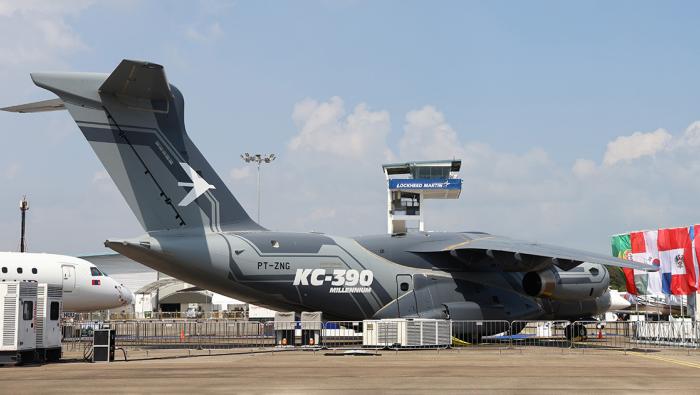
It is widely believed that Embraer has the engineering chops and a production system capable of delivering a narrowbody larger than the E2 family. It has proven capable of producing large aircraft; note the E195-E2’s 142-foot nose-to-tail length and the large-diameter fuselage of the KC-390 military transport jet.

The company also has a long track record of successfully certifying aircraft with Brazil's National Civil Aviation Agency (ANAC), which has bilateral agreements with EASA and the FAA.

But recent history is littered with examples of why going big could be a big mistake. OEMs such as Bombardier and Mitsubishi have tried and failed to compete with Airbus and Boeing. Comac, despite vast government support, has yet to prove itself as a true third player.

Timing the Market 

Middle-of-the-market demand for narrowbody jets remains massive globally, with Airbus and Boeing struggling to keep pace. At present, there is more than enough room for a competitor to step into the arena.

Timing is critical, however. If Embraer were to launch a large narrowbody program today, the aircraft wouldn’t likely enter service until the middle of the next decade. By then, it is possible that Airbus and Boeing have meaningfully reduced their A320neo- and 737-family backlogs, and today's supply and demand imbalance looks much different.

If demand for narrowbody jets is peaking now and eases later, Embraer’s potential market entrance could be poorly timed. Whether the duopoly successfully increases production rates of single-aisle jets is an open question, however, with much riding on the aerospace supply chain’s ability to support Airbus and Boeing’s lofty ambitions. Efforts to ramp up production could falter, leaving an opportunity for another player.

Supply Chain Limits Ambitions 

Which leads to a major factor that could discourage Embraer from getting in the large narrowbody business. As one executive with an aerospace supplier recently told LNA, regardless of how many OEMs are in the market, there is only one supply chain. New market entrants will further strain an already-stretched-thin system, as suppliers struggle to support the production rates of the two big players in addition to Comac’s push to become a globally relevant airliner manufacturer.

In other words, all of the same supply chain disruptions and difficulties gating single-aisle production rates for Airbus and Boeing would apply to Embraer—if not be worsened by Embraer entering the market.

Indeed, any new entrant would rely on the same materials, parts, components and engines. It is highly unlikely that Embraer could convince one of the engine makers to develop an all-new powerplant on its behalf, meaning Embraer's aircraft would share many of the same performance attributes as competing jets.

Another question is whether Embraer would have enough clout with suppliers to secure what is needed to support large narrowbody production. Bombardier’s foray into the space with the C Series is reason for pause, as the Canadian airframer ultimately did not secure favorable contracts with suppliers, compounded by problems of its own making. Eventually, the program was spun off to Airbus and the aircraft was rebranded as the A220.

Embraer would also face a challenge in servicing a fleet of globally operating narrowbodies, though not anything like the high hurdle Comac faces in supporting operations beyond China’s borders. The Brazilian airframer has a head start but would need to build an even more-robust support network.

'Too Big of a Risk' 

One executive with strong visibility into the supply chain told LNA it is “too big of a risk” for Embraer to take a homerun swing on the commercial side. “When Bombardier jumped into it, they were two-and-a-half times bigger than Embraer, so their ability to access debt and leverage debt was two-and-a-half times greater,” they said. “Of course, we know what happened with Bombardier.”

Though that comparison is valid, Bombardier's financial situation was much weaker than that of present-day Embraer, as it had a poor credit rating and was losing money on other aircraft programs during C Series development.

The executive also questioned where a new Embraer jet would fit in a market that is gradually growing by one-to-two seats per year. Airlines are favoring the largest narrowbodies, such as the A321neo and 737 Max 10. “There’s probably room for them to do something that’s a size up from where they’re already at on the commercial side, which may be a size down from where Airbus wants to be playing,” they said. “There are different arguments on whether or not airlines would want to sustain that number of [passengers] in those types of ranges.”

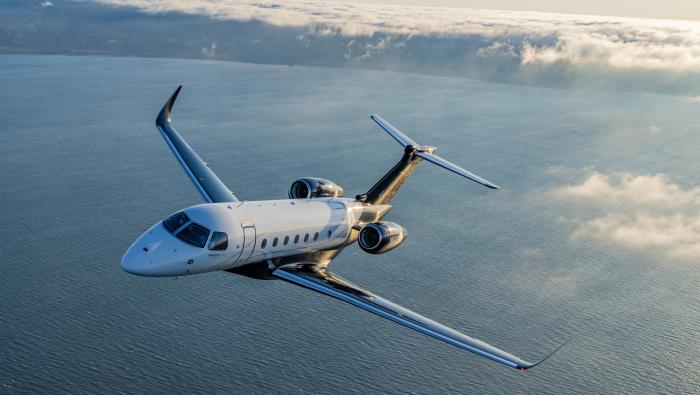
Some believe Embraer’s next clean-sheet aircraft should be a heavy business jet, leveraging the success of its Executive Jets segment coming out of the Covid pandemic while exposing itself to far less risk. But the upside of that decision would also be lower than that of a successful narrowbody launch. There is a reason homerun hitters accept a higher likelihood of striking out.

It is likely that the industry will gain more insight into Embraer's strategy within the next two years. A decision to launch a large narrowbody jet would prove disruptive to Airbus' plans to launch its own clean-sheet aircraft by 2030. Boeing would likely be even more dramatically impacted, as it has recently taken the stance that its next jet will enter service as late as 2040. An ambitious move by Embraer could force both companies to move faster than anticipated.

This story was first published at AIN Media Group's Leeham News and Analysis platform. To subscribe to its exclusive content find more details here.