A public-private partnership has selected five sites in Norway to host a series of upcoming hybrid-electric flight demonstrations. The initiative, which will exclusively feature Electra Aero’s EL2 technology demonstrator, builds on previous work carried out by different OEMs. The EL2’s first Norwegian flights are slated to start in the third quarter of 2027.
On Monday, Bristow Group, Electra Aero, Avinor, and Norway’s civil aviation authority announced the selection of five demonstration sites: building on a contract signed in April 2026. According to helicopter operator Bristow, the selected locations represent three distinct operating environments: comprising short runway airports, larger aviation hubs, and so-called “novel landing sites.”
Flight trials into the former category will start at Mosjøen Airport in northern Norway, where the runway is just under 3,000 feet long. In April, the partners indicated they will begin with short runway testing before moving to locations with no established runways. These will be include sites at Horvnes quay near the central Norwegian town of Sandnessjøen, and Kongsbergporten Business Park, in south of the country.
Finally, the established larger airports in Trondheim and Norwegian capital city Oslo will offer the chance to integrate hybrid-electric operations into larger pre-existing ecosystems. These are managed by state-owned Avinor, which oversees 43 major civil airports across its network.
According to Avinor executive v-p of sustainability and infrastructure Karianne Helland Strand, “what matters is not the individual location itself, but that we are able to test the technology under different conditions and in different parts of the aviation system.”
Hybrid-Electric Ecosystem In The Spotlight
Norway’s international test arena for zero and low-emission aviation was established in 2024 as a government-funded initiative, led by Avinor and the Norwegian CAA. At the time, Avinor stated “there is currently no equivalent test arena in an operational environment in the world.”
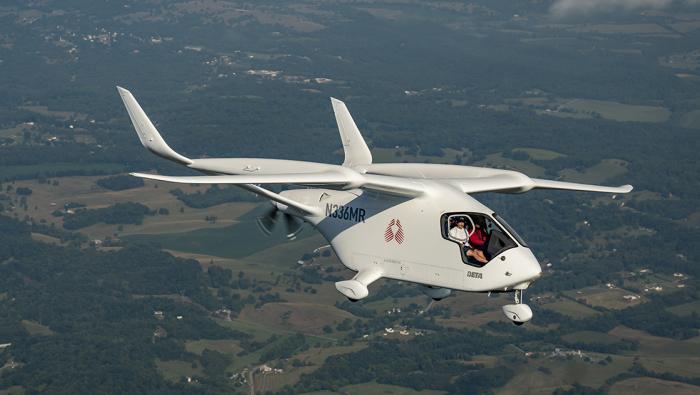
In August 2025, Beta Technologies completed the project’s first test flights with its uncrewed Alia cargo aircraft. Later that year, the Norwegian government proposed a further $5.3 million to augment the initiative’s original NOK 1 billion ($11 million) allocation.
However, the selection of the Electra EL2 Ultra Short hybrid-electric demonstrator is well suited to the upcoming challenge. Earlier this year, this technology demonstrator aircraft performed a series of U.S. demo flights connecting airports in Virginia, New Jersey, and Pennsylvania.
Electra is targeting a landing distance of just 50 meters (164 feet) for its upcoming EL9 certification variant, which will have a range of around 80 to 800 kilometers (around 44 to 432 nm). While Electra hopes to certify the EL9 in 2029 under FAA Part 23 permissions, Finland’s Helsinki also studying the EL9’s suitability for regional air transportation within the country.
In this article
More In Operations