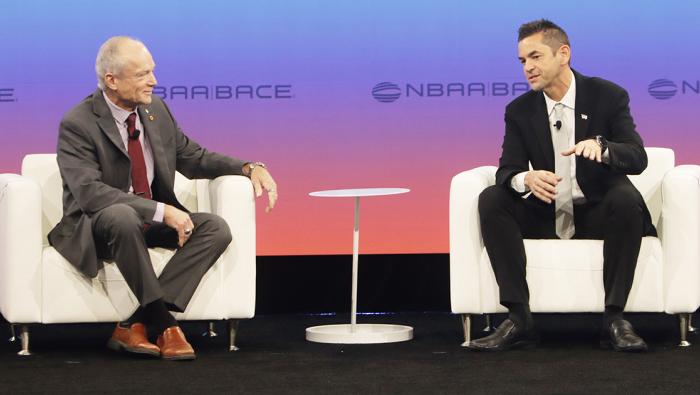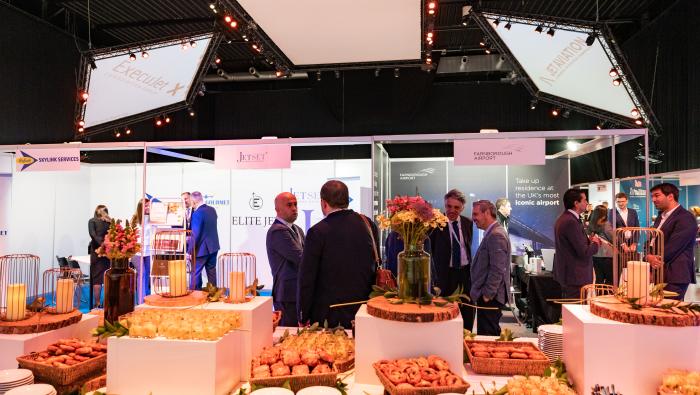

No one doubts the significance of the special federal aviation regulation for the “Integration of Powered Lift: Pilot Certification and Operations” issued with much fanfare during the NBAA-BACE business aviation trade show last week in Las Vegas. However, there is still a shroud of doubt imparing visibility as to how the ambitious and impatient advanced air mobility (AAM) sector will deal with what the U.S. regulator is requiring for commercial operations of, mainly, eVTOL aircraft.
In its final rule, the FAA has spelled out permanent amendments to 14 CFR rules and also a special federal aviation regulation (SFAR) that will remain in force for an initial 10-year period. They apply to aircraft defined as “heavier-than-air and capable of vertical takeoff, vertical landing, and low-speed flight, which depends principally on engine-driven lift devices or engine thrust for lift during these flight regimes and on non-rotating airfoils for lift during horizontal flight.” The FAA’s approach leaves scope for rules to be updated once it is clearer how the first phase of advanced air mobility will materialize and what lessons need to be learned.
More In Regulations and Government