The only member of Congress with both a pilot’s license and a graduate degree in artificial intelligence (AI) wants the FAA, not a standalone AI agency, to regulate the technology in aviation.
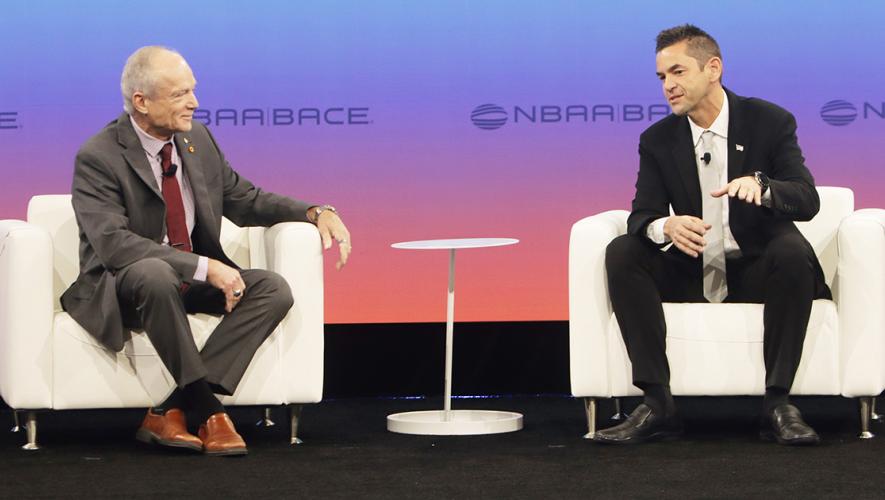
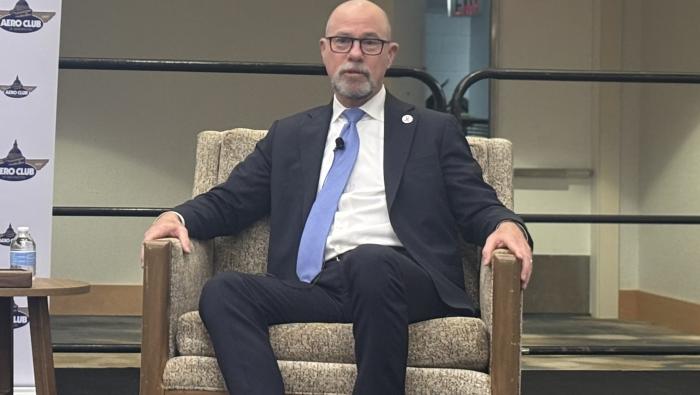
Rep. Jay Obernolte (R-California), a 6,200-hour pilot who has owned his Embraer Phenom 300 for 15 years, chairs the House Science Committee’s research and technology subcommittee. Speaking Tuesday afternoon at NBAA-BACE 2026, he said the European Union’s AI Act leaves companies in regulated sectors answering to two regulators. “If you set out to regulate something for the purpose of regulation, you’ve embarked on a fool’s errand,” he said.
Obernolte instead favors a “hub-and-spoke” model in which sector regulators such as the FAA write the rules, with testing tools and expertise from the Center for AI Standards and Innovation at the National Institute of Standards and Technology.
In aviation, he sees promise in sifting safety data for accident warning signs, optimizing flight paths, and forecasting hazards such as lake-effect fog. “AI makes mistakes the same way humans make mistakes,” he said. “You absolutely do not want AI making unmonitored, autonomous, safety-critical decisions.”
When an attendee cited Garmin’s Autoland, installed on more than 2,500 aircraft, as AI flying an airplane, Obernolte disagreed. To his knowledge, the system runs deterministic software that regulators can test case by case, and “the FAA knows how to evaluate the procedural stuff,” he said. Because neural networks can’t explain their answers, he added, the agency will have to do “some more thinking” about AI.
Outside the cockpit, AI agents are already shopping for charter flights on customers’ behalf. Donald Howell, president and CFO of Birmingham, Alabama-based Southern Sky Aviation, said Google’s Gemini has called the company twice for a quote.
Obernolte predicted such agents will steer business toward the most efficient operators. He urged operators automating their quotes to add a second algorithm that checks each price. “I would use AI to safeguard my AI,” he said.
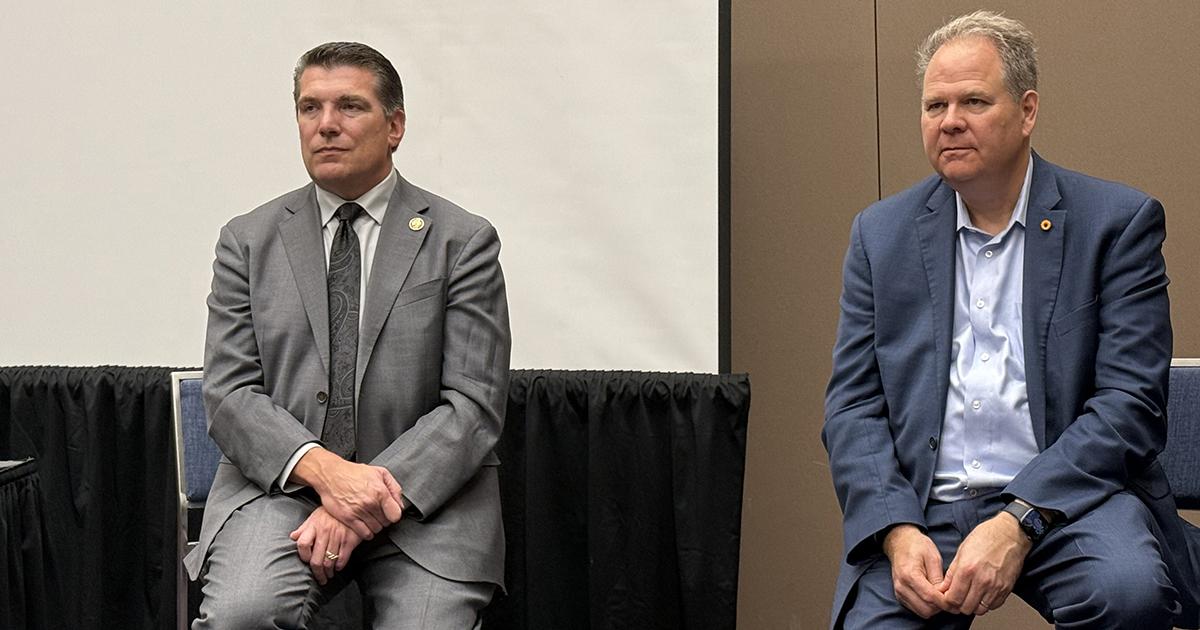
Tuvoli president and CEO Greg Johnson moderated the discussion, a follow-up to the inaugural AI Symposium for Business Aviation held September 14 to 16 in Daytona Beach, Florida. The Nashua, New Hampshire-based company organized the symposium with the National Air Transportation Association and Embry-Riddle Aeronautical University’s David B. O’Maley College of Business.
Organizers said Tuesday that the Florida event raised $15,000 for National Air Transportation Foundation scholarships and allowed 50 students and faculty members to attend for free.
More In Regulations and Government