More than 2,500 aircraft now carry Garmin’s Autoland emergency landing system, the company announced on October 14, about six years after it first won approval.
Intended for emergencies in which the pilot becomes incapacitated, Autoland engages when someone on board presses a dedicated button or when the pilot becomes unresponsive. It then chooses an airport where it can land safely, alerts air traffic control, and lands the airplane without human input.
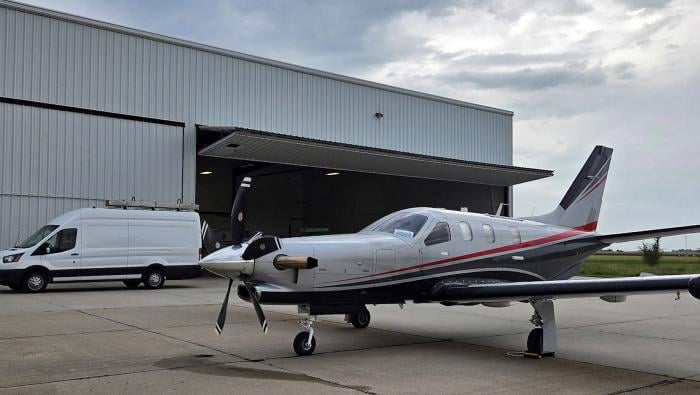
The FAA first certified Autoland on the Piper M600 SLS single-engine turboprop in May 2020, and the system has since spread to more than 15 models, from Cirrus SR20 and SR22 single-engine piston airplanes to twin turboprops and twinjets.
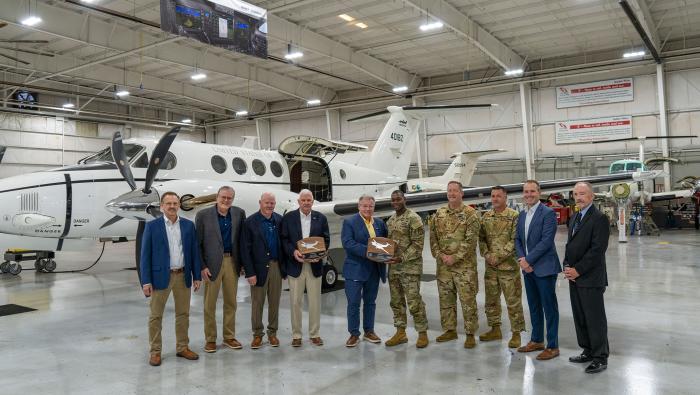
Nearly 250 of today’s Autoland-equipped aircraft received the system after delivery. Some left the factory with compatible Garmin flight decks but without Autoland enabled and had it switched on later, according to Garmin. Others are King Air 200- and 300-series twin turboprops, some of them decades old, that owners retrofitted with Garmin’s G1000 NXi flight deck.
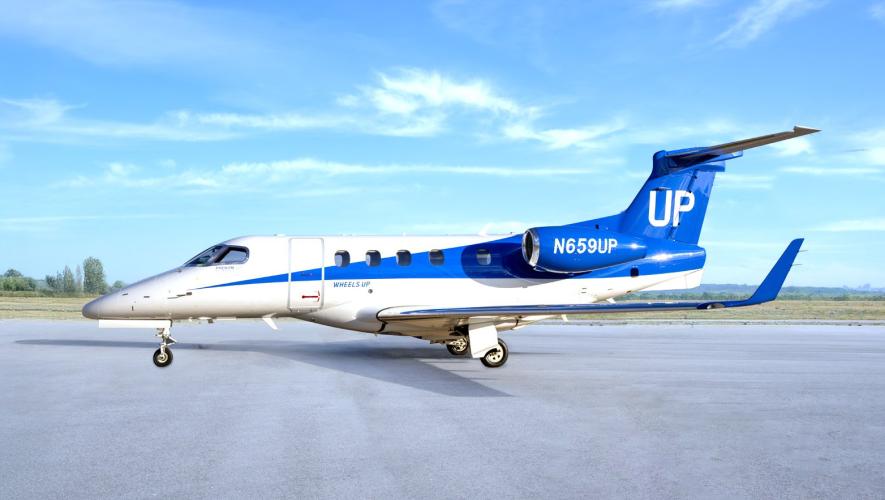
This year marked Autoland’s move into twinjets. The FAA approved the system on the HondaJet Elite II in February, making it the first twinjet with Autoland. In August, the Embraer Phenom 300EV earned U.S., European, and Brazilian certification. Embraer says the light jet is the largest business aircraft equipped with Autoland, though deliveries won’t begin until 2028.
U.S. and European regulators last month approved Autoland on the Pilatus PC-12 Pro, a single-engine turboprop that carries the system as standard equipment. The FAA recently approved the system on the Epic E1000 AX, another single-engine turboprop, which has Autoland buttons in several spots around the cabin.
Next year, the Olathe, Kansas-based avionics maker expects Autoland certification for Textron Aviation’s Cessna Citation M2 Gen3, CJ3 Gen3, and CJ4 Gen3 light jets, as well as the Beechcraft Denali single-engine turboprop.
Autoland landed an airplane in a real emergency for the first time in December 2025. A King Air B200 flying without passengers from Aspen, Colorado, suffered a rapid loss of cabin pressurization. The system engaged automatically and landed the twin turboprop at Rocky Mountain Metropolitan Airport (KBJC) near Denver. Neither of the two pilots on board was incapacitated, but they chose to let Autoland complete the flight because of poor visibility, icing, and mountainous terrain, according to operator Buffalo River Aviation.
In this article
More In Maintenance and Modifications