Charter & Fractional
Luxaviation Meets Charter Demand for New Destinations
Social media helping drive demand for new experiences as Middle East market still weak
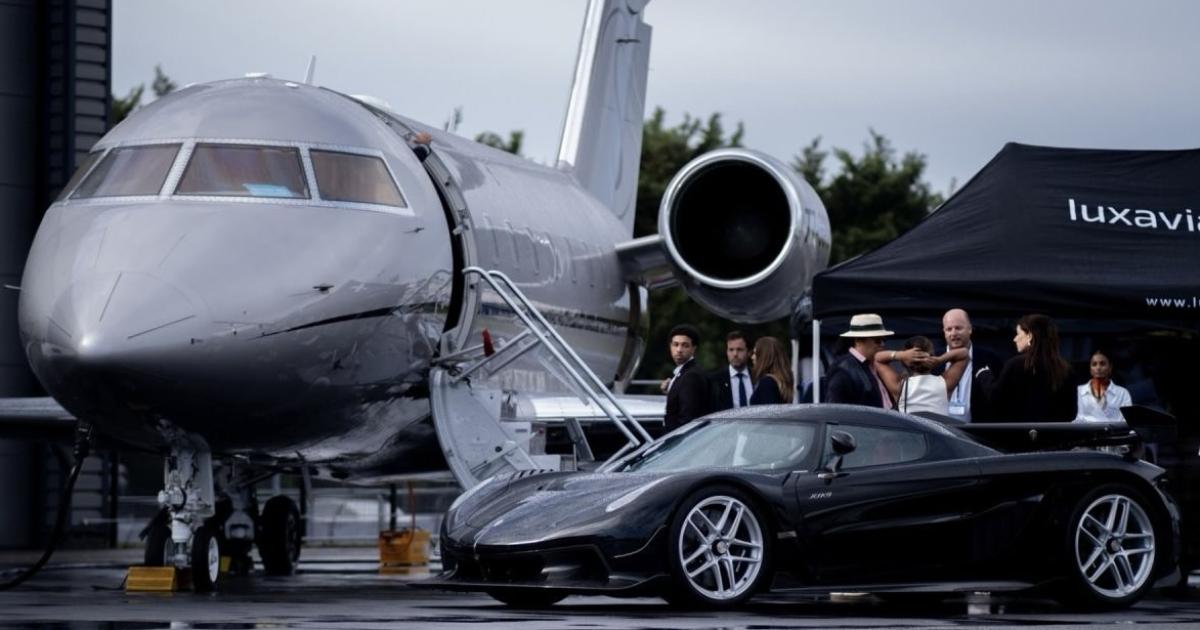
Luxaviation Challenger 604
Luxaviation presented its new Bombardier Challenger 604 jet at the Air Charter Expo at London Biggin Hill Airport on September 8.

After a comparatively slow start to the year, private flight provider Luxaviation has experienced a busy European summer season and continues to see firm demand across Europe and beyond. However, while many charter clients remain cautious about visiting the Middle East, the charter group said others are increasingly seeking new experiences in far-flung locations. 

Speaking to AIN at the recent Air Charter Expo held at London Biggin Hill Airport (EGKB), Luxaviation UK CEO George Galanopoulos suggested that due to the ongoing conflict in the Middle East, charter demand for the region “is dead – very few people want to go there.” He said the wider escalation of geopolitical tension resulted in a comparatively slower first quarter for the company. 

“People thought business was booming because of the Middle East. It didn’t happen,” Galanopoulos explained, highlighting that Luxaviation received very few charter requests following the initial scramble to safely leave the area in . However, the resumption of airline services to the region also negated potential ongoing demand. “Why would we fly people that don’t usually use business aircraft?” he mused. 

Expectations that the FIFA soccer World Cup tournament in North America would yield a spike in demand also did not materialize as Luxaviation might have hoped. “I don’t think the World Cup brought the business that we expected,” suggested Galanopoulos, who cited significant inflated airport surcharges and the overall difficulty in acquiring game tickets as responsible. Nevertheless, Luxaviation has enjoyed strong demand across Africa and Europe. 

Alongside the so-called ‘traditional’ summer destinations including Ibiza, Mallorca and the south of France, Galanopoulos also highlighted what he termed “a trend towards unusual travel” with clients wanting to have adventures further afield. From meeting gorillas in Rwanda, diving in Belize’s ‘Great Blue Hole’, to touching down in Antarctica, this trend has been partly driven by social media. 

According to Galanopoulos, over the last three of four years, the prevalence of platforms such as TikTok are not just helping Luxaviation win business, but helping raise the profile of private flying as a whole. “This is the generation that will be our clients in a few years’ time,” he suggested.

Whereas charter customers would typically book a flight weeks or even months in advance, Luxaviation has found that many new clients have more expectations of flexibility, often scheduling services for just two or three days’ time. A younger demographic—with Luxaviation UK’s average client age down from the late 50s to 40s—is also largely eschewing the traditional ‘caviar-and-champagne’ service previously synonymous with previously eschewing. Nevertheless, Galanopoulos stressed that “the fundamentals remain the same,” with all customers craving clarity on what service will be provided at the agreed price. 

Meanwhile, the impact of the inflated cost of oil resulting from the latest Gulf war is now all too apparent in charter operators' cost structures. For a Bombardier Global or Gulfstream size of aircraft, Luxaviation is currently levying a surcharge of $1,000 per flight hour and monitors jet A prices on a weekly basis to make further adjustments as needed. Galanopoulas confirmed that the operator has not experienced the widely-anticipated difficulties in securing fuel supplies.  

Meanwhile, Luxaviation continues to augment its existing fleet, having added three jets in the first quarter of the year despite a softening of demand. In July, Luxaviation also announced it was boosting its fleets in Europe and Asia with an additional nine aircraft, ranging from a Bombardier Challenger 604 to a Gulfstream G800. 

The company currently operates two Challengers, and would ideally add a third or fourth example, despite Galanopoulos acknowledging that supply of longer-range aircraft is “not easy” right now. “The market has changed purely because people are travelling further,” he concluded. “There is a good upturn on people looking to buy aircraft, including first time buyers, and there are a lot of clients looking to upgrade.”