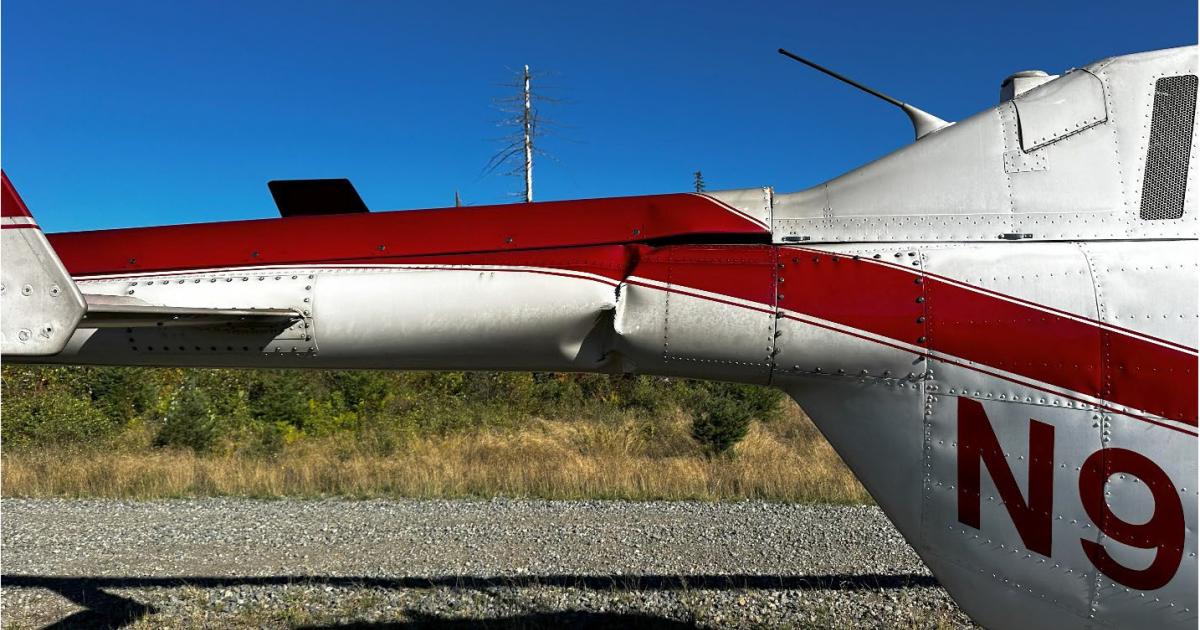
Buckling of a Bell 206L LongRanger’s tail boom during a “vertical hop” oscillation on Sept. 26, 2024, was due to an “aeroelastic interaction between the helicopter’s main rotor blades and nodal beam system, which resulted in oscillations that exceeded the design limits of the tail boom,” according to the NTSB final report. “Contributing to the accident was the failure of the main rotor blade manufacturer to adequately publish the appropriate recovery technique for a known flight dynamics issue.”
The helicopter—N9984K, operated by JL Aviation of Boring, Oregon—was equipped with composite Van Horn Aviation (VHA) main rotor blades, which had replaced the Bell metal blades about five months before the accident. The VHA blades had logged 348.6 hours when the accident occurred. With no passengers and about 135 pounds of fuel, the helicopter was lightly loaded.
In this article
More In Accidents