Preliminary Reports
Pilot Killed in Departure Crash, Embraer EMB-505, Jan. 2, 2023, Provo, Utah
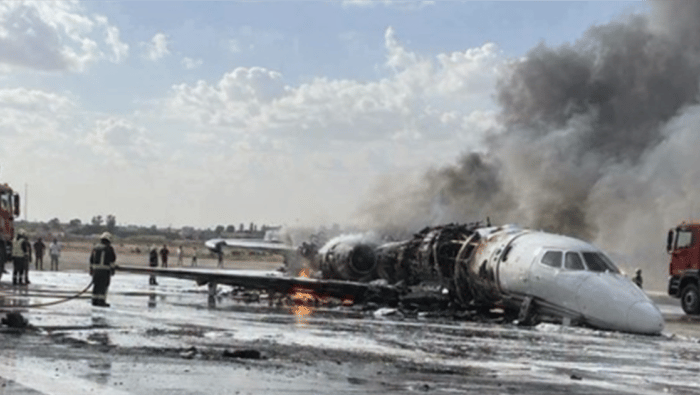
The pilot was killed, two passengers survived with serious injuries, and a third escaped with minor injuries after the light jet’s left wing struck the runway just after takeoff. Witnesses described the airplane lifting off in a steep pitch attitude and reaching an altitude of 20 to 30 feet before the wings “wobbled back and forth,” rolling right and then hard left until ground contact. Scrape marks found on the runway indicated that the airplane briefly lifted again before departing the runway to the left, leaving an impact crater at the beginning of a 597-foot debris path that led to the final resting point of the fuselage. Both wings separated and were found another 106 feet further along. Both engines had separated and were found adjacent to the fuselage.
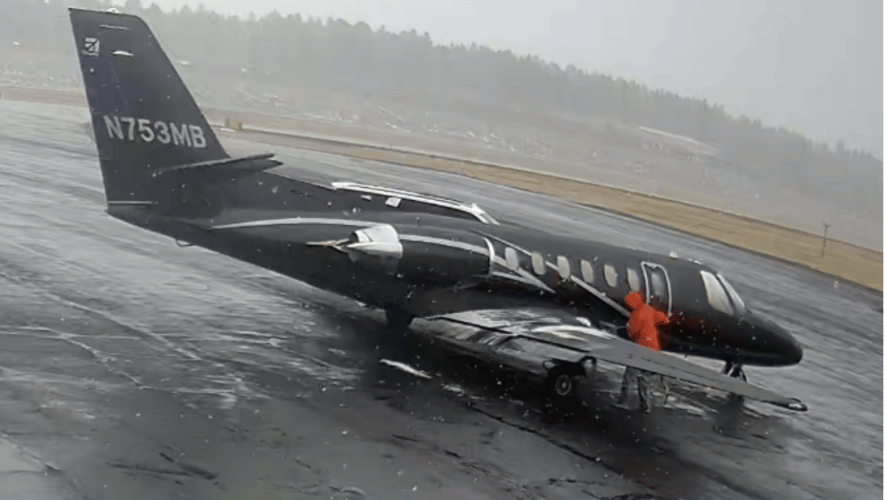
The airplane had been hangared before the flight, but was pulled out for refueling at about 10:55 MST. The lineman who serviced it with 350 gallons of jet-A recalled the pilot telling him that he was “trying to get out before the weather;” the lineman also noticed unfrozen water droplets on the wings. The pilot started the engines around 11:10 or 11:15, about the time light snow began to fall. The lineman described the precipitation as a mixture of snow and misty rain of light to moderate intensity. The last recorded weather observation showed calm winds, an 800-foot overcast, and three miles visibility with both temperature and dew point at -1 deg C.
More In Accidents