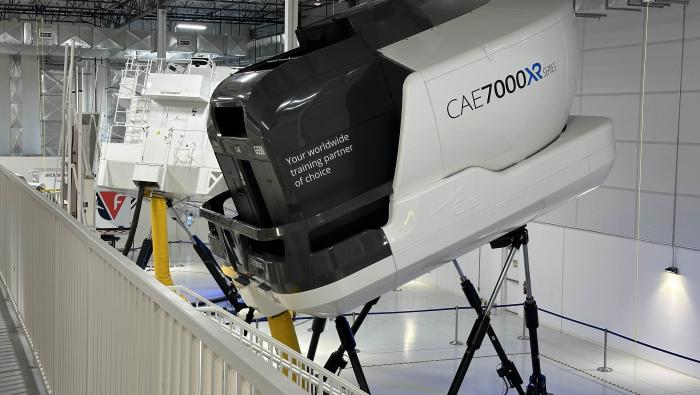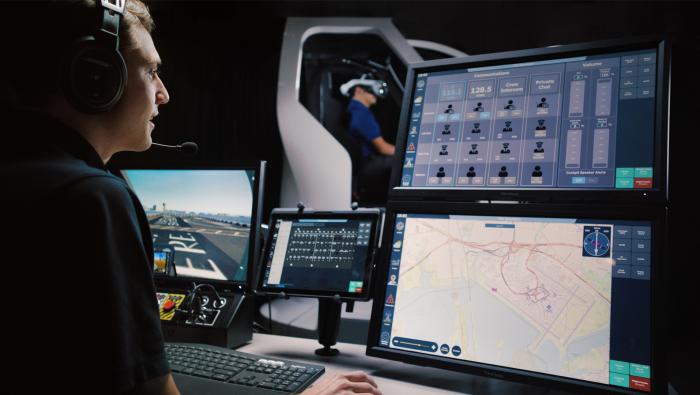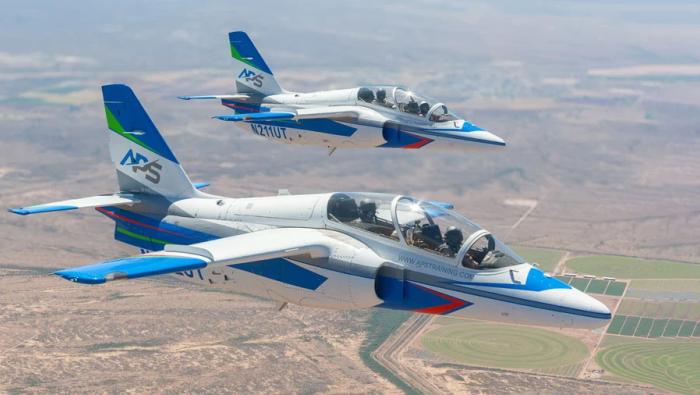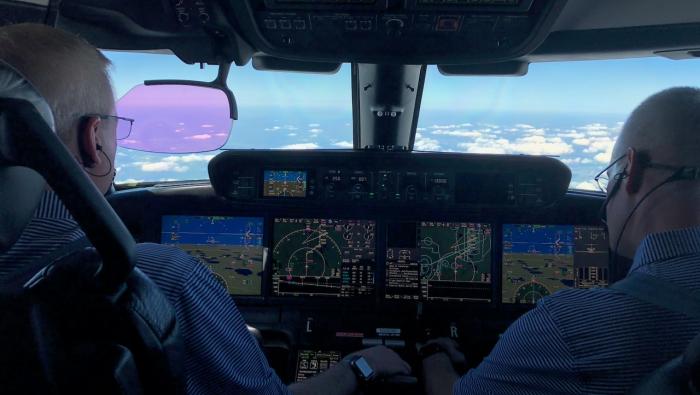

The aviation industry is facing a dilemma: There are not enough pilots to respond to the pent-up demand for air travel, forcing operators to either reduce capacity or slow expansion plans. This problem affects every segment of commercial aviation from airlines to business jet operators. Complicating this scenario is a lack of resources, both instructors and flight simulators, to train new recruits or advance pilots into the left seat in a timely fashion. One unexpected solution to this problem is virtual reality (VR).
VR is the concept of being completely immersed into a computer-generated environment—like the flight deck of an aircraft—with both visual and audible representations through a head-mounted display like a headset. The user can then interact with that environment through a mix of hand gestures or in a mixed-reality application using physical buttons or levers.
More In Training and Workforce