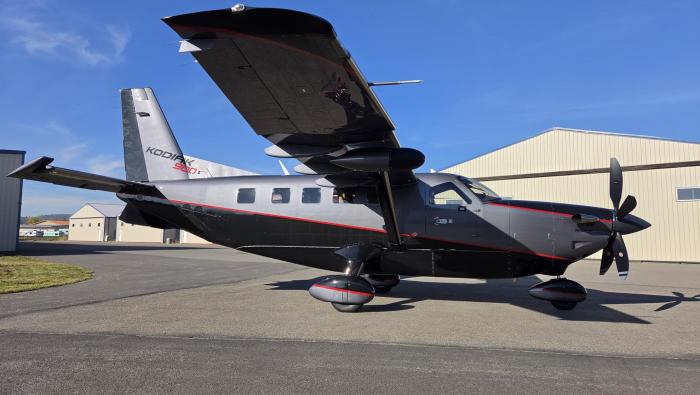

Quest Aircraft bills the Kodiak as the “next generation of STOL aircraft capable of bringing services and heavy supplies to the most remote regions on the planet,” and the Idaho-based manufacturer has built 222 since the sturdy turboprop single was certified in 2007.
“Third generation” would be accurate too, in that the Cessna Caravan dates to the early 1980s. The first generation would be the Pilatus Porter (340 hp)/Turbo Porter (550 shp) and Helio Courier (295 to 400 hp). In the context of the Kodiak, the Helio seems particularly noteworthy because both it and the Kodiak were designed originally to serve missionary pilots flying on and off short, narrow strips carved out of some of the harshest terrain on the planet. Indeed, the Kodiak’s 45-foot wing span (seven feet shorter than the Caravan’s) was dictated by the 50-foot width of many strips carved out of jungle.
More In Aircraft