This AIN pilot/reporter had an opportunity to fly the Eclipse on two different occasions, once on a short cross-country trip in March between Chicago and Nashville and again to Rockford, Ill., for some approaches, landings
and airwork. My instructor pilot was North American Jet Eclipse instructor Mike Vautell.
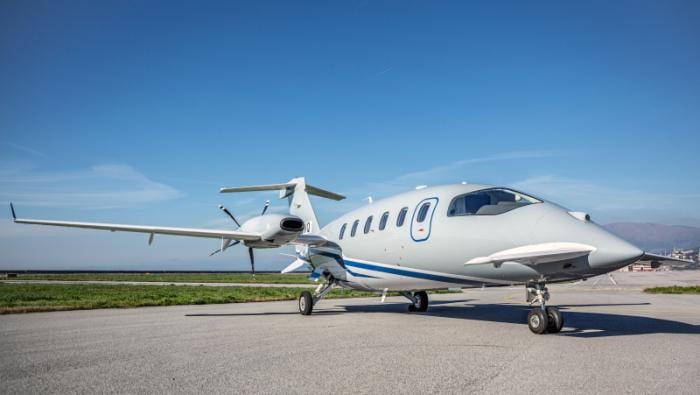
As I approached the Eclipse, it was clear once again just how compact the airplane is by today’s standards. The aircraft measures just 11 feet from the ground to the top of the tail, 38 feet from wingtip to wingtip and 33 feet from nose to tail. The Beech Baron’s wingspan is just under 38 feet and it stands just under 10 feet high. At mtow, the Baron weighs in at 5,500 pounds; the Eclipse weighs 6,000 pounds. Eclipse’s friction stir welding process produced a smooth, sleek airframe with only a few items–such as the landing gear and AOA probes–sticking out in the slipstream.
Powered by two Pratt & Whitney Canada PW610F-A turbofans, each pumping out a solid 900 pounds of thrust–950 if the automatic power reserve kicks in on an engine failure–the Eclipse carries a maximum of 1,698 pounds of fuel. The walk-around is light-twin simple as the pilot pulls the chocks, snoops under the fuselage to check the gear and be sure the hard landing indicators are not showing and that the oxygen blowouts have not popped. Oil level checks are just below eye level.
More In Aircraft