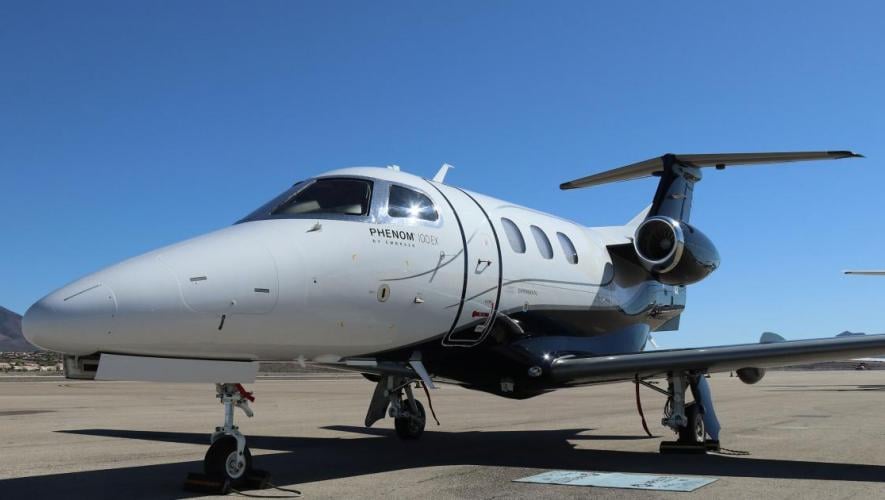
I’ve been waiting quite some time to fly the Eclipse, a dozen years in fact, since the then revolutionary very light jet (VLJ) was first announced in 1998. The term very light jet–originally coined to describe the Eclipse specifically–came to be applied to a number of small jets, although a precise definition seemed to depend upon an aircraft manufacturer’s marketing department at any given time. The assumption was that a VLJ would be small and light. Some thought the term fit the 8,730-pound Cessna Citation Mustang while others applied it to the 10,472-pound Embraer Phenom 100. Of course, neither Cessna nor Embraer called its aircraft a VLJ, preferring the title entry-level jet. Only the 6,000-pound-mtow Eclipse EA-500 seemed to really embody the VLJ philosophy.
Certainly the smallest of the twinjets, the Eclipse is also easily owner-flown at high altitudes and can land and depart from relatively short runways. Only the Eclipse arrived on the scene with a teeny and significantly premature price tag of less than $1 million when first announced. Eclipse claimed a higher airspeed (370 knots) than the Mustang (340 knots), but it would lag the Phenom (390 knots). It also claimed to be a fuel miser. Both the Mustang and the Phenom deliver cabins larger than the Eclipse’s, but those cabins come with much larger price tags and operating costs. All are RVSM-certified, unlike the single-engine jets coming down the line such as the Cirrus Vision or PiperJet.
More In Aircraft