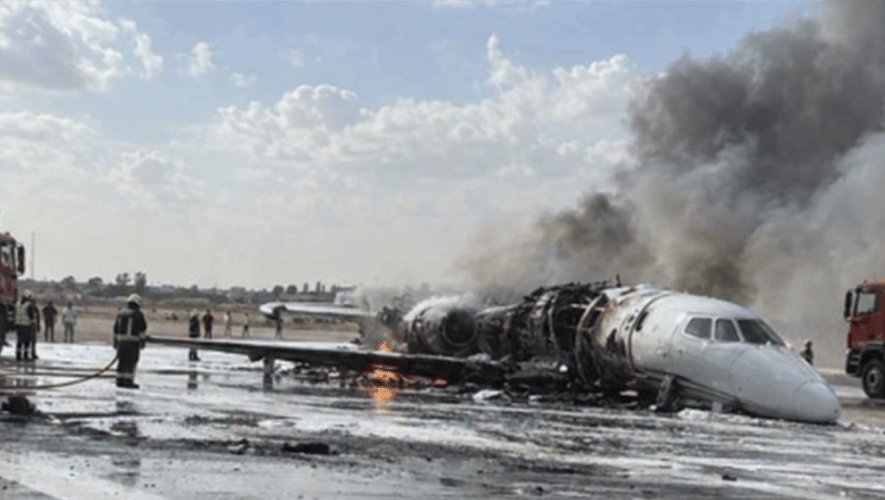
A preliminary report issued by the UK Air Accidents Investigation Board on the January 4 crash of Challenger 604 N90AG at Birmingham, England, raises a suspicion that frost or ice on the wing may have been a factor. The aircraft, operated by Epps Aviation of Atlanta on behalf of agricultural machinery manufacturer Agco, had arrived the previous evening at 8:39 p.m. after a nonstop flight from West Palm Beach, Fla. The temperature at the time was 30 deg F with the dewpoint just one degree lower, and overnight it dropped to 16 deg F with variable cloud cover.
Mid-morning the next day each pilot carried out an independent walkround. Following this, the aircraft was fueled to full tanks. After the passengers arrived, a start clearance was given at 11:56 a.m. and taxi clearance followed at 12:01 p.m.
Other aircraft that had been parked overnight at the airport required de-icing for moderate or severe ice and frost contamination, and those crews reported they saw frost or ice on the wings of N90AG. However, the Challenger crew did not request de-icing by the handling agent.
More In Accidents