Trying to anticipate Embraer's next move has recently become a favorite pastime for commercial aerospace observers, despite company executives remaining persistently tight-lipped on the subject. Will the Brazilian airframer launch a new commercial platform, or a large-cabin, long-range business jet? Will it truly go big by developing a large narrowbody aircraft to compete with the Airbus A320neo and Boeing 737 Max families?
Embraer is, for the most part, not showing its hand. From the outside, there is a growing consensus on one subject: While Embraer appears to have the engineering chops, favorable labor costs and production system necessary to build a larger aircraft, it probably needs an industry partner to achieve the necessary financial scale.
This is far from a foreign concept to the company, which has sought partners to bolster its current commercial and defense programs and extend production capacity beyond Brazil. Arjan Meijer, CEO of Embraer Commercial Aviation, said that the company continues actively courting partners during a recent interview with Leeham News and Analysis (LNA) in New York. He acknowledged that new partnerships would likely be necessary for the airframer to launch a larger aircraft development program, emphasizing that Embraer has yet to decide which pathway to take.
New Partners
"For the last seven or eight years, we've been very clear that we are looking for partners in the industry, and we've been very active," Meijer said, pointing to progress with the UAE's Mubadala Investment Company as well as the governments of India and Turkey. "That's all to support what we're doing today. What do we need for a future product? I think it's still too early to say, but in general we are spending a lot of time to work with partners in the industry instead of just building aircraft in Brazil."
Embraer kicked off a strategic partnership with Mubadala at the Farnborough International Airshow in July. It provides a framework for cooperation in areas including aerostructures manufacturing, maintenance, workforce development and research. Separately, Embraer and Mubadala subsidiary Strata Manufacturing signed an agreement to evaluate potential composite aerostructure work packages for the E2 family. The latter agreement provides a pathway for Strata to potentially become a Tier 1 supplier for Embraer aircraft programs but does not contain a firm production commitment.
"The two organizations will also jointly plan the research and development of next-generation aerostructures technologies, including composites, additive manufacturing, and high-temperature alloys, with the ambition of creating a co-located innovation hub to accelerate prototyping and bring new technologies to industrial scale," Embraer said at the time.
As LNA contributing writer Jay Menon reported, Embraer is reportedly nearing a deal to sell regional E175 jets to IndiGo, which would strengthen the business case for building a final assembly line in India.
Neither of these burgeoning partnerships clearly indicate that a major new aircraft development program is on the way from Embraer. Rather, they demonstrate the airframer's desire to internationalize its industrial operations.
"I think India is a good example," Meijer said. "We're talking about the local final assembly line now, but the purpose there is really to get access to the India market with our existing products as a first step. If and when we would do something bigger, yeah, it would potentially be with partners, but it's still too early to say that will pan out."
Engineering Resources & Financial Position
While some industry sources estimate that the costs of developing Airbus and Boeing's next narrowbody aircraft will exceed $20 billion, Embraer has a significant labor-cost advantage given that its engineers are based in Brazil rather than Europe or the U.S. Still, some believe that launching a large narrowbody program would be an endeavor of bet-the-company magnitude, meaning that a financial partner would be required rather than simply nice to have.
Company executives fielded multiple questions about Embraer's next clean-sheet aircraft during Embraer's third-quarter earnings call last week. CEO Francisco Gomes Neto emphasized that "one thing we will not do is risk the financial health of our company."
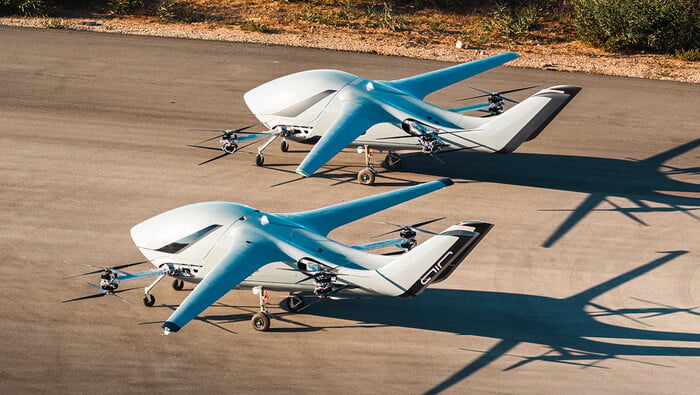
Kristine Liwag, head of aerospace and defense research at Morgan Stanley, suggested that engineering hours will be freed up as Embraer-backed Eve Air Mobility matures the design of its four-passenger eVTOL aircraft—and those resources could be directed toward larger aircraft development.
"The opportunity for the next big project could come pretty soon," she said. "It seems like you've got capacity opening up maybe for engineers [in the] second half of '27, maybe into '28?"
Gomes Neto said that the company's engineers "have been very busy...not only with Eve but in doing updates on the existing products." Engineers are presently focused on certifying the Embraer Enhanced Takeoff System (E²TS) with the FAA, an automated takeoff function that controls pitch and bank angle without pilot input to the flight controls; Gomes Neto calls the E²TS a "unique" offering for commercial aircraft. Another present-day focus for Embraer's engineers is meeting customer specifications for KC-390 military transport aircraft.
In recent years, Gomes Neto has spoken openly about Embraer's aspiration of becoming a $10 billion revenue company by 2030, fueled by an impressive post-Covid financial turnaround. LNA chronicled Embraer's positive progress with a four-part series (1, 2, 3, 4) earlier this year.
Now, the company is firing on all cylinders, recently raising its full-year 2026 revenue target to $8.4-$8.6 billion, and appears poised to achieve its goal ahead of schedule--potentially crossing the $10 billion revenue threshold (excluding Eve) for the full year of 2028.
The company's increasingly firm financial position makes launching a clean-sheet aircraft more viable and lowers the risk of taking a big swing. But it does not mean that a large narrowbody program is forthcoming.
Building Ever-Larger Aircraft
Pointing to Embraer's history of certifying ever-larger commercial aircraft, Meijer does not rule out eventually jumping into the large narrowbody market. But he maintains that looking at the company's history and drawing a line into the future—and imagining a clean-sheet commercial jet larger than the stretched-to-the-limit E195-E2—is too simplistic.
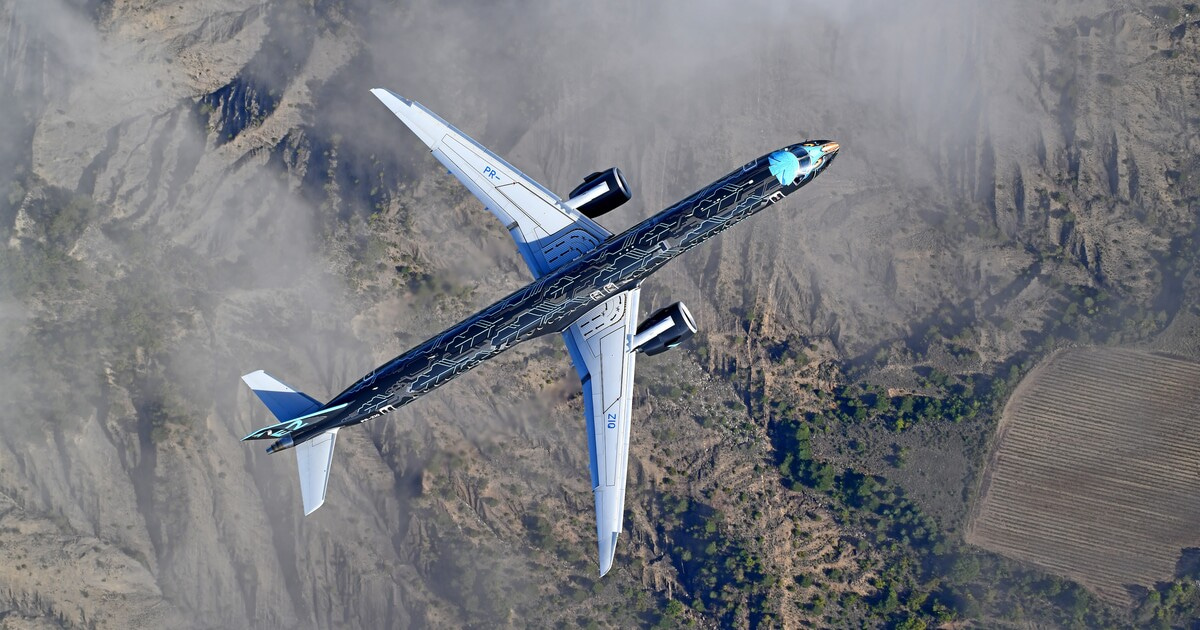
"I mean, we started a turboprop manufacturer," he told LNA. "Then, we moved into the 50-seat [regional jets], and then the E-Jets, which was 70-to-120 seats. We now moved into the E2, which starts currently around 100 seats up to a maximum of 146 seats. So, we're following the trend upwards.
"Now, the market would love for us to do something bigger, right? Several customers are saying, 'Embraer should build a new product.' That's very flattering, and I think we could do it; we have a very capable engineering force. Since the year 2000, we've brought more than 20 aircraft models to market, which is pretty impressive."
One limiting factor is the readiness of next-generation engines. Meijer agrees with the general sentiment that next-generation airframes will be built around next-generation engines, meaning that Embraer is playing the same waiting game as Airbus and Boeing.
"That's what always has happened in the past," he said. "You need a significant step up [in efficiency], and to do that just from the airframe is very tough... You're not going to do just a new airframe, and you wouldn't do a new airframe and the same engines."
Whether an engine manufacturer—such as Rolls-Royce—could be convinced to develop a narrowbody engine to power Embraer's next commercial jet is a major open question. Any such partnership would be determined largely by the needs of airlines, Meijer said.
"If the customers want an OEM to do something, I think suppliers then see what they can do to make that happen," he said.
Perhaps the biggest question is not whether Embraer's leadership team believes the company is capable of launching an ambitious new aircraft program; its confidence is apparent. Rather, when is the timing right? Meijer insists the company "is not there yet," while acknowledging that the "trend has been upscaling over time."
"We have people that constantly look at future product development," he said. "They're looking at everything, but it's just not to a point to make a decision on whether we should do something bigger."
This article first appeared in Leeham News and Analysis which provides in-depth coverage of the future of commercial aerospace. You can subscribe for more of its exclusive reports here.
More In Aircraft